Why Netflix is betting on systems thinkers—not specialists—in the AI era | Elizabeth Stone (CPTO)
Elizabeth Stone, Netflix CPTO, discusses how AI is transforming product development and company culture. She highlights the increasing importance of "systems thinking," managing the influx of AI-generated output with clear guardrails, fostering "AI fluency" across all roles, and maintaining Netflix's unique "excellence as an operating system" through high talent density and a comfort with risk-taking. The conversation also explores AI's impact on content creation, the future of entertainment, and talent management.
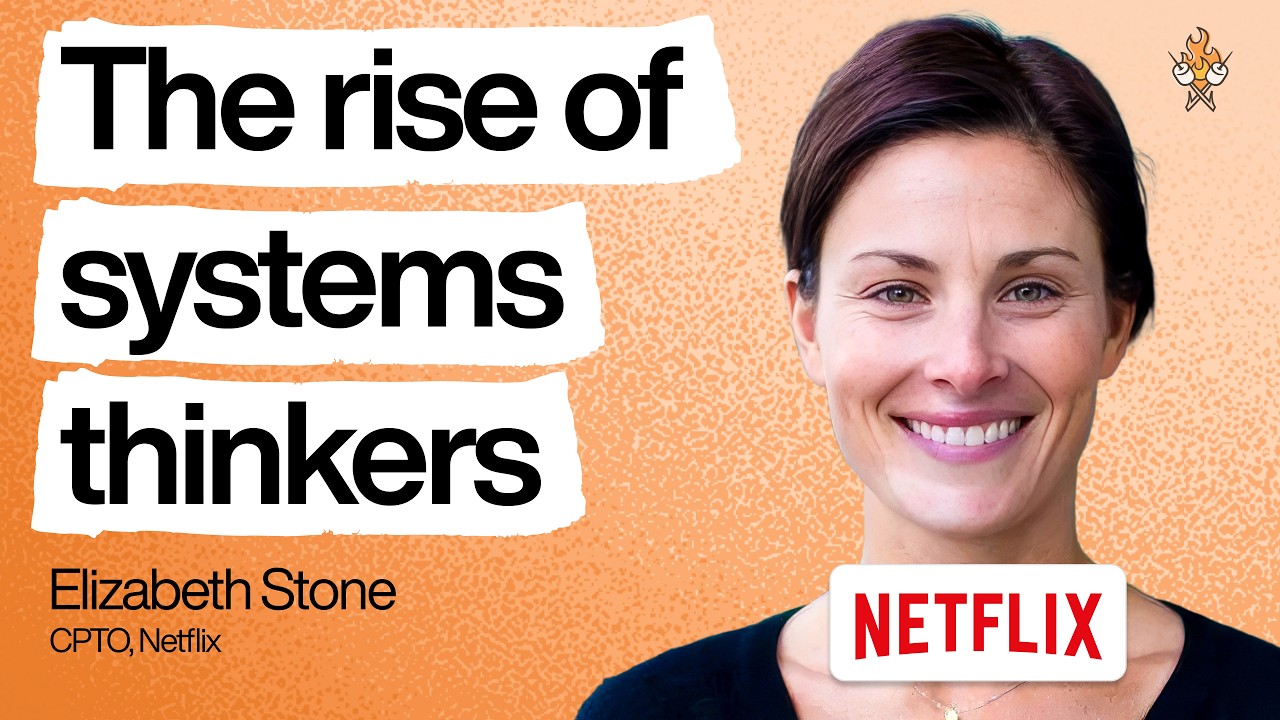
Elizabeth Stone, CPTO at Netflix, discusses the transformative impact of AI on roles, skills, and organizational culture in a conversation with Lenny Rachitsky. She emphasizes that AI’s emergence has led to a “storming phase” where traditional roles blur, with product managers shipping code and designers writing PRDs. While acknowledging the initial confusion, Stone sees this as an opportunity for faster prototyping and idea development. However, she stresses the enduring importance of core functional expertise and accountability, reminding that humans remain responsible for AI-generated outputs.
Evolving Roles and the Rise of Systems Thinking
AI empowers product, design, and data science teams to advance further in the product development lifecycle before core engineering takes over, particularly through distilling vast amounts of information and accelerating hypothesis generation. Despite this fluidity, Stone maintains that comparative strengths remain crucial: data scientists ensure data trustworthiness, product managers frame problems correctly, and engineers ensure scalability and quality.
A key skill Netflix is now prioritizing is systems thinking. This is driven by the need for increased velocity and robust scaffolding in an AI-driven world, where agents operate across multiple systems. Systems thinking promotes the creation of preferred “paved paths,” common infrastructure, and design systems. For designers, this means developing templates and overarching design languages to ensure coherent user experiences, preventing a “Frankenstein” product.
Stone advises that individuals can cultivate systems thinking by consistently zooming out “one click” from their immediate problem. This involves questioning broader assumptions, considering the manager’s perspective, and designing solutions that benefit colleagues and the wider organization, leaving a stronger foundation for future innovations.
Design, Specialization, and AI Fluency
While AI provides designers with powerful tools for faster iteration and exploration, Stone pushes back on the idea that “the design process is dead.” She argues that deep design expertise and thoughtful process are critical for Netflix to maintain its signature seamless, intuitive user experience, making complexity invisible to the user. The work might change, but the design mindset remains indispensable.
Regarding skills, Stone observes a shift away from very narrow, deep specialization, with exceptions for highly niche technical areas. Instead, Netflix seeks generalists and adaptable individuals who can navigate various functional and technical domains. Core attributes trending up include curiosity, an innovation mindset, and comfort with ambiguity and change.
Netflix promotes AI fluency as a universal expectation across all talent, rather than a level-specific skill. This involves understanding where AI is useful (and where it’s not), adopting an experimentation mindset, and integrating AI tools into daily workflows, even for senior leadership. This expectation is now embedded in hiring practices, with candidates even encouraged to use AI tools in coding interviews.
AI’s Impact Beyond Coding
Beyond coding and prototyping, AI is making a significant impact in several areas at Netflix:
- Data Analysis: Streamlining the distillation of information, leveraging historical insights from experiments, and expediting analytical modeling to translate data into actionable insights.
- Content Production and Creation: AI is used in pre-visualization, generating promotional assets, and enhancing localization (subtitles, dubs). In post-production, technologies like those from acquired company InterPositive enable filmmakers to relight, reframe, or even adjust dialogue, providing powerful creative levers.
- Content Delivery: AI optimizes the creation of high-quality trailers, images, and artwork at scale to ensure content reaches the right audiences globally.
Stone notes that Netflix’s engagement with AI/ML is not new, citing the historical Netflix Prize as an example of its long-standing commitment to leveraging these technologies, particularly for personalization, to manage its ever-expanding content library.
Excellence as an Operating System
Stone defines Netflix’s culture as “excellence as an operating system.” The cultural elements – high agency, autonomy, talent density, bottom-up thinking, quick experimentation, and top-of-market compensation – are not ends in themselves but means to achieve excellence. This system hinges on several pillars:
- Talent Density: A non-negotiable foundation, enabling confident decision-making at all levels.
- Comfort with Risk-Taking: Acknowledging that failures will occur but focusing on quick recovery and learning, rather than avoidance. This was evident in Netflix’s foray into live content.
- Outcome Orientation: A selfless focus on driving results for Netflix and its members, above personal success.
- Counter-Intuitive Practices: Leaders must resist the natural inclination to intervene in every decision or implement new processes when things go wrong. Instead, they foster environments where individuals learn from their own decisions and engage in blameless retrospectives, which leads to a more resilient and impactful team over time. The “Keeper Test” (would I fight to keep this person today?) serves as a tool for honest feedback and maintaining high talent standards, often leading to positive, growth-oriented conversations.
Attracting Talent and the Future of Entertainment
Netflix attracts top talent by emphasizing a passion for applying technology to entertainment, consumer products at scale, and global impact. This offers a distinct appeal compared to foundational research roles at frontier AI labs. For junior talent, Netflix continues to invest in intern and new grad programs, valuing their fresh perspectives and native comfort with new technologies. Stone stresses that craft mastery remains paramount; junior engineers are accountable for code quality, and strong mentorship is essential to instill “what good looks like” in an AI-accelerated environment. Even if AI writes much of the code, engineers must understand how systems work to diagnose and fix problems.
Looking 5-10 years ahead, Stone believes entertainment will be multifaceted, moving beyond traditional film and TV to include games, live content, and podcasts, accessible across various devices and moments. AI will facilitate this shift by enabling more personalized, immersive, and interactive experiences. In Hollywood, Netflix maintains a “creator enablement” position, supporting filmmakers who embrace AI tools to bring their visions to life, as well as those who prefer traditional methods. Stone firmly believes that while AI will amplify creative possibilities, the human element, particularly in storytelling and emotional performance, will remain at the core of compelling entertainment.