Personalization

Gadgets: Personal app vibe coding that is actually safe — Kenton Varda, Cloudflare

Gadgets: Personal app vibe coding that is actually safe — Kenton Varda, Cloudflare

Kenton Varda introduces "Gadgets," a new architecture built on Cloudflare Workers, addressing the challenge of user-driven AI customization in a world where traditional cloud infrastructure restricts personalization. He demonstrates how AI agents can add features directly to applications, while a unique security model, leveraging `null origin iframes` and isolated server-side sandboxes, renders XSS vulnerabilities irrelevant. The entire system operates without containers or traditional databases, running efficiently on the `workerd` runtime.

Why Netflix is betting on systems thinkers—not specialists—in the AI era | Elizabeth Stone (CPTO)

Why Netflix is betting on systems thinkers—not specialists—in the AI era | Elizabeth Stone (CPTO)

Elizabeth Stone, Netflix CPTO, discusses how AI is transforming product development and company culture. She highlights the increasing importance of "systems thinking," managing the influx of AI-generated output with clear guardrails, fostering "AI fluency" across all roles, and maintaining Netflix's unique "excellence as an operating system" through high talent density and a comfort with risk-taking. The conversation also explores AI's impact on content creation, the future of entertainment, and talent management.

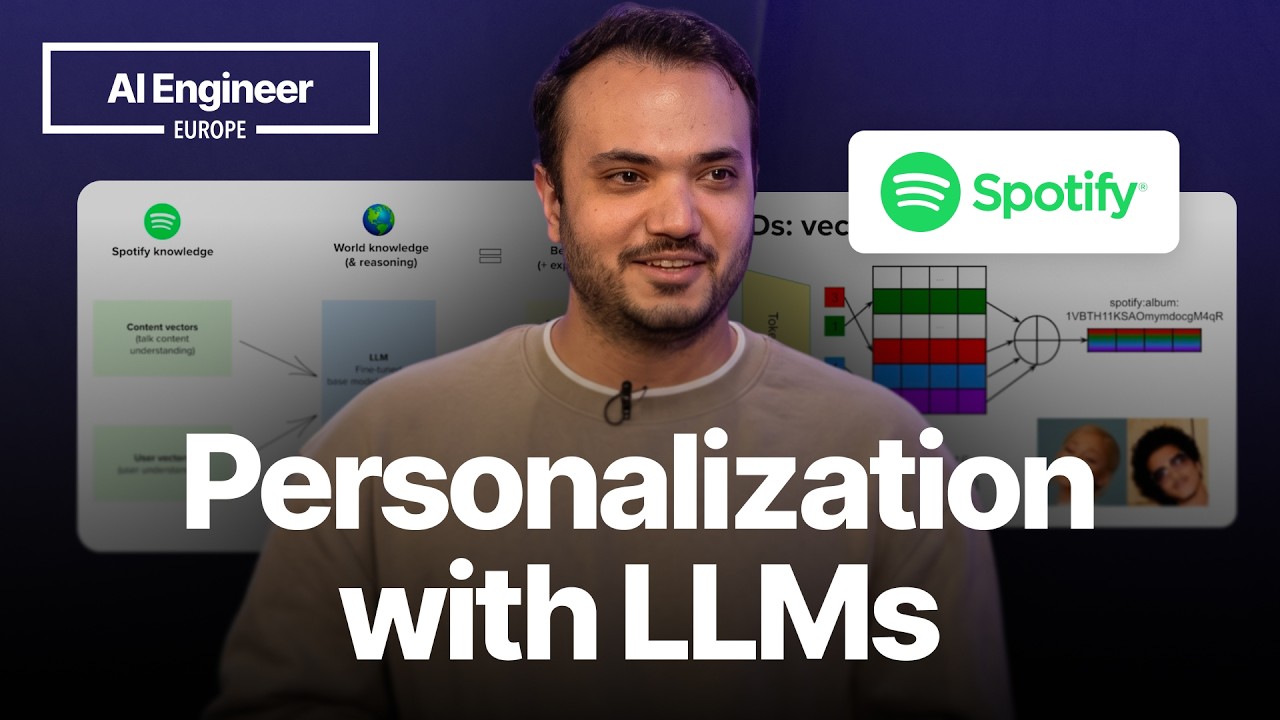
Personalization in the Era of LLMs - Shivam Verma, Spotify

Personalization in the Era of LLMs - Shivam Verma, Spotify

Spotify is personalizing open-weight LLMs without full fine-tuning by combining three key components: foundational user embeddings from streaming history, 'Semantic IDs' that tokenize its 100M+ item catalog, and a 'soft tokenization' layer that projects a user's embedding directly into the LLM's context. This allows the model to autoregressively generate the next song or podcast as the next token in a sequence.

OpenClaw's Memory Sucks and the fix is simple — Dhravya Shah, Supermemory

OpenClaw's Memory Sucks and the fix is simple — Dhravya Shah, Supermemory

Dhravya Shah, founder of Super Memory, details the evolution of his company from a simple RAG-based consumer app to a sophisticated, open-source context infrastructure for AI, and introduces a novel hooks-based memory solution for OpenClaw.

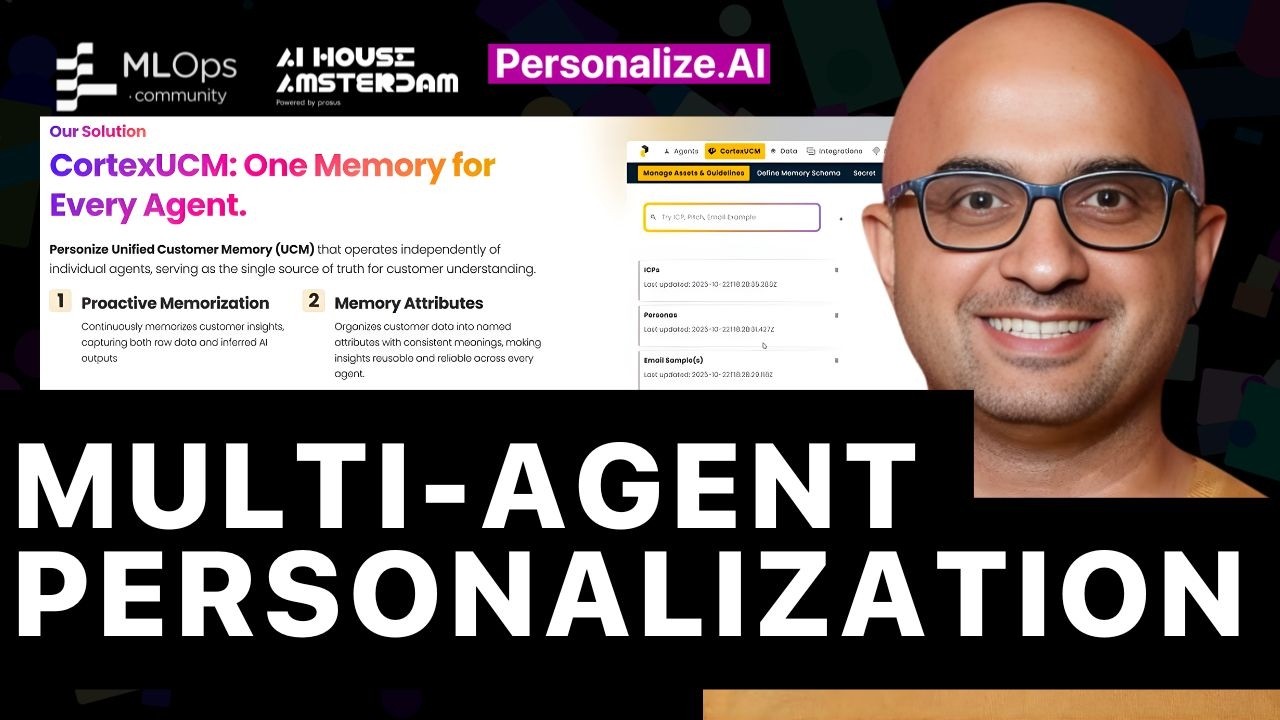
Multi-Agent Personalization with Shared Memory: From Email to Website to Proposal // Hamed Taheri

Multi-Agent Personalization with Shared Memory: From Email to Website to Proposal // Hamed Taheri

This talk explores the challenges of using multi-agent systems for mass personalization, highlighting the inconsistencies and inaccuracies that arise from traditional methods like RAG and function calling. The speaker introduces Cortex UCM, a unified customer memory system that proactively infers and standardizes customer insights. This shared, structured memory layer enables agents to achieve a deep, consistent understanding of customers, leading to high-quality, scalable generative personalization for emails, websites, and product pages.

Simple AI Upsells 30% Better Than Trained Reps

Simple AI Upsells 30% Better Than Trained Reps

Founders of Simple AI, Catheryn Li & Zach Kamran, discuss their journey from building consumer apps to creating an AI sales agent that handles inbound calls for major brands. They cover their pivot, the technical challenges of integrating with legacy systems, and how their AI outperforms human reps by leveraging hyper-personalization and rapid A/B testing.