Ai

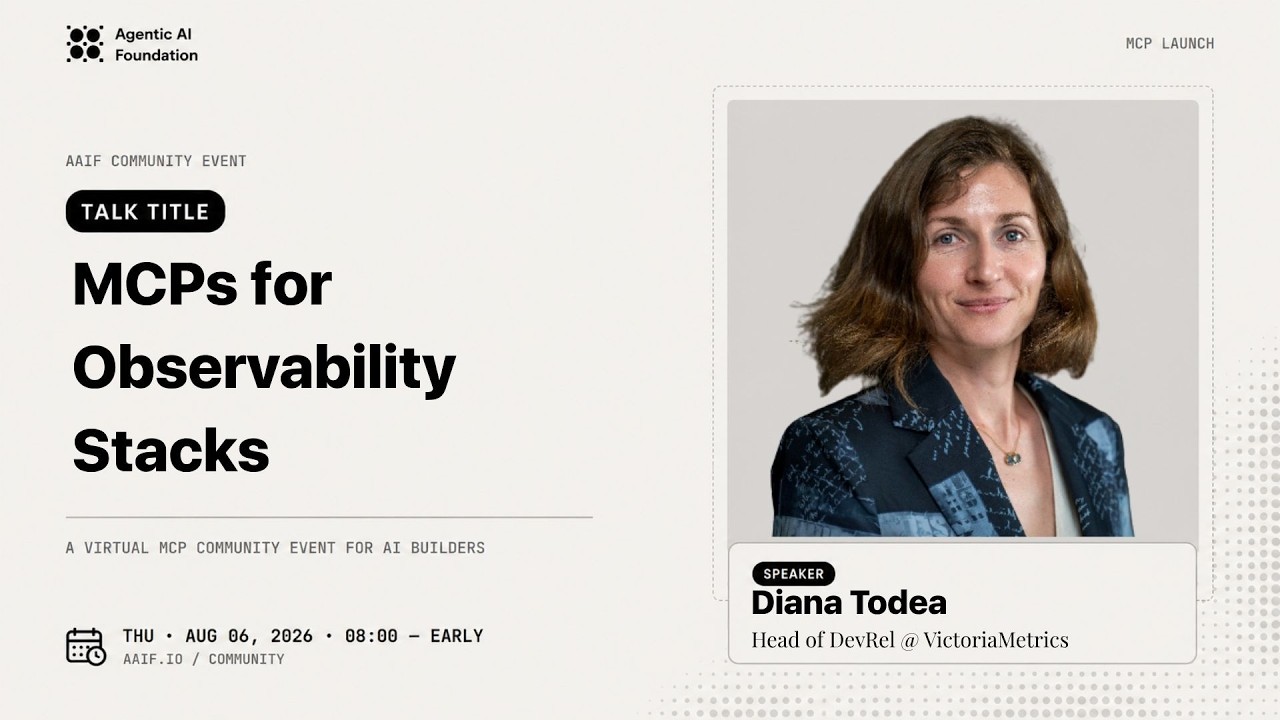
MCPs for Observability Stacks

MCPs for Observability Stacks

Diana Todea, Head of Developer Relations at VictoriaMetrics, demonstrates how Model-Controller-Pair (MCP) servers enhance observability stacks for faster, smarter troubleshooting. She highlights the use of AI-driven anomaly detection, natural language querying, and customizable "skills" to investigate production issues, manage metrics, and generate alerts, showcasing practical applications with two interconnected MCP servers.

Jeff Dean: The 1% Rule for Building in AI

Jeff Dean: The 1% Rule for Building in AI

Jeff Dean discusses the evolution of AI, drawing parallels between Google's past breakthroughs (like fitting search in RAM and the origin of TPUs) and current challenges. He emphasizes that AI is becoming an energy problem, driving the need for specialized inference hardware. Dean highlights 'context engineering' and multi-agent systems as crucial for long-running, complex AI tasks, and offers advice for startups on finding niches where they can outperform larger entities by focusing on specific domains, data, and models. He stresses the importance of clear specifications for agents and 'taste' in problem selection, encouraging founders to question fundamental assumptions and automate the scientific method to build 'AI that builds AI.'

Jensen Huang: The Mindset That Built NVIDIA

Jensen Huang: The Mindset That Built NVIDIA

Jensen Huang, CEO of NVIDIA, shares critical lessons from NVIDIA's journey, emphasizing how early failures and a commitment to learning new technologies, like purchasing textbooks from Fry's to pivot the company, laid the groundwork for their success. He discusses NVIDIA's strategic vision, driven by accelerating algorithm domains and seeing AlexNet as a universal function approximator, which led to a reinvention of the computing stack. Huang also explores the future of AI with agents, the importance of fine-grained control, and the "Linux moment" of open-source AI, while also forecasting the rise of physical AI and job creation. He concludes with profound advice on resilience, systems thinking, and the "how hard can it be?" mindset for aspiring entrepreneurs in this unprecedented era of technological reset.

How Two French Engineers In New York Built The Company That Monitors The Entire Cloud

How Two French Engineers In New York Built The Company That Monitors The Entire Cloud

Datadog CEO Olivier Pomel shares his journey, emphasizing the company's evolution from a DevOps insight to a public tech giant. He discusses the resilience required to overcome early rejections, his hands-on leadership style focused on raw customer feedback, and how Datadog is rapidly adapting to the AI revolution by prioritizing automation and faster iteration in product development and internal processes. Pomel also offers candid advice on co-founder relationships and the critical importance of moving quickly in both hiring and firing.

Why Netflix is betting on systems thinkers—not specialists—in the AI era | Elizabeth Stone (CPTO)

Why Netflix is betting on systems thinkers—not specialists—in the AI era | Elizabeth Stone (CPTO)

Elizabeth Stone, Netflix CPTO, discusses how AI is transforming product development and company culture. She highlights the increasing importance of "systems thinking," managing the influx of AI-generated output with clear guardrails, fostering "AI fluency" across all roles, and maintaining Netflix's unique "excellence as an operating system" through high talent density and a comfort with risk-taking. The conversation also explores AI's impact on content creation, the future of entertainment, and talent management.

The new post-quantum cryptography executive order. Plus: What is Q-Day, really?

The new post-quantum cryptography executive order. Plus: What is Q-Day, really?

This episode delves into Q-Day, the anticipated future when quantum computers can break public key cryptography, and the U.S. Executive Order accelerating the transition to post-quantum cryptography. Experts discuss why Q-Day is a gradual process rather than a sudden event, the critical importance of "crypto-agility" as a long-term strategy, and the necessity for organizations to begin immediate discovery and planning to secure data against "collect now, decrypt later" threats. The discussion also touches upon the broader, transformative benefits of quantum computing beyond just security.