Why AI Agents Could Finally Reinvent the Credit Card
Max Levchin and Alex Rampell dive into 25 years of fintech evolution, from the surprising persistence of the card interface and the origins of Affirm's unique 'real 0% APR' model and negative customer acquisition cost, to the future prospects of AI-driven agentic payments versus shopping.
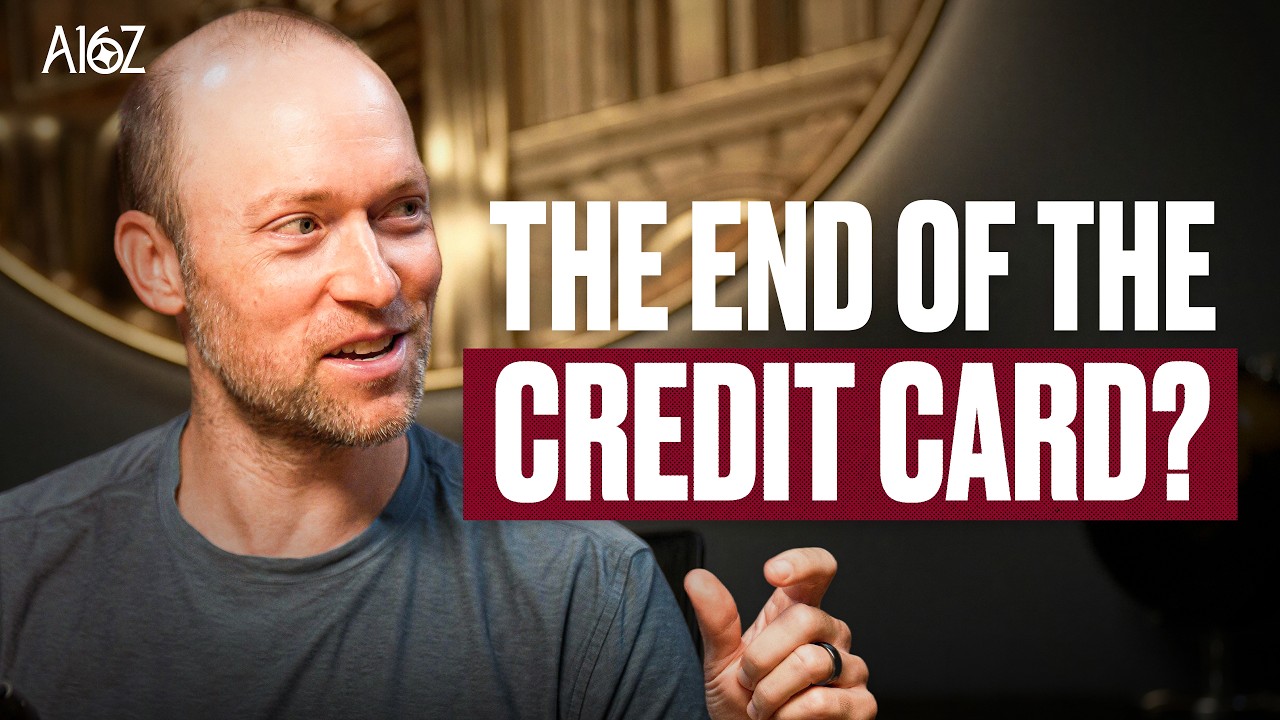
Max Levchin (Affirm Co-Founder and CEO) and Alex Rampell (a16z General Partner) reflect on 25 years of fintech, discussing surprising evolutions, the origins of Affirm, and the future of agentic commerce.
Evolution and Surprises in Payments
Alex Rampell highlights the unexpected success of Apple Pay and Google Pay, attributing their widespread adoption to a bizarre confluence of factors: a merchant liability shift forcing EMV chip terminal upgrades, the rise of ubiquitous mobile phones, and the impact of COVID-19 accelerating contactless payments. These new terminals inherently supported tap-to-pay, inadvertently changing consumer behavior. Max Levchin adds that despite these advances, the fundamental 60-year-old rules of payments, such as Visa/Mastercard’s rigid 2.5-second transaction limit, remain surprisingly intact, hindering true innovation in processing.
Both agree that the payments market is incredibly vast; even seemingly niche areas can become multi-hundred-billion-dollar markets. However, they observe an inverse relationship between transaction value and profit margin, with smaller dollar amounts often yielding higher revenue opportunities (e.g., quick-serve restaurants leveraging prepaid solutions like Starbucks Pay to avoid recurring transaction fees).
They discuss the elusive ideal payment interface, noting that the credit card remains the “singular best user interface ever created” due to its reliability and convenience. Past innovations like a gas station ‘wand’ or Amazon’s palm payment failed to displace it because they offered only marginal improvements in speed or convenience, underscoring the critical mass required for payment innovation to succeed.
Cryptocurrency and the ‘Coffee Test’
Max, a co-founder of PayPal, recounts the early days of digital payments, including the failure of DigiCash due to a lack of product-market fit for anonymity, and PayPal’s success by prioritizing convenience over anonymity. Regarding cryptocurrency, he was impressed by Bitcoin’s solution to the Byzantine General Problem but remains unconvinced of its viability as a mainstream payment method for everyday transactions (the “cup of coffee test”). He acknowledges its success as a commodity and store of value, citing stablecoins as a clear use case, but points out that the friction of using crypto for small purchases prevents widespread adoption. Convenience, he argues, trumps cost as transaction amounts decrease.
The Genesis of Affirm: Solving the ‘Pajama Problem’
Recalling the inception of Affirm in 2011, Alex and Max trace the “idea maze.” The initial problem statement was the “pajama problem”: how to facilitate mobile purchases when a credit card is not readily available. This evolved into the concept of “pay with your identity,” leveraging social data for credit underwriting—a modern take on the historical “general store” model where trust was based on community knowledge. Max, recovering from his social media venture (Slide), sought to apply machine learning to build a robust credit scoring system, harkening back to his anti-fraud work at PayPal.
Achieving Product-Market Fit
Affirm’s early attempts, like a 1-800-Flowers demo where customers could “pay with Facebook,” struggled due to low conversion rates and merchant reluctance to accept a high 7% Merchant Discount Rate (MDR) for a post-payment option that appeared after product selection. This led to a period of “40 years in the desert” where the team searched for product-market fit.
The breakthrough came with Beautylish, an online cosmetics retailer. By integrating Affirm’s offer up-funnel (before product selection), indicating customers could pay in installments, Beautylish saw a 30% increase in conversion. This pivotal insight revealed that Affirm was not merely an alternative payment method, but a tool to create demand by expanding customer budgets. This model thrived with direct-to-consumer (D2C) brands, especially mattress companies, which had high gross margins and long replacement cycles, making them willing to absorb Affirm’s fees to drive sales.
Affirm’s Unique Value Proposition Today
Max emphasizes Affirm’s commitment to “real 0% APR” loans, contrasting them sharply with “fake 0%” deferred interest credit cards that retroactively charge interest if a payment is missed. Affirm’s transparent, no-late-fees model builds consumer trust. Alex highlights Affirm’s unique business advantage: a negative customer acquisition cost (CAC). Merchants actively pay Affirm to offer financing because it drives higher conversion and average order value, effectively allowing Affirm to be “paid to acquire a customer.” This robust customer relationship, spanning multiple payments, allows Affirm to develop new financial products and services, acting as a direct-to-consumer lender while handling the burden of customer support and collections for merchants.
The PayPal Mafia Phenomenon
Reflecting on the enduring legacy of the “PayPal Mafia,” Max attributes the high success rate of its alumni (founders of YouTube, Yelp, LinkedIn, etc.) to a deliberate hiring strategy: seeking out individuals who were ambitious entrepreneurs at heart. Crucially, the intense, early days at PayPal fostered deep, intimate knowledge of each other’s true selves—their strengths, weaknesses, doubts, and resilience. This intimate understanding, seeing each other as “humans, not gods,” provided a powerful inspiration for subsequent ventures, instilling confidence that if their peers could tackle monumental challenges, they could too.
The Future of Agentic Commerce and Payments
Looking ahead, Max expresses strong optimism for “agentic payments”—where AI intelligently selects the optimal payment method (e.g., specific credit cards based on terms, rewards) for a transaction—but is more skeptical about “agentic shopping” (AI choosing what to buy). He believes people want to participate in subjective purchase decisions, especially for passion-driven items like bike parts. However, he acknowledges that AI could be invaluable for highly objective purchases, such as finding the lowest price for a specific product SKU. Alex supports this, noting that an agent could optimize purchases for those who prioritize time over money, similar to price comparison tools like CamelCamelCamel.
They conclude that while agentic shopping for subjective items faces significant hurdles (trust in AI’s preferences, return logistics for wrong purchases), humanity is already conditioned for some forms of agentic commerce. Instacart, for instance, demonstrates a widely accepted model where a human agent (the shopper) makes autonomous purchasing decisions (e.g., substituting milk brands), proving that outsourcing some purchasing decisions can work effectively. The future will involve AI navigating these complexities, but the full integration of agentic commerce might be more protracted than some predict.