Data science

Evals in AI: A Deep Dive — Tejas Kumar, IBM

Evals in AI: A Deep Dive — Tejas Kumar, IBM

This deep dive into AI evaluation (evals) starts by clarifying their role in providing ahead-of-time reliability and security for non-deterministic systems, contrasted with just-in-time harnesses. Tejas Kumar defines evals as "fuzzy unit tests" and outlines their core components: test cases, expected behavior, a judge, and aggregation. He explores various evaluation techniques, emphasizing the challenges and biases of using LLMs as judges, such as position bias, sycophancy, self-preference, and verbosity. The presentation details a practical methodology for calibrating LLM judges against human verdicts using a "golden dataset" to achieve an 80-85% agreement threshold, which can then be enforced as a CI/CD gate. A live coding demonstration illustrates the evolution from simple string matching to a policy-aware LLM judge, showcasing how refining policy and incorporating RAG (Retrieval Augmented Generation) via OpenRAG dramatically improves decision-making. The discussion also covers strategies for maintaining living datasets in production and managing evaluation costs.
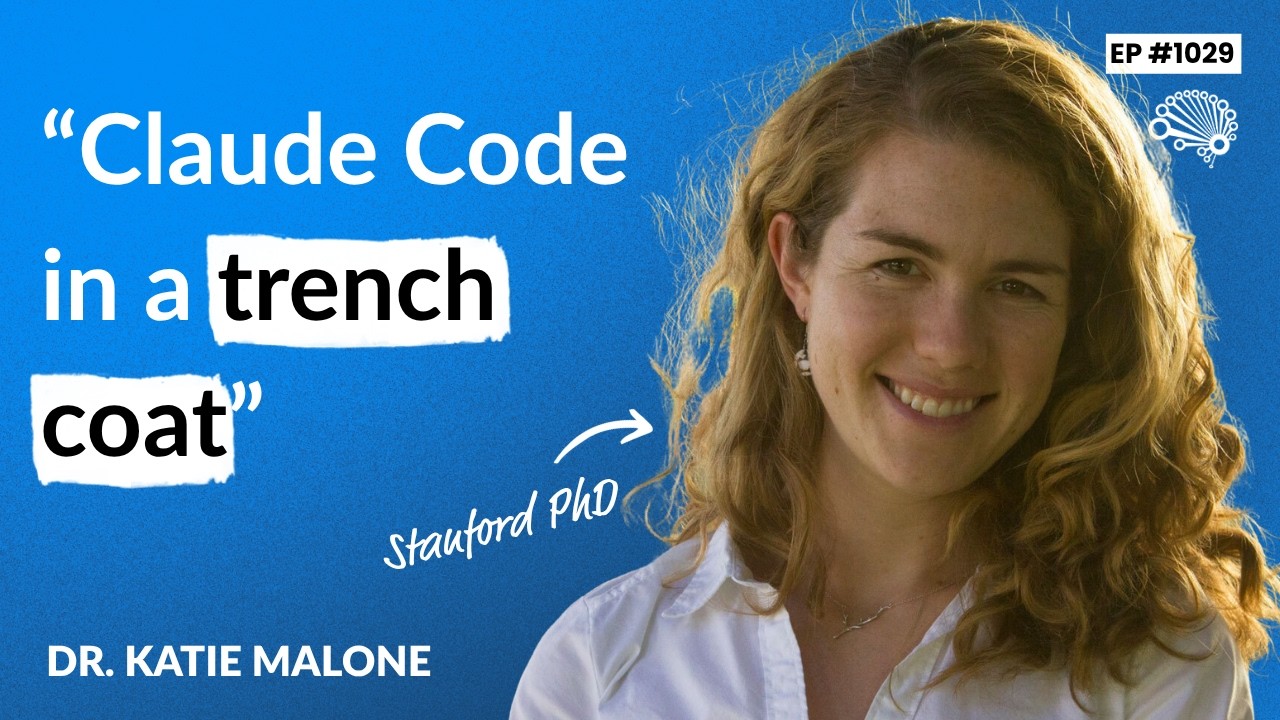
Why AI Makes You Worse at the Jobs It Can't Do (with Katie Malone)

Why AI Makes You Worse at the Jobs It Can't Do (with Katie Malone)

Dr. Katie Malone, host of *Linear Digressions*, explains how AI enabled her to relaunch her podcast after a 5.5-year hiatus. She argues that people management and AI agent management are fundamentally the same skill, highlighting the importance of defining tasks, setting acceptance criteria, and 'trust but verify'. Malone discusses the implications of 'AI slop' and 'process slop' in organizations and describes how a "Claude Code in a trench coat" agent now produces her show. She also delves into fascinating data paradoxes, including Bainbridge's Ironies of Automation, Simpsons Paradox, and Benford's Law, emphasizing how human expertise can erode with increasing automation and the counter-intuitive patterns in natural data.

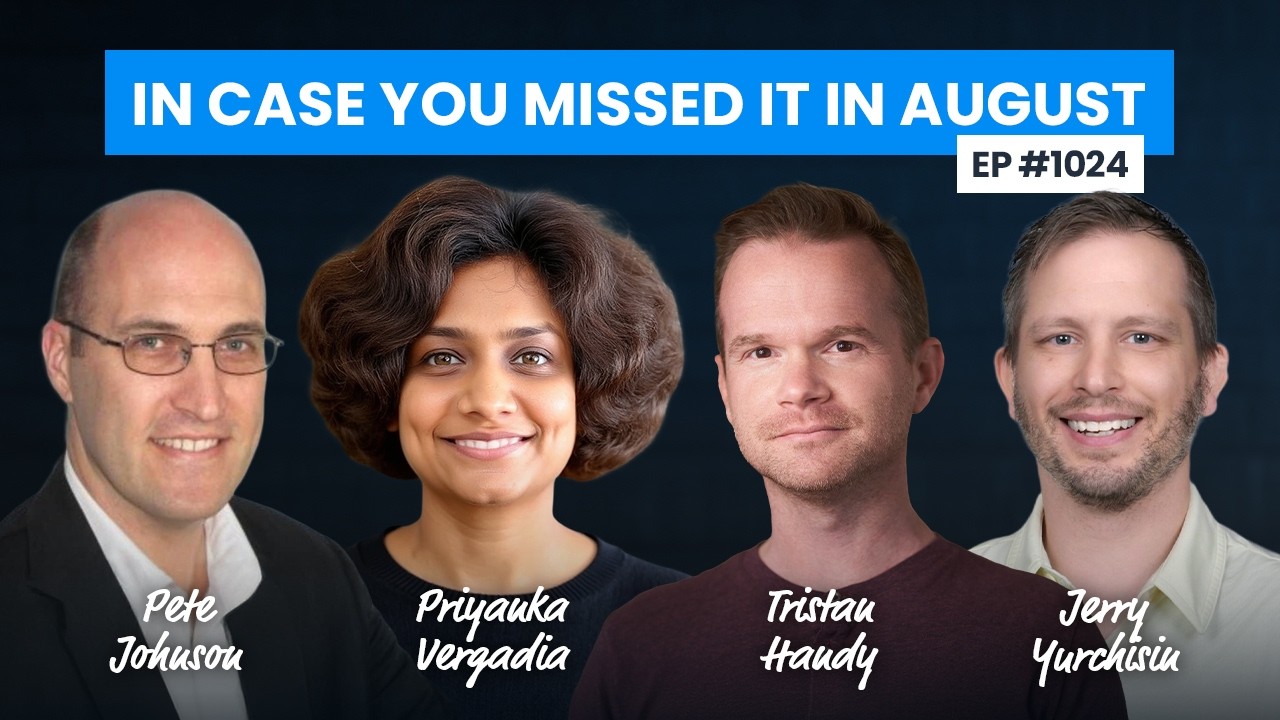
In Case You Missed It in August 2026 (Ep. 1024 with Jon Krohn)

In Case You Missed It in August 2026 (Ep. 1024 with Jon Krohn)

This episode explores the critical gap between AI investment and return, featuring insights from industry leaders. It covers why most organizations fail to see ROI from AI, the crucial role of mathematical optimization in agentic AI to ensure constraint adherence, practical strategies for structuring AI skills in tools like Claude for quality output, and a 10-20-70 budget framework emphasizing upskilling. Additionally, it delves into the growing importance of the semantic layer for analytics agents to ensure consistent data interpretation and efficiency in large enterprises.

This CPO regrets that product management exists | Tom Verrilli (CPO of Whatnot)

This CPO regrets that product management exists | Tom Verrilli (CPO of Whatnot)

Tom Verrilli, CPO at Whatnot, discusses his controversial stance that "we regret product management exists," advocating for a leaner, more hands-on PM approach. He delves into how Whatnot structures its product team, its rigorous hiring process focused on deep systems thinking and IC work, and the transformative impact of AI on product and data science functions. Verrilli also shares mental models for balancing strategy and iteration, navigating the CPO-founder relationship, and key lessons from his time at Twitter, emphasizing the importance of core PM skills in an AI-driven world.

What Actually Makes an Algorithm Terrifying (with Cathy O'Neil)

What Actually Makes an Algorithm Terrifying (with Cathy O'Neil)

Dr. Cathy O'Neil, author of "Weapons of Math Destruction," asserts that terrifying algorithms are defined by secrecy, unaccountability, and a lack of opt-out, not mathematical complexity. She details how Taylorism's labor degradation now extends to white-collar jobs via AI surveillance. O'Neil discusses her firms, ORCAA and OCEAN, which provide statistical evidence for lawsuits against tech giants and advocate for algorithmic accountability through "cockpits" of metrics and transparent auditing, urging collective action against unchecked technological power.

Why Netflix is betting on systems thinkers—not specialists—in the AI era | Elizabeth Stone (CPTO)

Why Netflix is betting on systems thinkers—not specialists—in the AI era | Elizabeth Stone (CPTO)

Elizabeth Stone, Netflix CPTO, discusses how AI is transforming product development and company culture. She highlights the increasing importance of "systems thinking," managing the influx of AI-generated output with clear guardrails, fostering "AI fluency" across all roles, and maintaining Netflix's unique "excellence as an operating system" through high talent density and a comfort with risk-taking. The conversation also explores AI's impact on content creation, the future of entertainment, and talent management.