Why a Tenured Professor Went Back to School for AI (with John Renne)
John Renne, a tenured professor of real estate and urban planning at Tulane University, explains how returning to school for a master's in AI transformed his research on transit-oriented development, from analyzing 4,500 U.S. train stations to a global database of over 110,000, and how computer vision can now rate how attractive a street is. He also covers teaching vibe coding to urban planning undergraduates and making the case for AI-led oral exams over AI detectors.
Going back to school at a senior career stage
After years of analysis in Excel and SPSS, John Renne found his skills falling behind the younger PhD students and junior colleagues he worked with. Colleagues used R, and the newer students had learned Python, so he set out to close the gap. Instead of a generic online certificate, he enrolled in the new master’s in AI at Florida Atlantic University, starting with two undergraduate Python courses to qualify and then taking one graduate class per semester while keeping his full-time professorship. Taking two classes at once proved too much. He is now finishing his master’s thesis, and he is clear that he did not need the degree for his tenured position. He pursued it for the enjoyment and for the boost it gives across academia, consulting, and his entrepreneurial projects.
Understanding the machinery behind vibe coding
He sees a real difference between using AI-generated code and understanding it. Vibe coding lets anyone drive the car, but without knowing pandas, GeoPandas, and the architecture of machine learning models, it is hard to tell whether a model is doing what it should. Having learned the fundamentals before the current era, he can look under the hood, check the output, and catch errors that a non-specialist would miss. He has watched the field move from classical data science to the ChatGPT era and now to vibe coding in just a few years.
He also values what large language models do with academic jargon. Urban planning, economics, and engineering each have their own technical vocabulary, which he argues has long insulated academics from outsiders. Asking a model to explain a term, then to give an example or to explain it as if to a middle schooler, feels to him like a genie in a bottle that removes that barrier.
Progress, risk, and an optimistic outlook
The discussion turned to the pace of AI progress. He points to his own work, where AI now generates floor plans and designs buildings in ways he would not have predicted. Scaling transformer architectures, rather than major new learning theory, produced the leap from narrow, task-specific models to general capabilities, and the researchers building these systems were themselves surprised. The old technical moat that came from specialized skills like pandas is shrinking, which he finds both threatening and exciting. He compares the present moment to imagining life in the late 1800s, when most Americans were farmers, and argues that the answer is to make the best of the change, since the genie cannot be put back in the bottle.
He is optimistic that market incentives can drive the shift to sustainable development, and he sees AI as a tool for climate-related problems such as flooding, wildfire, and drought. Home and life in both West Palm Beach and New Orleans make these threats concrete for him.
Transit-oriented development as a historical and economic argument
He describes transit-oriented development as the way cities were built before cars dominated. Medieval cities were walkable, with a crossing time of about an hour. Rail lines and stations later allowed walkable neighborhoods to form along transit corridors, as in Scandinavia, Europe, Japan, and older American cities such as New York, Boston, and Philadelphia. After World War II, the U.S. prioritized highways and sprawl, which produced congestion that cannot be built away because of induced demand. Expanding roads simply encourages more low-density development and more traffic over the long run.
The modern term traces to the New Urbanism movement of the 1980s and to the architect and planner Peter Calthorpe, whose 1993 book The Next American Metropolis defined it. Research by Peter Newman and Jeff Kenworthy, who were attacked by academics in the 1990s, showed the value of compact cities. The shift came after the Great Recession, when developers discovered that walkable, transit-oriented projects were the most profitable form of real estate development. Gentrification and high prices follow from strong demand against limited supply, and he argues that the answer is more housing supply, as in the book Abundance by Ezra Klein and Derek Thompson.
Scaling the research with data and computer vision
His early work studied about 104 transit-oriented developments identified in a survey by Robert Cervero, the Berkeley researcher. He compared their travel behavior, car ownership, income, race, ethnicity, and tenure with metropolitan averages. As an assistant professor, he extended the approach to all roughly 4,500 U.S. train station areas. He classified them by density, which requires about 4,000 households within a half-mile radius, and by walkability, using a Walk Score of 70 or higher. About a third of U.S. stations qualified. Those areas often generate 60 to 70 percent of trips by walking, cycling, and transit, which is orders of magnitude more sustainable than auto-dependent neighborhoods. Christopher Leinberger’s research also shows that walkable urban places generate a disproportionate share of GDP.
When the data grew to include National Park Service historic property records, property values, and location-based social media data from Spatial.ai, Excel and SPSS could no longer handle the volume, and he moved to Python. A joint project with Shiling Zhao at the University of Florida used deep learning on aerial imagery, Google Street View, parcel data, OpenStreetMap, and transit schedules to measure the built environment in five dimensions: density, diversity, design, destinations, and distance to transit. He notes that this work would once have required a multimillion-dollar grant and years of manual annotation.
His master’s thesis extends this into street-level perception. Using models such as TabPFN, XGBoost, and OLS, he trains systems to rate street images on dimensions that people judge intuitively, such as a beautiful Main Street with brick sidewalks, flowers, benches, and cafes versus a wide arterial with few sidewalks and heavy traffic. He then links those ratings to retail lease values, finding that stores are worth more in highly rated places. For a mayor weighing a $5 million Main Street investment against losing ground to neighboring communities, this turns subjective streetscape quality into something that can be measured in a cost-benefit analysis.
A global database and the changing economics of research
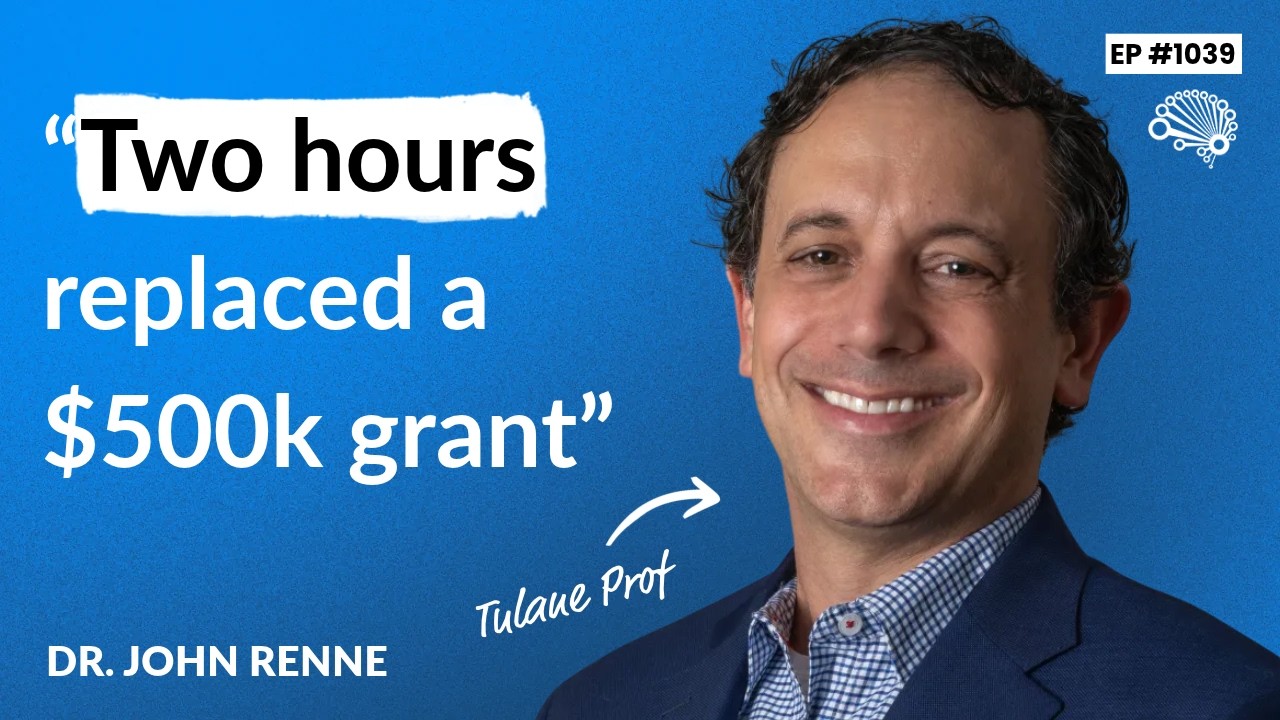
While on sabbatical at Oxford, he began planning a network of colleagues who would replicate the U.S. analysis in other countries. Coordinating that across the world was impractical, but with AI coding tools he extracted data on more than 110,000 train stations worldwide from OpenStreetMap and other geospatial sources. He is writing a book on this work with Billy Fields, tentatively titled Green TOD, to be published by Cambridge University Press. He estimates that a two-hour working session now produces what once required a half-million-dollar grant, several years, and a team of postdocs and PhD students.
He is cautious about where this leads. He values mentoring students and building a legacy, and he is exploring a new doctoral program at Tulane’s School of Architecture and Built Environment. He has also applied for a major grant with colleagues at TU Delft, Oxford, and Cranfield to model energy use in transportation, land use, and building systems in order to design low-carbon communities. More computing power means more ambitious questions, not fewer collaborators.
Teaching AI to urban planning students at Tulane
He co-teaches an undergraduate course with Jon Krohn at Tulane that he believes is the first AI course in an undergraduate real estate or urban planning program. The students are not computer science, math, or data science majors, and most had no coding background. Drawing on Ed Donner’s Udemy course, they built a video game in their first session with Cursor, then moved on to a Kanban board and personal websites. Their semester project is a public-facing chatbot grounded in real data that helps New Orleans residents understand property assessments. The project came from a colleague who ran the real estate program and campaigned for city assessor.
The tool is intended to work in three stages. It first explains how assessments are performed and how property tax depends on them, and where to challenge a valuation. Next, it explains how the official assessment relates to comparable properties on platforms such as Zillow. Finally, if feasible, it grounds assessments in comparable sales data. Assessments can change sharply: in Orleans Parish, citywide values rose about 23 percent in 2023, but increases were not uniform, so some owners saw much larger jumps. Renters also bear these costs when landlords pass property tax increases through as higher rent.
AI-led oral exams as an alternative to AI detectors
He sees a crisis in assessment. Writing became the standard method for large classes because oral examinations do not scale. Now that AI can produce essays, instructors can no longer trust them. He describes a process in which he extracted entire Canvas course outputs and asked an AI model to infer student learning outcomes, a task that matters for program accreditation. His colleague Daryl Glade and he then began working on oral exams that AI can administer at scale. Through oralexam.ai, a student submits an essay, receives a five- to seven-minute AI-led video interview about its content, and the instructor receives an assessment of whether the student understands the work. The approach uses AI to counter AI without outsourcing the learning itself.
He is skeptical of AI detectors. False positives, which he estimates at four to five percent, can accuse students of cheating and damage trust in their institutions. Across a university of 30,000 students, that produces thousands of cases to adjudicate, and in some instances universities have been sued. He describes the situation as an arms race that detectors cannot win, because AI keeps getting better at evading them.