Zynga Founder: Consumer Is Not Investible Right Now - Thats Why You Should Build It
Mark Pincus, founder of Zynga, discusses the product philosophy behind "Life at the Speed of Play," focusing on consumer innovation in the AI age. He introduces the "Proven, Better, New" framework, shares insights on founder mode, and predicts a future where "intelligence on tap" driven by free AI compute will unlock unprecedented opportunities for new "internet treasures," despite current investor skepticism in the consumer space.
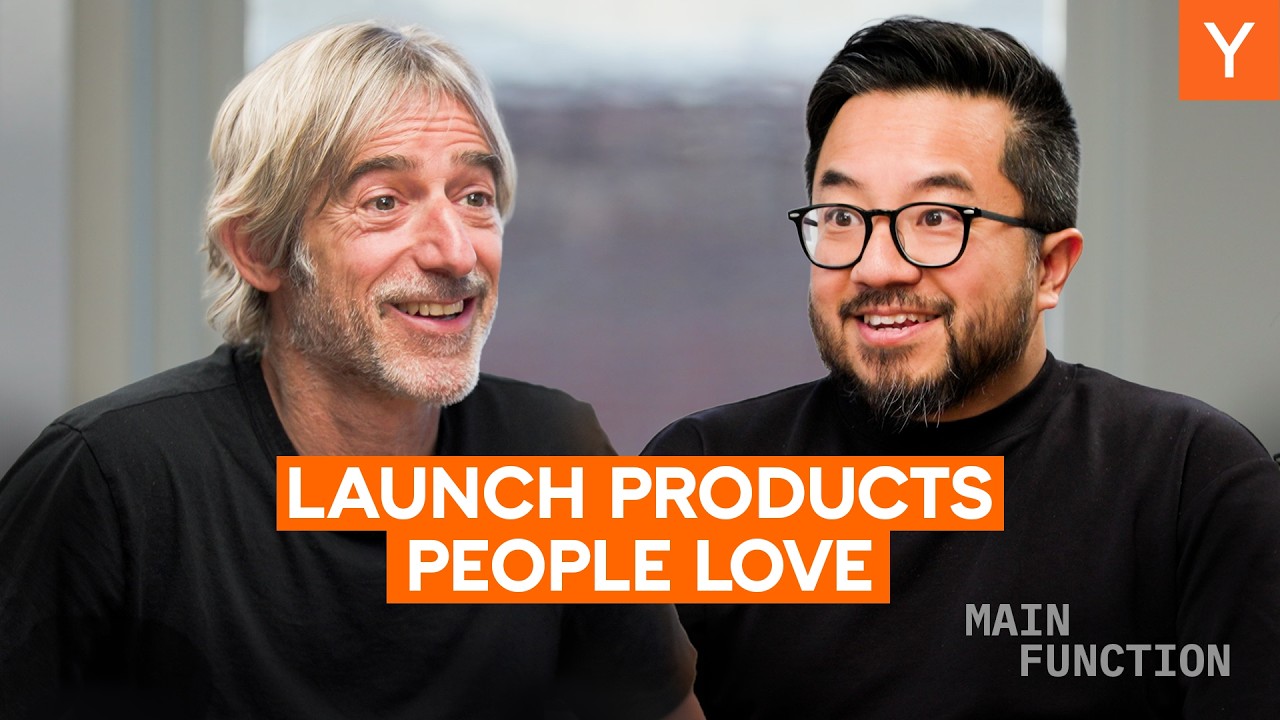
Mark Pincus, founder of Zynga and author of “Life at the Speed of Play,” shares his distilled product philosophy and founder playbook, emphasizing a holistic “full-stack” approach from customer understanding to sustainable strategy. His core tenet: “Make something people love,” starting by making something you love.
The Eras of the Internet and AI’s Emergence
Pincus highlights his unique perspective, having navigated three major internet eras:
- The early web (e.g., Freeloader, 1995).
- Social and mobile (e.g., Tribe, Zynga).
- The current AI revolution.
He traces the origin of social networking to Napster’s “4.5 million machines” moment, which first allowed users to “look through the network at each other,” fostering a “people web.” He contrasts this with early failures like his own “Tribe,” which missed the crucial element of trust that later propelled platforms like Facebook. Pincus draws a parallel between Napster’s disruptive impact and the current “Opus 4.5” moment in AI, where advanced models like GPT-4 are becoming “peers” and offering “intelligence on tap.” He expresses frustration at the slow evolution of consumer AI products, desiring an always-on AI assistant akin to a “smart other person at the table.”
The “Proven, Better, New” Product Framework
A cornerstone of Pincus’s product philosophy is the “Proven, Better, New” framework for innovation:
- Proven: Identify what already works effectively in existing products (e.g., successful AI notetakers like Granola). “Legally copy” these proven mechanics without re-innovating, as they provide a reliable foundation.
- Better: Focus on improvements that would be universally recognized as superior by 100% of existing users (e.g., faster, cheaper, less friction). This is about optimizing existing functionality.
- New: This is the core “innovation zone”—a hypothesis about a differentiating feature (e.g., an always-on, passively listening AI). Pincus stresses that new ideas are highly likely to be wrong and should be tested without ego attachment. He notes that AI models excel at the “proven” aspect and are decent at “better,” but still fall short in generating truly “new” concepts, reaffirming the enduring human role in novel creation.
Consumer Products in the AI Age: Opportunity Amidst Skepticism
Despite many investors currently viewing consumer products as “not investable,” Pincus argues that the opportunity for new “internet treasures” enabled by AI has “never been greater.” He acknowledges the current “distribution problem” for consumer apps, where established viral paths are absent.
The Founder’s Mindset: Ego, Conviction, and “Fish Are Running”
Pincus emphasizes several key aspects of the founder’s mindset:
- Killing Ego: Founders must be prepared to abandon even deeply invested “bad ideas,” separating their personal identity from the product’s success. This requires maintaining passion for the overarching vision while being dispassionate about specific product variants.
- “When the Fish Are Running”: This metaphor describes the elusive moment of true product-market fit or “true signal,” where feedback loops are overwhelmingly positive, and the product’s success is undeniable. In such times, teams work tirelessly and effortlessly, driven by the palpable momentum. Pincus suggests going “slow to go fast,” building conviction before accelerating execution.
- Founder Mode: Inspired by Brian Chesky, Pincus defines “founder mode” as staying true to one’s instincts and vision, even when unpopular or lacking external validation. It means being “in the room” and deeply understanding the product better than anyone else (“leadership is presence, not absence”). Founder mode is about giving oneself permission to pivot frequently based on new learnings, provided the team shares the overarching mission and fosters a culture of intellectual honesty and curiosity. He asserts that “founder mode is for every founder,” not just the select few.
The Cost of Intelligence: Tokenmaxxing and the Future of “Free”
Pincus delves into the practicalities and future implications of AI costs:
- Tokenmaxxing: He discusses the high current cost of running frontier AI models (e.g., “a million dollars a year on tokens” for some advanced users), noting that many enterprises are struggling to see ROI from their AI investments.
- Rethinking Software Development: Pincus advocates for a shift in coding: instead of writing code that calls LLMs, founders should teach LLMs to write the necessary code directly. This approach can lead to “10 or 20 times less code” and greater customizability.
- Future of Free Compute: He anticipates a 10,000x increase in inference capabilities and a dramatic reduction in AI compute costs, eventually leading to an “intelligence on tap” future where AI processing is virtually free. This future aligns with the “business plan of free,” where anything that can be free will be free, as seen with Freeloader (free screensavers) and Zynga (free games). Pincus believes this will unleash a “consumer revolution” in 3-4 years, creating entirely new categories of “internet treasures” by embedding unlimited, free AI into services. He encourages founders to think about “how will all of these services be when that compute is basically free” to anticipate and build for this coming meta.