AI Coding Agents Change Software Development Forever
A discussion on the promise and limitations of coding agents, covering key challenges like verification and debugging, and exploring how they can support developers through improved abstraction, collaboration, and handling long-term tasks.
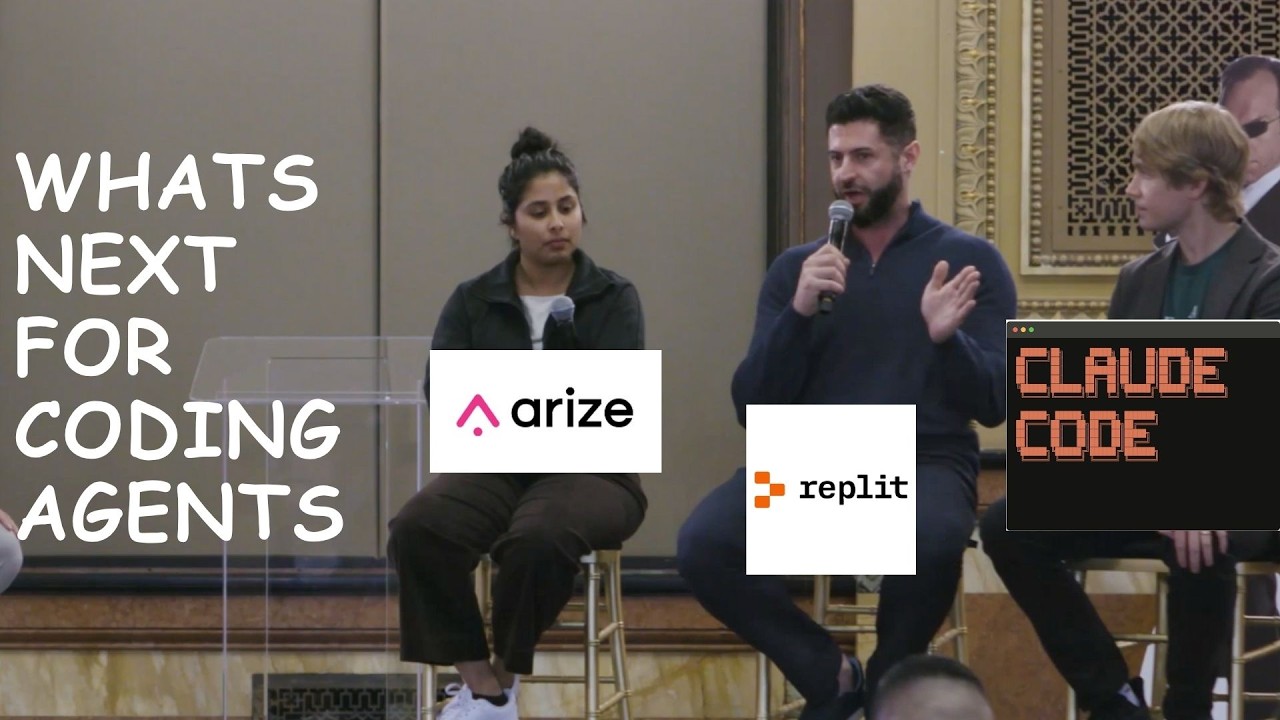
A central challenge for coding agents is striking the right balance between abstraction and control. While a command-line interface (CLI) is a universal tool for developers, an IDE provides a crucial layer for humans to review, understand, and debug an agent’s reasoning and edits. The ultimate goal is to abstract away the complexity, so users don’t even need to know an agent is at work. However, for technical users, the ability to dive into the details remains essential for building trust and verifying the output.
The Critical Hurdle of Verification
Verification is a primary bottleneck preventing coding agents from reaching the next level of autonomy. While models can now generate vast amounts of code very quickly, the ability to verify its correctness, performance, and reliability lags significantly.
Key aspects of the verification challenge include:
- Good Software Design: Agents, much like junior engineers, benefit from well-structured systems with clear separation of concerns and interpretable outputs between modules.
- Dependency Management: Agents currently struggle with complex dependency trees, sometimes introducing circular dependencies.
- Testing: A robust evaluation for a coding agent is its ability to not only write functional code but also to generate corresponding unit tests to validate its own work and improve the overall quality and edge case coverage.
- Code Longevity: A powerful, albeit lagging, indicator of a successful agent is whether its generated code remains in production months later, signifying it wasn’t just a temporary patch that created technical debt.
Debugging in the Age of Agents
Debugging code generated by AI introduces new challenges and requires new tools and techniques. The concept of “vibe debugging,” or intuitively fixing issues without deep analysis, is not yet effective.
- Readable Code: For human-in-the-loop debugging, agents must produce readable and maintainable code. Latency introduced by agent-generated code is another critical evaluation metric that is often overlooked.
- New Primitives: Agents allow for novel debugging approaches. For instance, a developer can simply delete a faulty block of code and ask the agent to regenerate it from scratch—a strategy that would be impractical with a human engineer.
- Agent-Native Tooling: Current debuggers like GDB are built for humans, not agents. The developer toolchain will need to evolve to become more AI-friendly, with new debuggers designed specifically for an agent-driven workflow.
- The “Whack-A-Mole” Problem: A common frustration is fixing one bug only to have another appear. To escape this loop, developers must be strategic, focusing “vibe coding” on isolated, leaf-node components of the codebase while applying rigorous engineering to the core logic. User experience features, such as extensive rollback capabilities, can also provide a safety net.
Best Practices for Agent-Human Collaboration
To maximize the effectiveness of coding agents, they should be treated less like a black box and more like a new teammate. This requires providing them with the right context and guardrails.
- Focused Context: Tools that allow developers to point an agent to specific files or directories for context are highly effective. This prevents the agent from making sprawling, uncoordinated changes across a large codebase.
- Onboarding Agents: As agents become more integrated, teams should develop onboarding materials for them, similar to how they would for a new engineer. This includes architectural overviews and documentation that give the agent a holistic understanding of the system, not just the code it’s touching.
- Leveraging Agents for Tedium: The good news is that agents can assist in creating the very documentation and tests they need to be effective, helping to enforce best practices at scale.
The Future: Long-Running Tasks and a Software Abundance
The prospect of agents handling long-running, week-long tasks is both exciting and daunting. This capability could unlock autonomous reliability engineers who manage on-call duties, fix bugs, and handle complex database migrations.
However, trust remains a major issue. For long-term tasks to be viable, agents need to provide status updates and visibility into their reasoning, much like a human collaborator. The paradigm must shift towards an asynchronous workflow where an agent can ask for help or clarification without getting completely blocked, allowing it to work on other tasks in parallel.
Ultimately, coding agents are a foundational technology. By making software creation more accessible and efficient, they will enable an explosion of new tools and solutions, fundamentally changing how we build.
Current Limitations
When asked what coding agents still do poorly, the panelists highlighted three key areas:
- Maintenance and Refactoring: Agents excel at generating new code (“slop”) but are not yet proficient at the essential tasks of refactoring, testing, and verification required for long-term code maintenance.
- Real-World Interaction: Agents lack the ability to interact with the physical world, such as making a phone call to book a reservation.
- Serving Non-Technical Users: While powerful for developers who can guide and debug them, coding agents are not yet reliable or trustworthy enough for non-technical users to employ them effectively.