Debugging

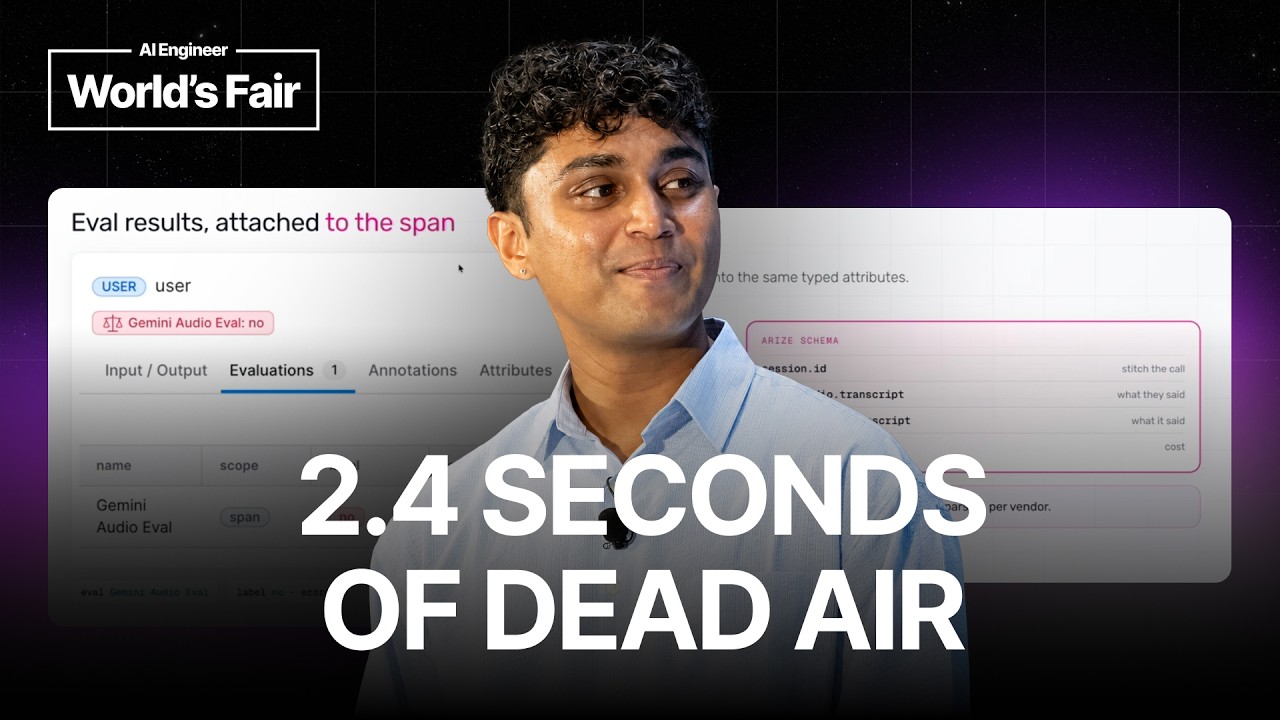
The Transcript Looked Fine. The Call Wasn't. — Debugging Voice Agents, Arize

The Transcript Looked Fine. The Call Wasn't. — Debugging Voice Agents, Arize

Fuad Ali from Arize AI explains why voice agents are uniquely challenging to debug, as critical issues like latency, interruptions, and tone are invisible in text logs. He presents a solution combining unified audio, transcript, and trace views with OpenInference semantic conventions and audio-native evaluations. The talk culminates in a vision for self-healing voice agents through automated observation, evaluation, and improvement cycles, demonstrating how to achieve robust, continuously improving AI voice systems.
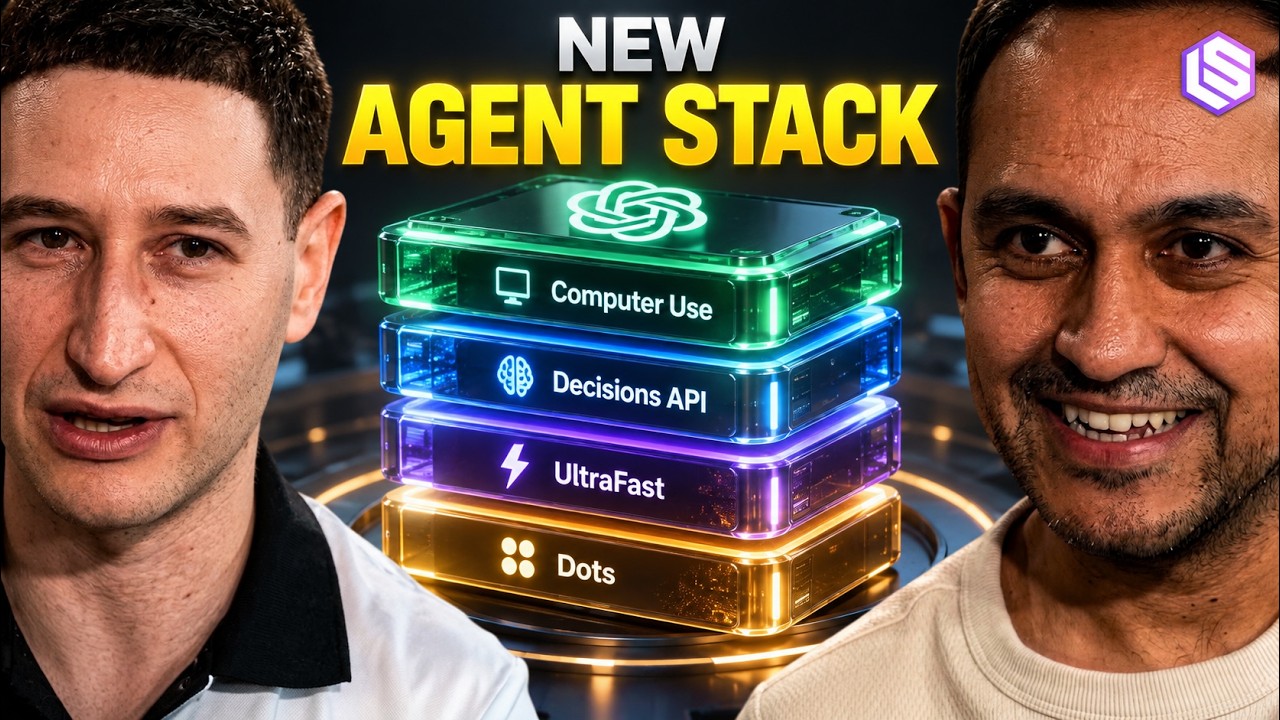
Inside OpenAI DevDay: Superhuman Computer Use, Decisions API, and the AI Cloud — Ari & Nikunj

Inside OpenAI DevDay: Superhuman Computer Use, Decisions API, and the AI Cloud — Ari & Nikunj

OpenAI has unveiled significant advancements in its AI agents and developer APIs, transforming Computer Use into a self-debugging system capable of superhuman speeds. Key innovations include multimodal interfaces, the Agents API for building on OpenAI's harness, and a new API stack featuring async tool calling, UltraFast inference, and the rapidly developed Decisions API for fast classification. These advancements, coupled with robust caching and context compaction, pave the way for an "AI cloud" with higher-level primitives for developers.

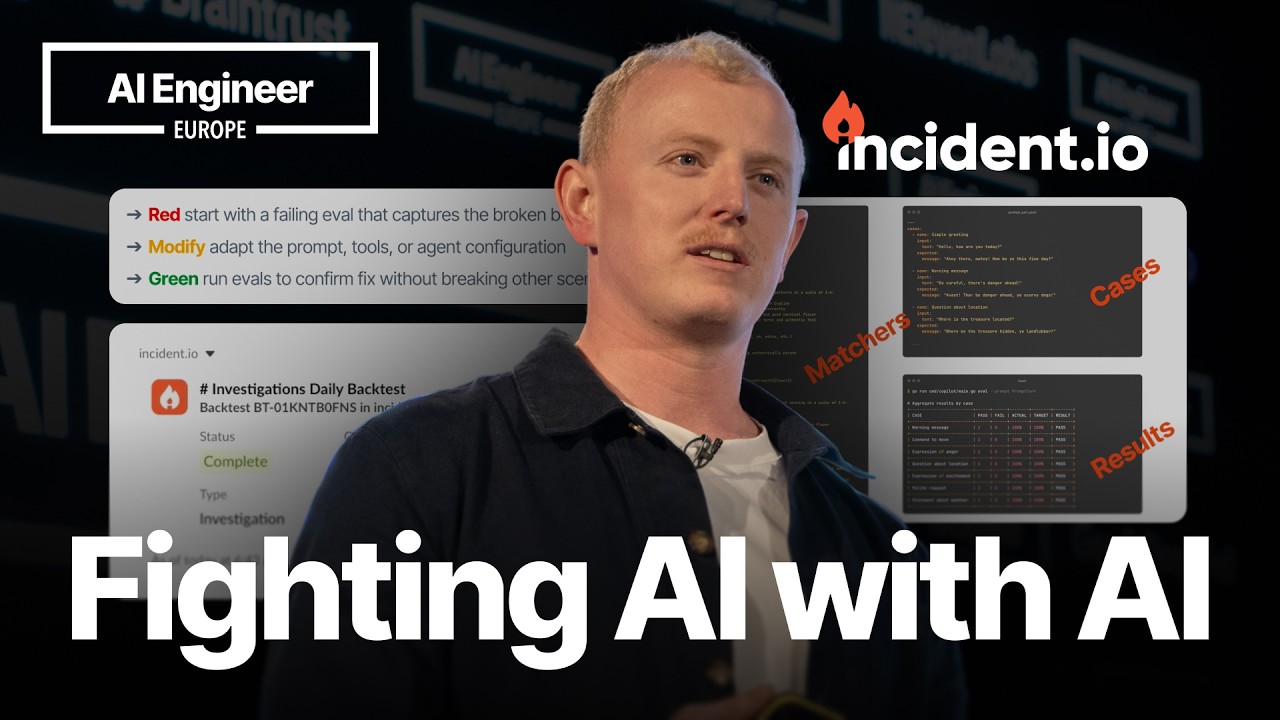
Fighting AI with AI — Lawrence Jones, Incident

Fighting AI with AI — Lawrence Jones, Incident

Lawrence Jones from Incident.io explains why their team needed AI to debug their complex AI SRE product. He details three powerful patterns: a CLI for agents to manage large evaluation files, serializing debug UIs into downloadable file systems for agent-based tracing, and multi-agent pipelines for fleet-scale failure analysis.

Everything You Need To Know About Agent Observability — Danny Gollapalli and Ben Hylak, Raindrop

Everything You Need To Know About Agent Observability — Danny Gollapalli and Ben Hylak, Raindrop

Agent failures are unlike traditional software failures. This workshop provides a practical framework for monitoring production agents, moving beyond evals to real-world observability by using explicit signals (errors, latency) and implicit signals (user frustration, refusals, self-diagnostics) to catch regressions and understand agent behavior.

How Debuggers Work • Sy Brand • GOTO 2025

How Debuggers Work • Sy Brand • GOTO 2025

Sy Brand demystifies the internal workings of native code debuggers, explaining how core features like breakpoints, stepping, stack unwinding, and variable inspection are implemented using operating system primitives, debug information formats like DWARF, and low-level hardware features.

Inside the AI Black Box

Inside the AI Black Box

Emmanuel Ameisen of Anthropic's interpretability team explains the inner workings of LLMs, drawing analogies to biology. He covers surprising findings on how models plan, represent concepts across languages, and the mechanistic causes of hallucinations, offering practical advice for developers on evaluation and post-training strategies.