A Bank Built Its Own Coding Agent. It Took Off — Felipe Felisola Caso & Francesco Galletta, Monzo
Felipe Felisola Caso and Francesco Galletta from Monzo explain how an internal Slack agent grew from a viral emoji trigger into a teammate authoring over 10% of merged PRs and running more than 1,800 tasks a day. They attribute its speed to existing platform capabilities, an MCP gateway, a sandboxed orchestration system suited to a regulated bank, and an agent designed as a composable building block for incidents, on-call data quality and non-engineer contributions.
Evals in AI: A Deep Dive — Tejas Kumar, IBM
This deep dive into AI evaluation (evals) starts by clarifying their role in providing ahead-of-time reliability and security for non-deterministic systems, contrasted with just-in-time harnesses. Tejas Kumar defines evals as "fuzzy unit tests" and outlines their core components: test cases, expected behavior, a judge, and aggregation. He explores various evaluation techniques, emphasizing the challenges and biases of using LLMs as judges, such as position bias, sycophancy, self-preference, and verbosity. The presentation details a practical methodology for calibrating LLM judges against human verdicts using a "golden dataset" to achieve an 80-85% agreement threshold, which can then be enforced as a CI/CD gate. A live coding demonstration illustrates the evolution from simple string matching to a policy-aware LLM judge, showcasing how refining policy and incorporating RAG (Retrieval Augmented Generation) via OpenRAG dramatically improves decision-making. The discussion also covers strategies for maintaining living datasets in production and managing evaluation costs.
Karthik Ranganathan of Yugabyte discusses the critical challenge of shared learning among AI agents, arguing that while per-agent memory is solved, true collective intelligence is not. He details Yugabyte's struggles in building agentic systems, highlighting the "lost context" problem and debunking five common misconceptions about agent memory. Ranganathan introduces Meko, an agent-native persistence layer designed to provide shared, governed, and traceable context through "data packs," drastically improving RAG pipeline faithfulness while reducing context size and token costs. Heather Downing demonstrates Meko's resumability and sharability features, showcasing its ability to foster collaborative learning and capture tribal knowledge across agents.
AI Engineer Paris 2026 Opening Keynotes: Mistral, Langfuse & Sizzy | Day 1
The AI Engineer Paris 2026 main stage featured discussions on the historical impact of AI as a general-purpose technology, the evolving landscape of AI engineering towards sophisticated "software factories," and Mistral AI's strategic vision for building frontier AI, ensuring agentic safety, and addressing data sovereignty through advanced models and infrastructure.
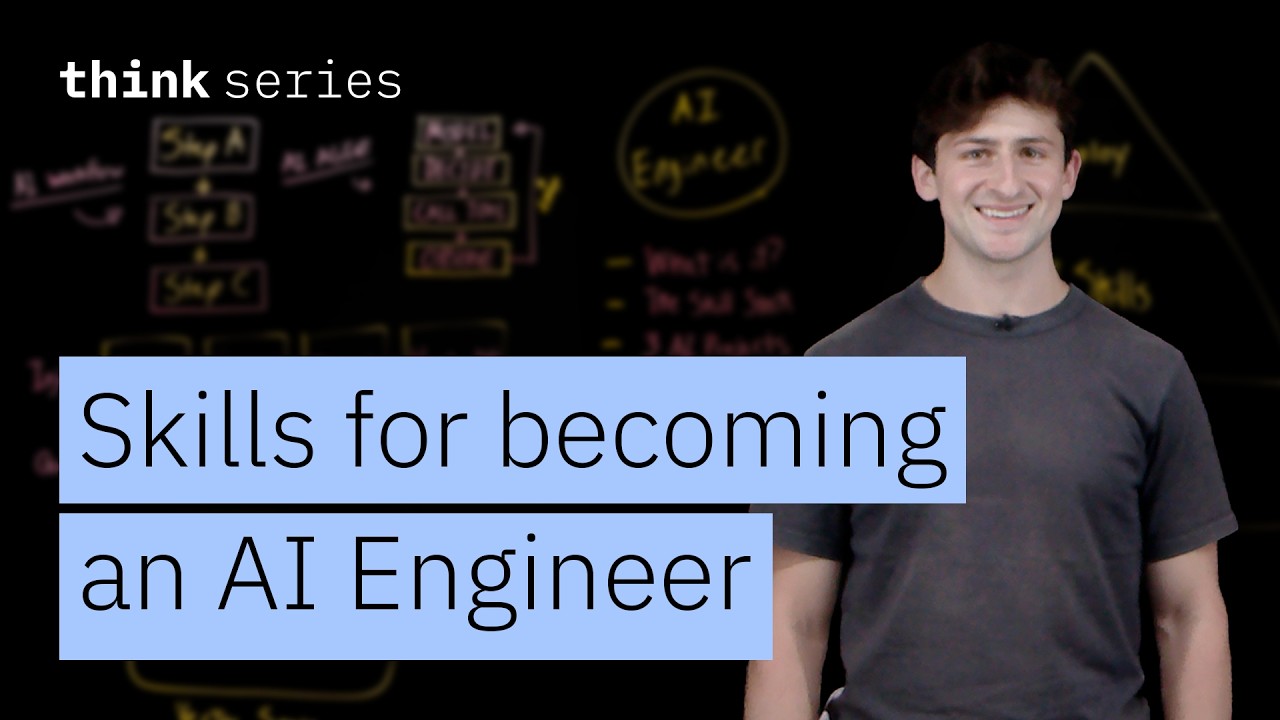
Essential Skills for Becoming an AI Engineer: RAG, AI Agents, & More
Cedric Clyburn outlines the essential skills for AI engineering, distinguishing it from ML research. He details a three-tier skill stack covering foundational programming (Python, Git, APIs), AI-specific techniques (embeddings, RAG, AI agents), and deployment strategies (containerization, observability). The discussion emphasizes judgment over code generation and highlights key use cases like RAG systems and agent-based solutions.
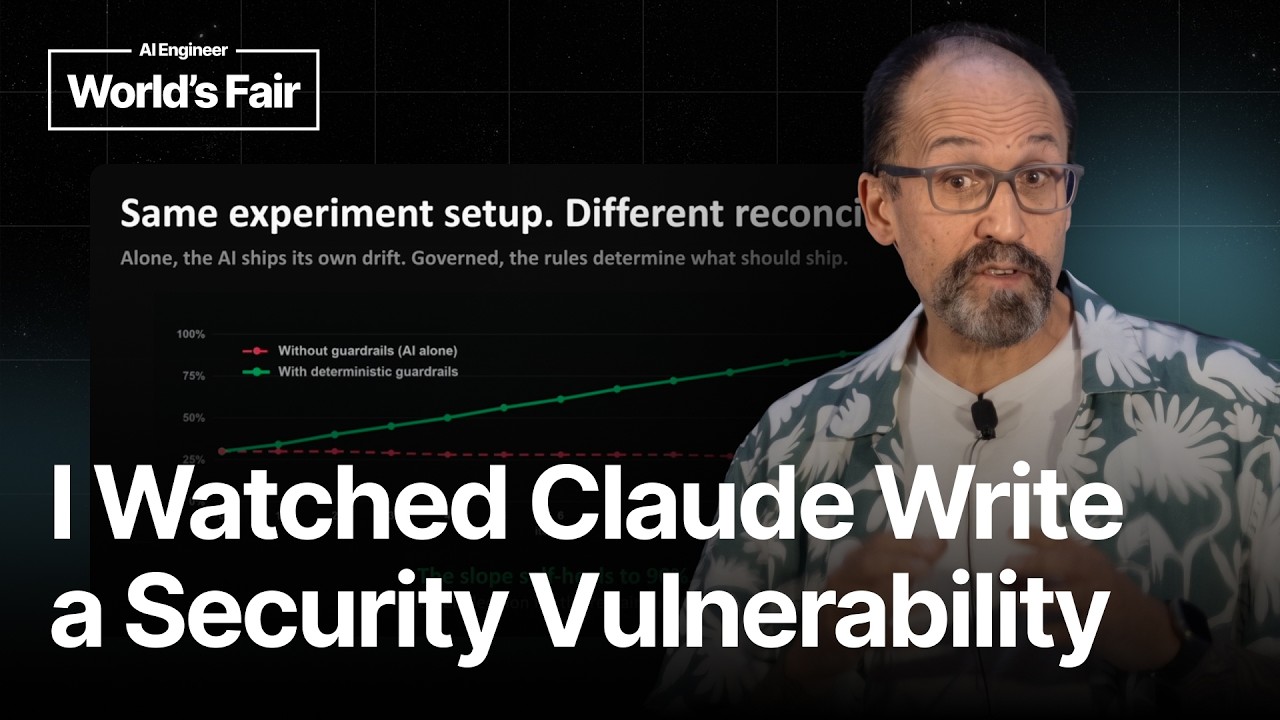
The Design-Code Roundtrip That Isn't — Jonathan Gordon, ReWeaver AI
Jonathan Gordon, with three decades in dev tools, unpacks why AI hasn't solved the design-code roundtrip problem. He introduces ReWeaver, a tool that uses deterministic guardrails to detect and manage "drift" between AI-generated code and design, ensuring fidelity and control across dimensions like accessibility and design consistency, ultimately advocating for humans to remain in control.