Teach Your Agent to Prove It's Done — Nick Nisi & Zack Proser, WorkOS
Nick Nisi and Zack Proser from WorkOS explore how to move "Beyond Done" with AI agents, ensuring their work is truly complete and reliable. They demonstrate building robust verification loops using custom CLIs, browser tools, and LLM judges, allowing agents to self-check and self-correct, preventing costly mistakes and accelerating development velocity for a technical audience.
OpenAI DevDay 2026 Keynote (FULL)
OpenAI's DevDay unveiled significant advancements including 'Dots' (always-on AI agents for personal and professional delegation), 'ChatGPT Spaces' (a collaborative platform for human-AI teams), and major model updates like GPT-6.1 Sol (cost-effective intelligence) and Astra Ultrafast (unprecedented speed). New developer tools, cloud-based Codex, enhanced APIs, and privacy features were also introduced, alongside strategies for distribution and monetization, underscoring OpenAI's vision of AI as a 'Renaissance' for human empowerment.
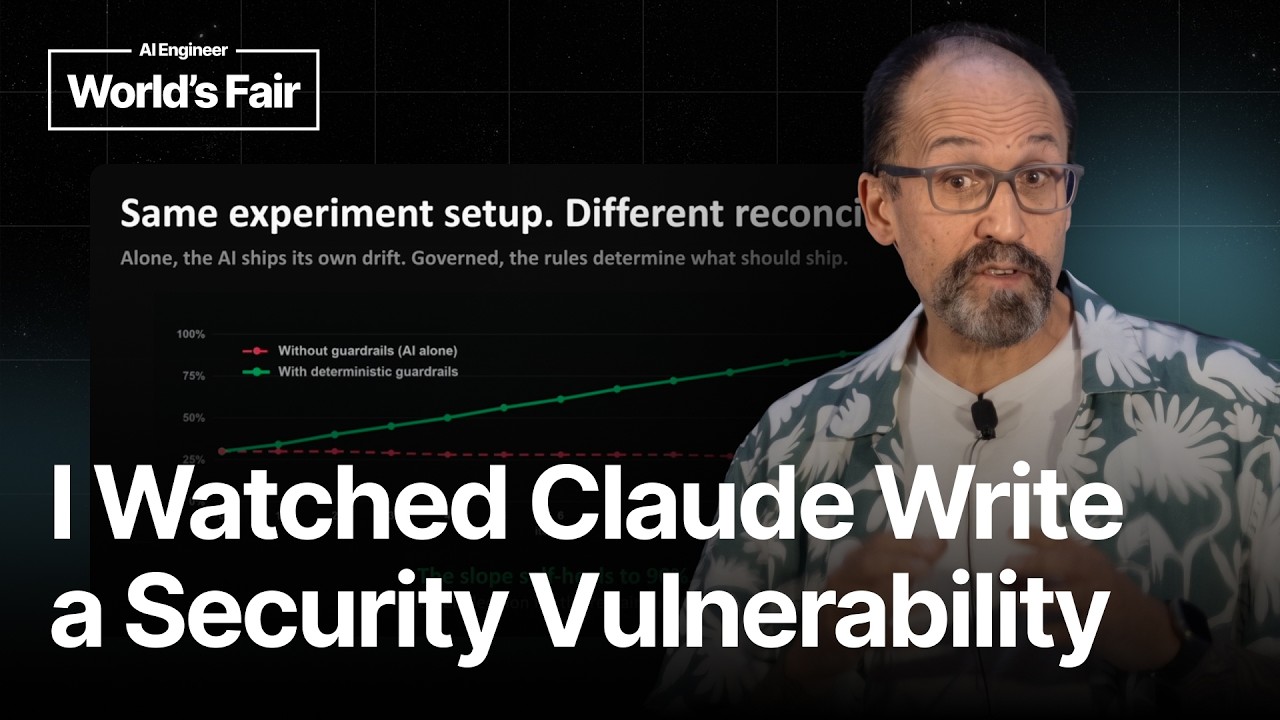
The Design-Code Roundtrip That Isn't — Jonathan Gordon, ReWeaver AI
Jonathan Gordon, with three decades in dev tools, unpacks why AI hasn't solved the design-code roundtrip problem. He introduces ReWeaver, a tool that uses deterministic guardrails to detect and manage "drift" between AI-generated code and design, ensuring fidelity and control across dimensions like accessibility and design consistency, ultimately advocating for humans to remain in control.
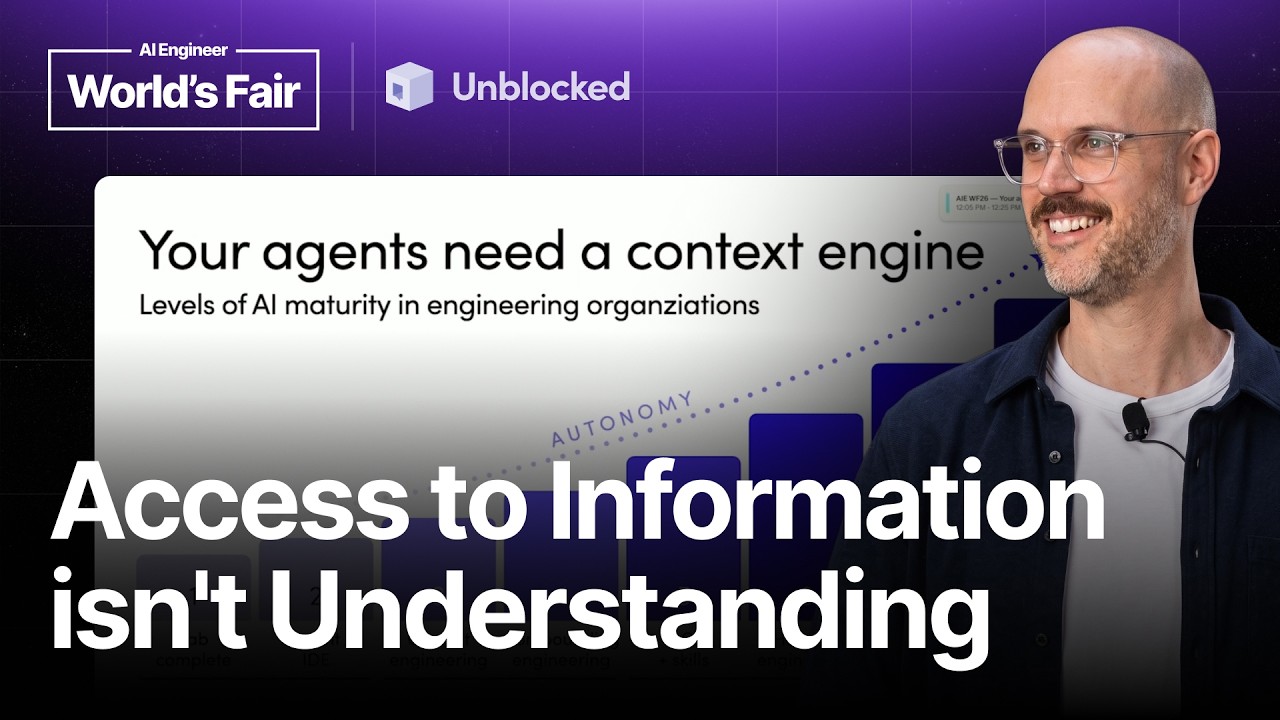
Your agents lack context: Here's how to fix "You're absolutely right!" — Brandon Waselnuk, Unblocked
Brandon Waselnuk of Unblocked discusses the critical need for robust context engines in AI-driven software development. He explains how AI agents' lack of company-specific understanding leads to compounding costs like wasted tokens and rework. Waselnuk outlines common pitfalls in providing context and details six essential characteristics of an effective context engine, demonstrating its impact with a 50% token reduction and significant time savings. He also introduces three open-source tools from Unblocked, including a workshop to build a relational context engine, emphasizing that "access to information is not understanding" and that context, not intelligence, is the current bottleneck for AI effectiveness.
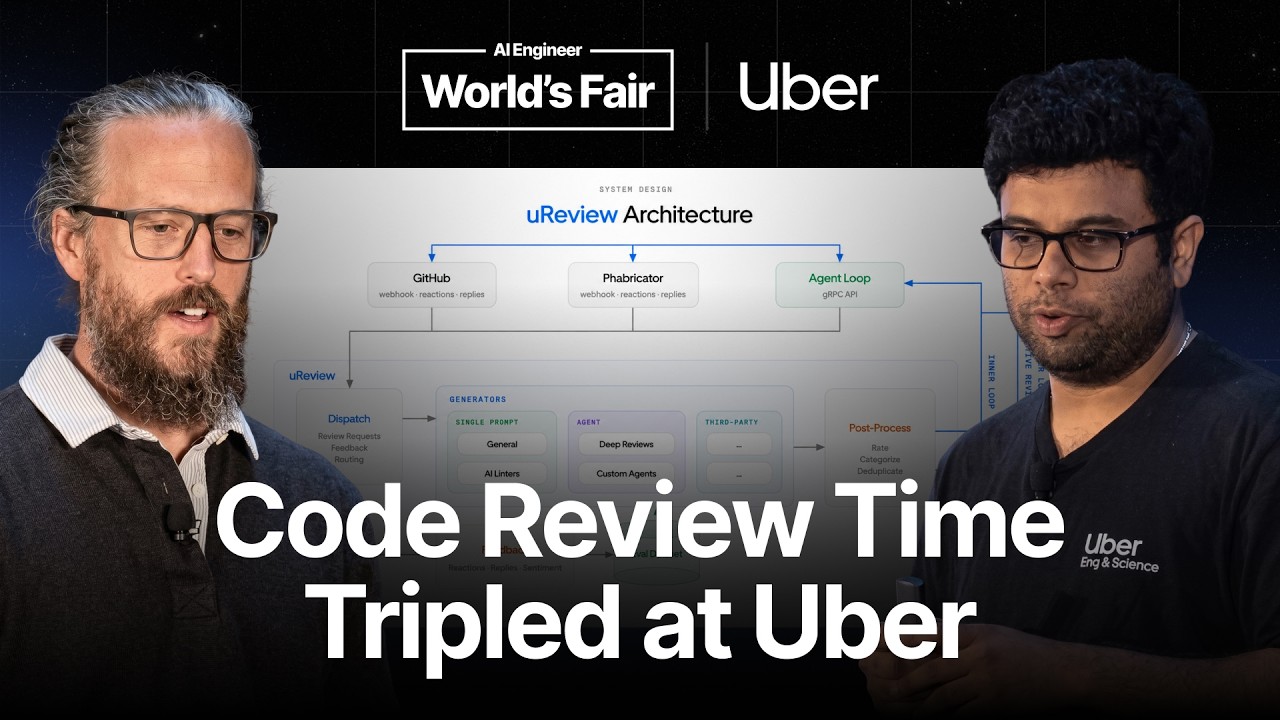
Building uReview, Uber’s Multi-Agent Code Review Engine — Will Bond & Ameya Ketkar, Uber
Uber's Will Bond and Ameya Ketkar present uReview, an in-house automated code review system developed to combat rising review times (3 to 9 hours for first review). They detail why Uber built it over buying—due to Phabricator, agentic SDLC integration, and distributed ownership—and its architecture, including comment deduplication. The presentation highlights their iterative approach using advanced observability (sentiment, addressal rate, agent trajectory) to tune model performance, acknowledging that "the model never knows that it is wrong." They discuss empowering hundreds of teams with custom review agents and skills, sharing impressive results: 25,000 comments weekly, 67% addressal rate, and 60% cost reduction. Finally, they explore the evolving role of human engineers in an agentic SDLC, predicting an "expanded outer loop" focused on architecture and domain expertise rather than direct code review.
Supabase: Cash Does Not Equal Success
Paul Copplestone, CEO of Supabase, discusses the company's rapid rise as a leading dev tool. He explains their strategic bet on open-source Postgres, the pivotal "Open Source Firebase" rebrand, and how three distinct "chapters" of AI — from vector databases and code generation to advanced AI agents — have dramatically accelerated Supabase's growth and forced a re-evaluation of developer experience and internal operations.