Code generation

Reading Group July 2026 - Loop Engineering

Reading Group July 2026 - Loop Engineering

This session provides an in-depth exploration of Loop Engineering, a paradigm shift from manual AI prompting to designing autonomous systems that orchestrate AI agents. Speakers share practical experiences, from building production-grade platforms with automated code generation and adversarial AI reviews to experimental loop structures and foundational infrastructure layers. Key discussions address challenges like managing token costs, preventing agent chaos, and implementing robust verification mechanisms for industrializing software development.

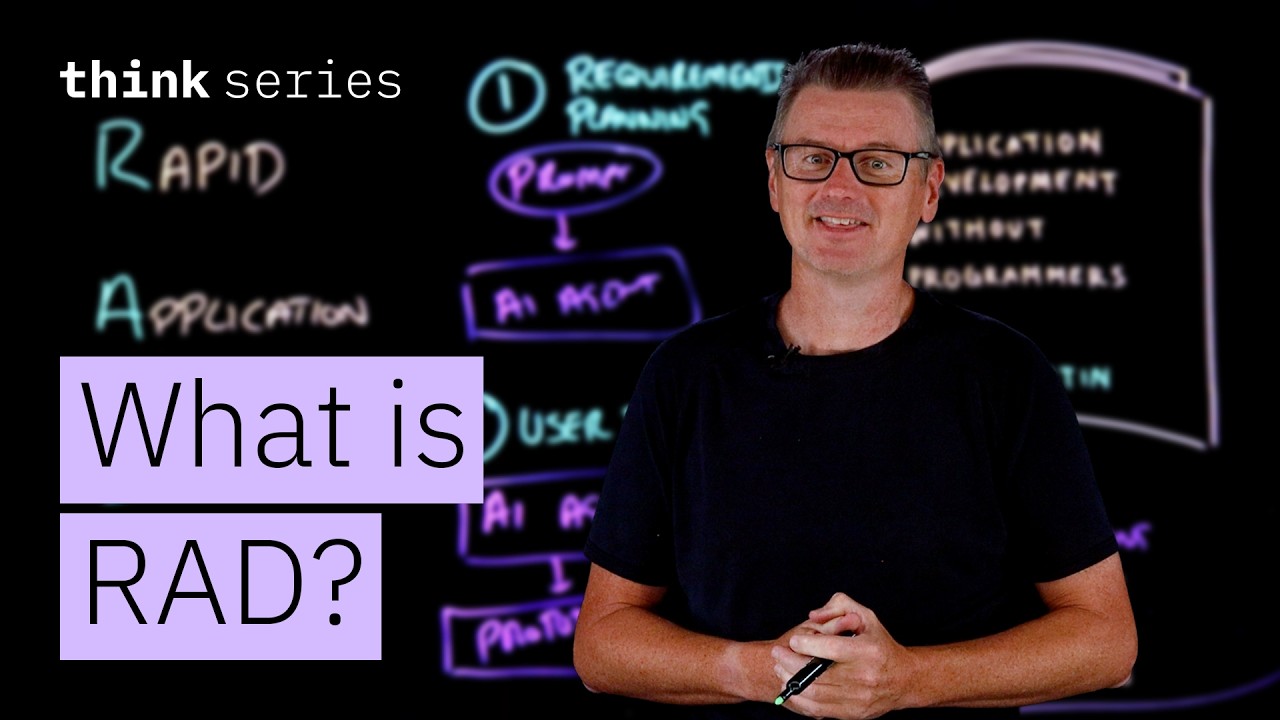
What Is RAD? Why It Matters in the Age of AI Coding

What Is RAD? Why It Matters in the Age of AI Coding

This video explores how James Martin's 1991 Rapid Application Development (RAD) methodology, with its emphasis on rapid prototyping, iterative development, and user feedback, offers a robust framework for contemporary AI coding and "vibe coding" workflows. It highlights how AI agents accelerate prototyping but introduces new challenges regarding production readiness and security. The solution proposed is spec-driven development, where human expertise formalizes requirements and verifies AI-generated code based on insights gained from early prototypes, ensuring quality and mitigating risks.

Agents, codebases, and teams — Aditya Khandelwal, Amazon AGI Lab

Agents, codebases, and teams — Aditya Khandelwal, Amazon AGI Lab

Aditya Khandelwal argues that scaling AI agent adoption within engineering teams is a leadership challenge, not an individual contributor problem. He highlights common pitfalls like agent "babysitting" and "slop," and provides a playbook emphasizing progressive disclosure, high-value automation, robust feedback loops, and a critical mindset shift to successfully integrate agents into team workflows.

Benchmarks: The Good, the Bad, and the Ugly — Ali Khial, G2i

Benchmarks: The Good, the Bad, and the Ugly — Ali Khial, G2i

Ali Khial exposes critical flaws in popular coding benchmarks, revealing how ambiguous instructions, weak verifiers, and model 'reward hacking' create a disconnect between reported performance and real-world utility. He argues that this leads to a "trust gap" where engineers disregard leaderboards. Khial then outlines five principles for building trustworthy, production-grade benchmarks, emphasizing human-authored instructions, holistic grading, economic value, contamination-free design, and informative leaderboards, urging software engineers to contribute to their improvement.

Developer Productivity at a Developer Productivity Startup • Robert-Jan "RJ" Huijsman • GOTO 2025

Developer Productivity at a Developer Productivity Startup • Robert-Jan "RJ" Huijsman • GOTO 2025

Robert-Jan Huijsman, Founding Engineer at Reboot.dev, outlines a pragmatic approach to developer productivity by tackling friction and non-determinism in both human collaboration and software development. He shares Reboot.dev's strategies, including async workstreams, full-stack typing, unit testing with AI, and foundational engineering principles like retries, durable execution, and strong consistency, to build reliable and efficient systems.

Boris Cherny: Building Claude Code

Boris Cherny: Building Claude Code

Boris Cherny, creator of Claude Code, discusses the transformative capabilities of Opus 5, highlighting its prompt injection resistance and long-task execution. He delves into Claude Code's empirical development philosophy of "unhobbling" AI by constantly adapting to new model generations, and shares insights on how to build advanced AI products using higher-level tasks, self-verification, and dynamic workflows to orchestrate thousands of agents.