Verification

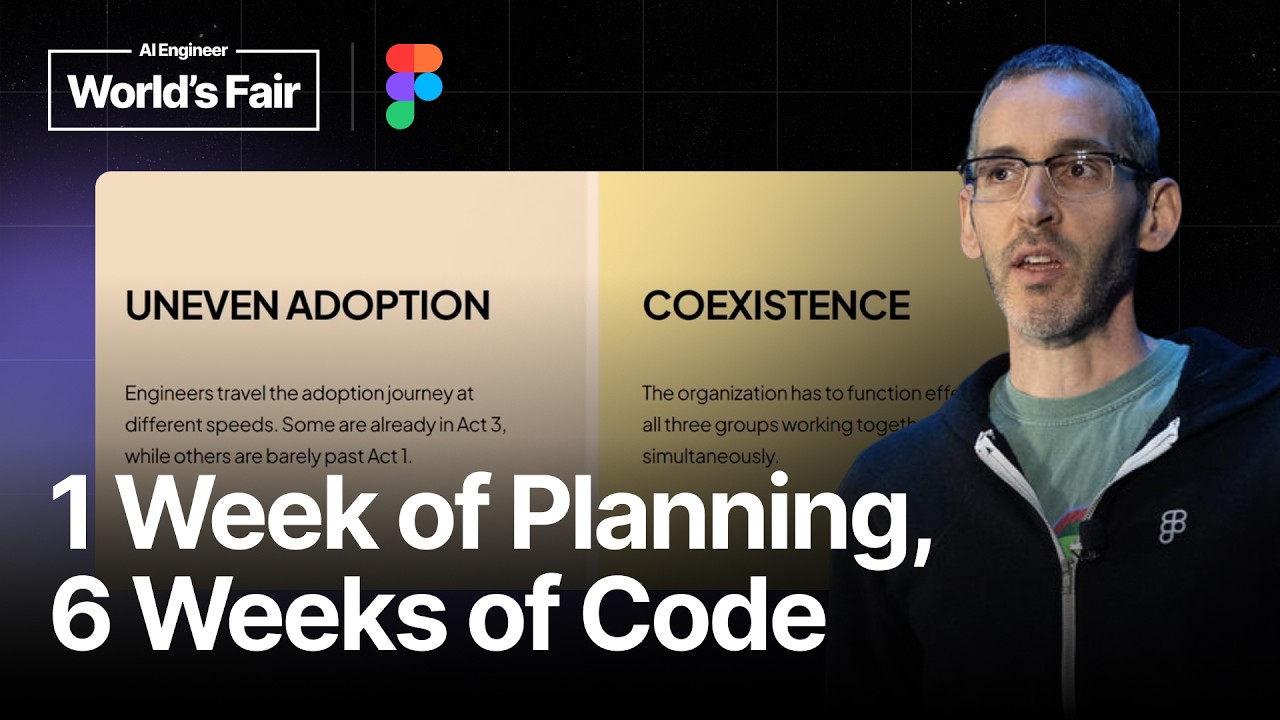
How to Get Your Org to Adopt Coding Agents (Without Shipping Garbage) — Eyal Blum, Figma

How to Get Your Org to Adopt Coding Agents (Without Shipping Garbage) — Eyal Blum, Figma

Figma's internal AI agent adoption journey faces challenges like reduced developer agency, skepticism from senior engineers, and communication inefficiency. Solutions include investing in verification, using a testing pyramid for agent review, prioritizing detailed planning over prompting, engaging skeptics to build AI safety roadmaps, and implementing attention-aware communication by clearly marking AI-generated content.

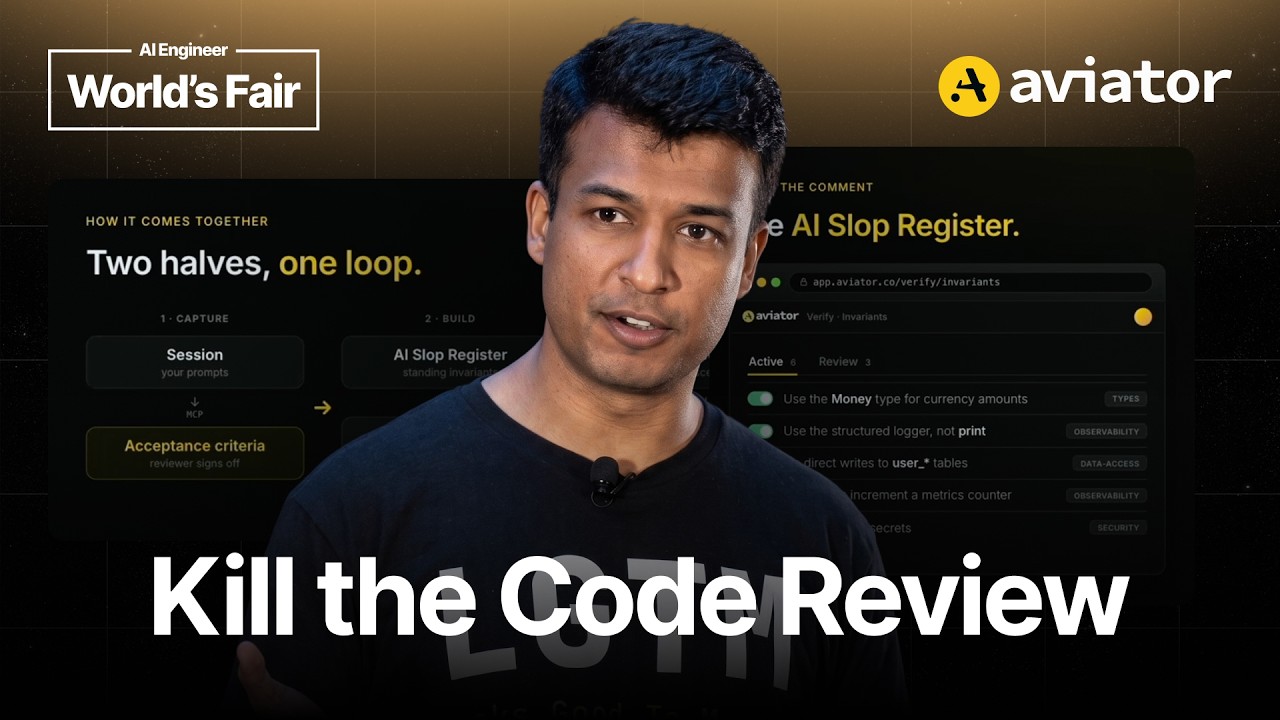
How to Kill the Code Review — Ankit Jain, Aviator

How to Kill the Code Review — Ankit Jain, Aviator

Ankit Jain argues that traditional line-by-line code review is defunct, with AI reviewing code that humans no longer read. He asserts that code review's vital, often overlooked, purpose is 'alignment'—knowledge sharing, mentorship, and architectural feedback—which current AI-driven workflows fail to capture. His proposal involves capturing user-AI interaction prompts as acceptance criteria, generating test plans with an 'AI Slop Registry' (codified recurring review comments), and verifying changes against live previews. The new review surface becomes the 'intent and evidence' rather than the code diff, preserving collaboration and ensuring semantic accuracy.

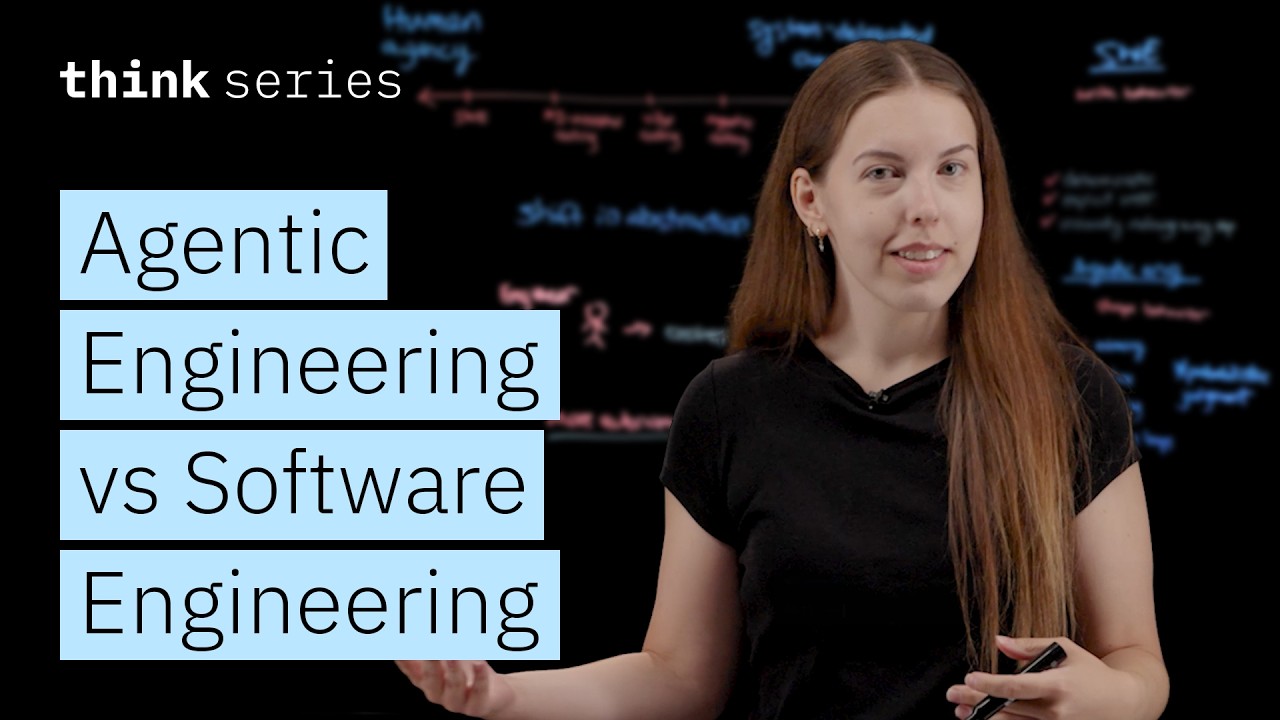
Agentic Engineering vs Software Engineering: Beyond Vibe Coding

Agentic Engineering vs Software Engineering: Beyond Vibe Coding

Anna Gutowska explains the paradigm shift in software engineering towards "agentic engineering," where AI agents execute goals defined by developers. She differentiates this from traditional, AI-assisted, and vibe coding, highlighting the increased importance of human oversight, orchestration, and verification in a world of probabilistic AI systems, and how this redefines the developer's role.

In the Land of AI Agents, the Verifiers Are King — Tariq Shaukat, Sonar

In the Land of AI Agents, the Verifiers Are King — Tariq Shaukat, Sonar

This talk addresses the critical challenge of verification in AI agent development, moving beyond generation to ensure correctness. It highlights the problem of "AI slop" and the "productivity paradox" of AI coding agents, where initial velocity gains are offset by increased technical debt and quality issues. The speaker introduces the AC/DC (Agent-Centric Development Cycle) framework comprising three stages: Guide (providing context and constraints), Verify (zero-trust, multi-layered verification using both algorithmic and agentic methods), and Solve (active code maintenance to control technical debt). This systems-level approach, integrating verification across agentic, CI, and code maintenance loops, significantly reduces issues and transforms AI into a reliable enterprise asset.

SWE-Marathon: Evaluating Coding Agents at Billion-Token Scale - Rishi Desai, Abundant AI

SWE-Marathon: Evaluating Coding Agents at Billion-Token Scale - Rishi Desai, Abundant AI

SWE-Marathon introduces a benchmark for long-horizon autonomous software engineering, pushing coding agents from bug fixes to full project ownership. It highlights the critical need for robust, multi-layered verification and anti-cheat mechanisms to prevent reward hacking in tasks spanning hundreds of millions of tokens, revealing that current agents achieve only a 26% success rate.

Session on Reasoning

Session on Reasoning

This session features two talks on optimizing and verifying AI reasoning. Hongxiang Fan discusses cross-stack co-design for efficient AI, focusing on Test-Time Scaling (TTS) challenges, optimal verification granularity, and system-level optimizations for edge deployments. Nagarajan Natarajan introduces 'Advancing Verified Reasoning' with the InterVent platform, aiming to ensure AI agents comply with complex policies through formal verification, dynamic steering, and leveraging verification signals for training. Both emphasize addressing the computational and reliability costs of advanced AI.