Ai

Should You Trust ChatGPT With Your Health?

Should You Trust ChatGPT With Your Health?

Karan Singhal, who leads health AI research at OpenAI, joins a16z's Jay Rughani to discuss how OpenAI is building trustworthy health intelligence into general-purpose frontier models. The conversation covers expert-driven evaluation and disagreement handling, the role of AI as a complement to doctors, integrations with Epic and clinician copilots, personal agents navigating fragmented healthcare, the distinction between medical information and medical care, and how falling costs of medical intelligence could compress the lag in clinical consensus and accelerate treatment discovery.
What Survives When AI Can Build Anything? (with Dr. Richard Socher)

What Survives When AI Can Build Anything? (with Dr. Richard Socher)

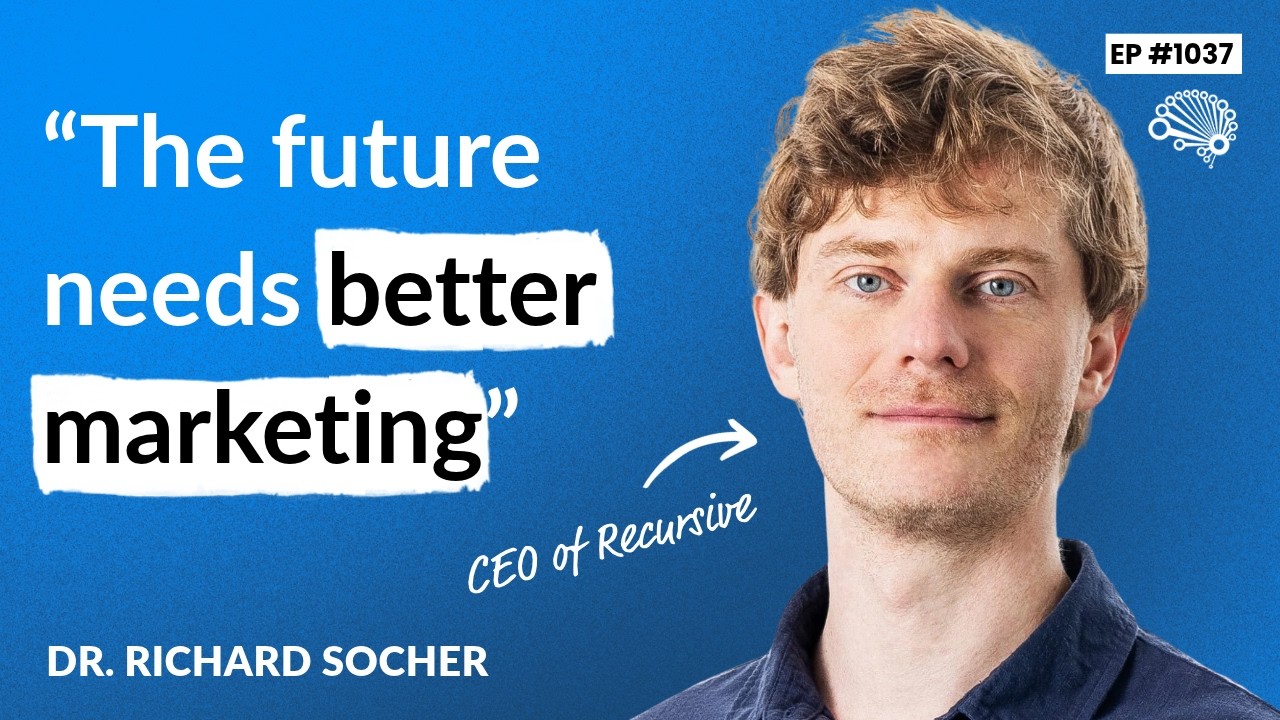
Richard Socher, CEO of Recursive and author of The Eureka Machine, makes the case for automating the scientific method with recursively self-improving AI. He covers how AI keeps replacing hand-crafted expertise with scale, the four pillars of his approach, why hallucinations can aid discovery, why RSI still rules out an overnight takeoff, and how science may become an engineering discipline across physics, biology, and economics.

Shipping AI Into 5 Major Banks Without a 12-Month Compliance Wait — Al Chen, Cisco

Shipping AI Into 5 Major Banks Without a 12-Month Compliance Wait — Al Chen, Cisco

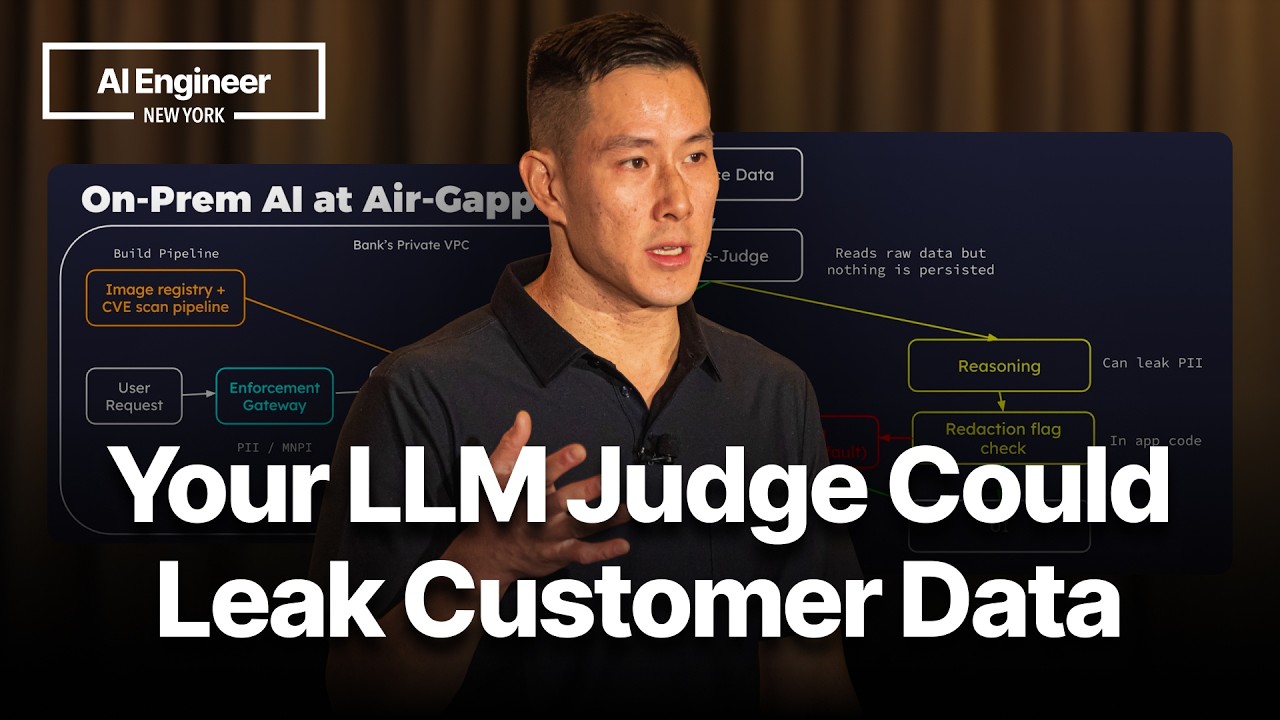
Al Chen explains what it takes to get AI observability software through the security and compliance reviews of major banks. He covers build pipelines, agent-driven CVE remediation with verifiable exploit tests, ClickHouse backup and restore verification, PII and MNPI leakage through LLM judges, and the tradeoffs of zero leakage and data sovereignty, with an emphasis on showing evidence to shorten time to production.

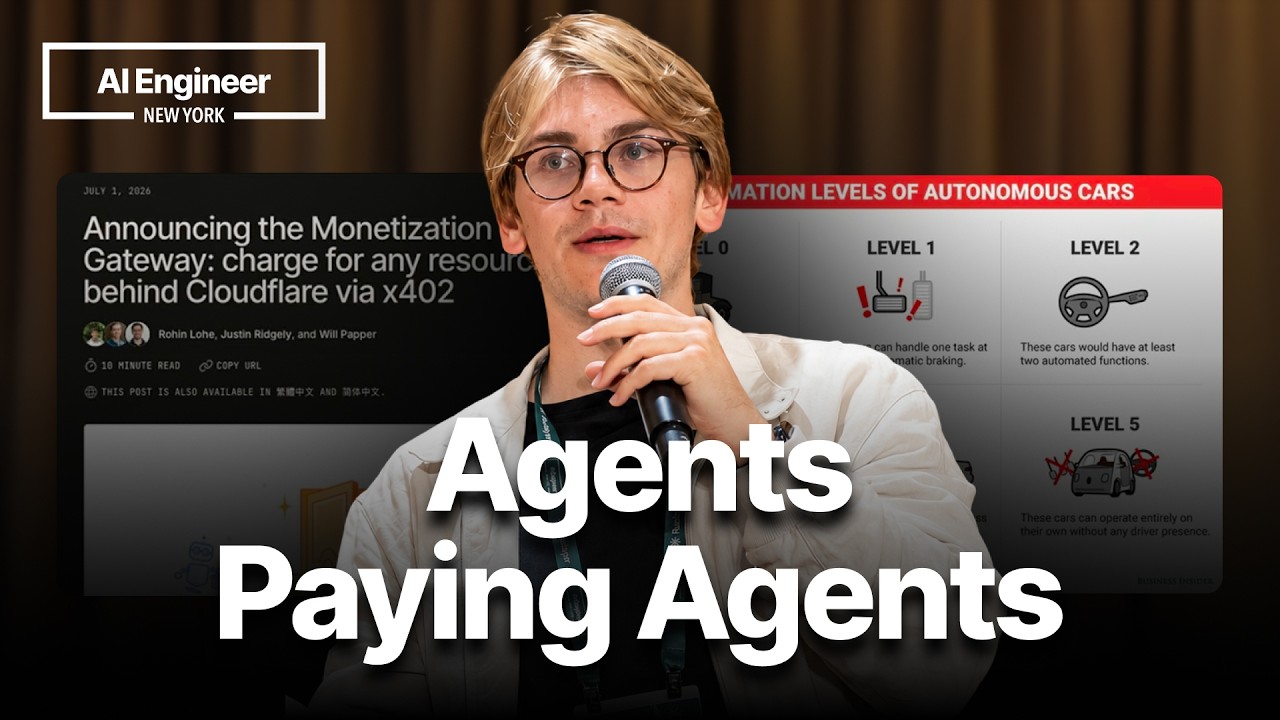
Why AI Agents Will Need Their Own Bank Accounts — Lincoln Murr, Coinbase

Why AI Agents Will Need Their Own Bank Accounts — Lincoln Murr, Coinbase

Lincoln Murr, head of AI product at Coinbase, explains agentic finance, covering agents that pay and agents that grow money. He traces the path from AgentKit, an early experiment giving an AI a wallet, to x402, an open payment standard built on the long-unused HTTP 402 code. He also discusses microtransactions as a replacement for the ad economy, agents executing trades from simple instructions, the trust-building lessons from two years of development, and the vision of agents that can pay for their own upkeep.

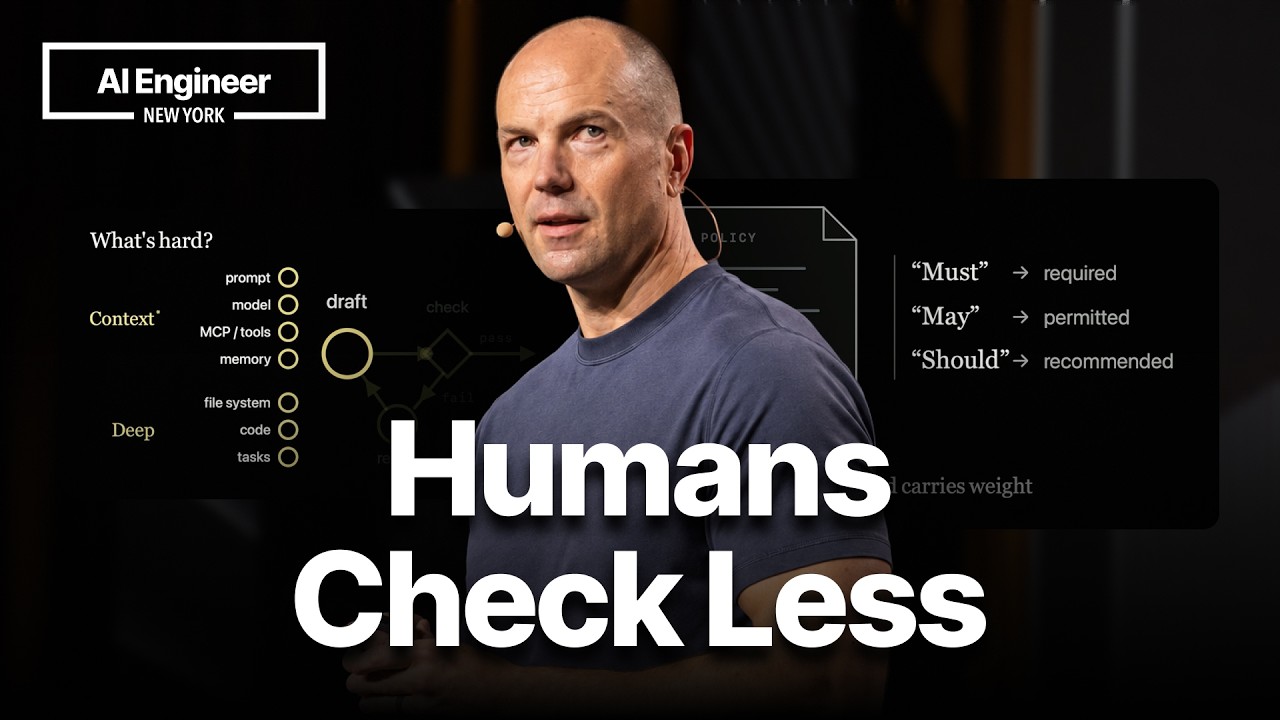
How to Know When an AI Agent Can Work Unsupervised — Evan Kormos, Coinbase

How to Know When an AI Agent Can Work Unsupervised — Evan Kormos, Coinbase

Evan Kormos of Coinbase presents a practical framework for bringing AI agents into policy-driven, regulated workflows. He models processes as DAGs with loops inside each node, argues that a loop is only as trustworthy as its check, and shows how evals and traces create a new confidence mechanism. Agents then move through supervised, sampled, and exception-only stages.

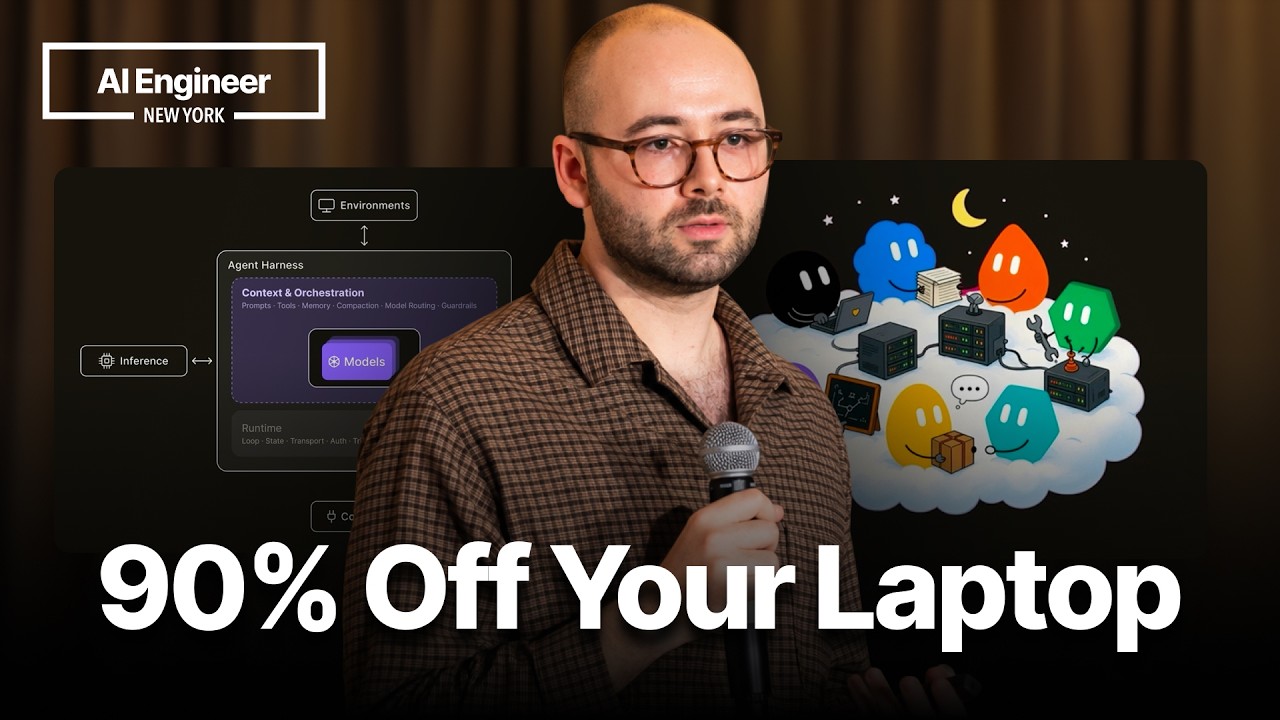
Smarter Models Killed the Harness. Here's What's Left — Jediah Katz, SpaceXAI

Smarter Models Killed the Harness. Here's What's Left — Jediah Katz, SpaceXAI

Jedidiah Katz, longtime agent-harness engineer at Cursor and now at SpaceX, argues that fancy harnesses no longer add coding intelligence because models absorb those skills through a data flywheel. He contends the harness matters more than ever: it unlocks new frontiers like Grokbot and owns infrastructure, trust and security, and efficiency. He closes with predictions, including that 90% of agent work will run off the laptop within six months.