Posts

Sandboxing, Agent Harnesses, and Agent Teamwork

Sandboxing, Agent Harnesses, and Agent Teamwork

Shahram Anver, CEO of Cleric, details how AI agents for SRE are evolving beyond fast triage to continuous learning and operational memory. He discusses Cleric's architectural shifts, from complex early designs to simpler, sandboxed query agents, and the unique challenges SRE agents face in diverse production environments. A core focus is on human-agent interaction, redefining roles as managers overseeing agents, and how agents learn from unstructured data like Slack to build robust, actionable knowledge for autonomous, self-healing infrastructure. The discussion also touches on the future of software, differentiating between durable systems and rapidly developed "skills" or "vibe-coded" solutions.

The First Dedicated YC GPU Cluster - With Together AI

The First Dedicated YC GPU Cluster - With Together AI

YC and Together AI have partnered to launch the first dedicated YC GPU cluster, addressing the critical compute bottleneck faced by AI-native startups. This initiative provides flexible, cost-effective access to GPU resources, enabling companies from early-stage research to major players to train, fine-tune, and run inference on AI models, and mitigating the financial strain of long-term compute commitments.

6 Ways to Enhance Developer Productivity with AI

6 Ways to Enhance Developer Productivity with AI

Discover how top-performing teams achieve 100-150% productivity gains with AI by strategically restructuring workflows, automating wisely, prioritizing design, fostering deep work, reducing cognitive load, investing in growth, and optimizing tools. This goes beyond mere AI adoption, focusing on human-centric practices and intelligent measurement to drive real impact and retention.

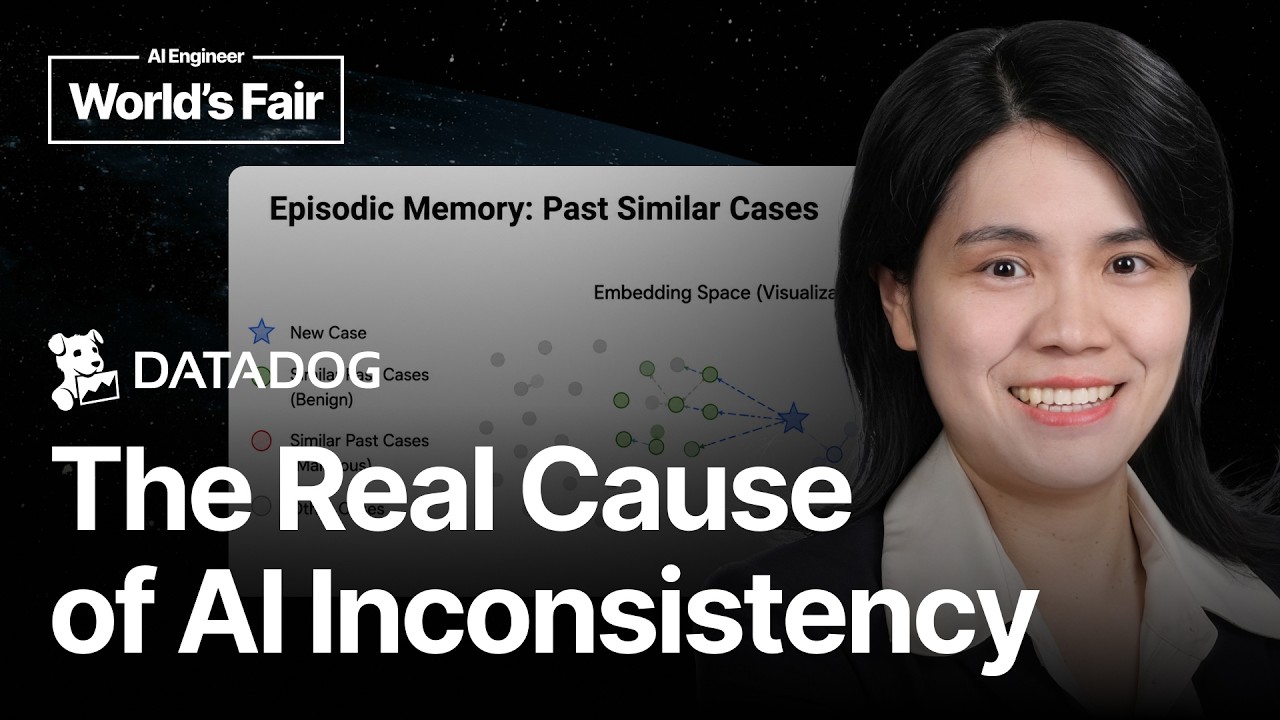
Why Your Agent Disagrees With Itself (And What To Do About It) - Diane Lin, Datadog

Why Your Agent Disagrees With Itself (And What To Do About It) - Diane Lin, Datadog

This session addresses the critical problem of AI agent inconsistency, particularly in LLMs, which leads to "flip-flops" in high-stakes domains like cybersecurity. It argues that this isn't a model failure but a signal of ambiguity in the "gray zone" near decision boundaries. The proposed solution involves using active learning to identify these ambiguous cases, followed by augmenting agents with semantic memory (explicit policies) and episodic memory (past similar cases) to clarify decisions, improve consistency, and adapt to customer-specific preferences without relying solely on expensive fine-tuning.

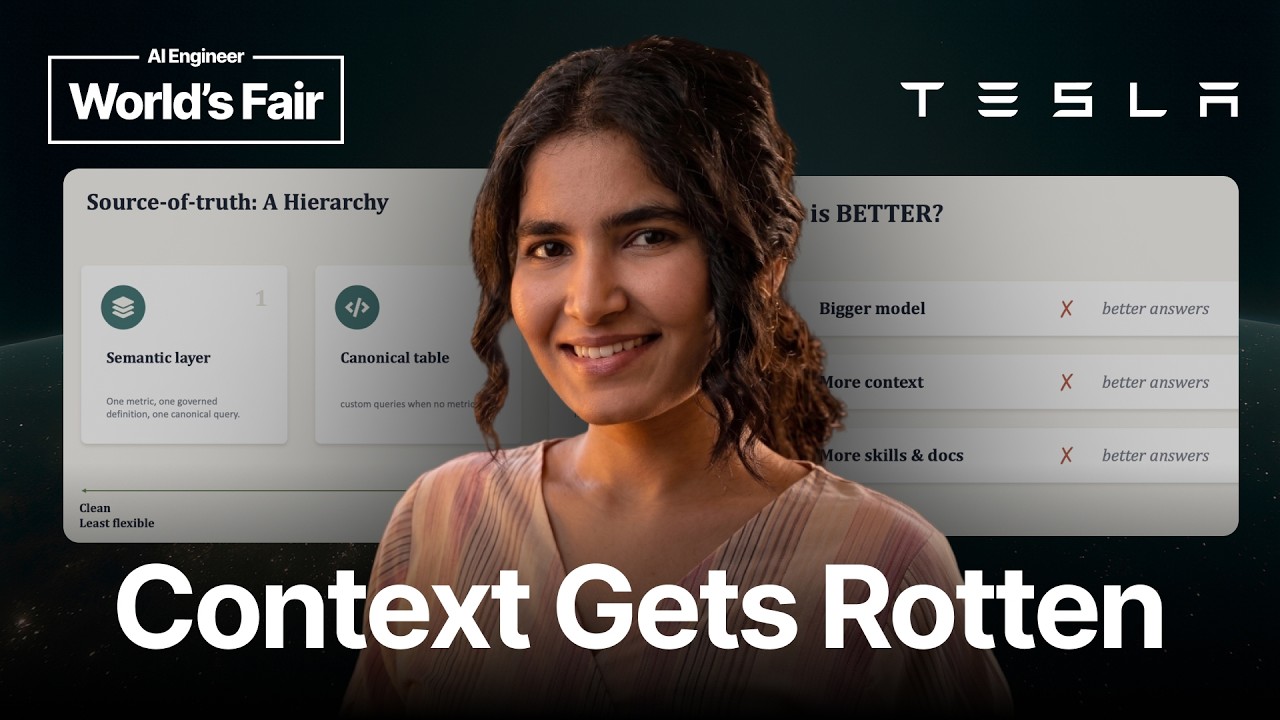
Enterprise Agents Have a Structure Problem - Ishita Daga, Tesla

Enterprise Agents Have a Structure Problem - Ishita Daga, Tesla

Ishita Daga, a Senior ML Engineer at Tesla, explains why enterprise AI agents fail, highlighting that current fixes like larger models or more RAG are insufficient. She identifies ambiguity, staleness, and user preference as key structural problems. Daga proposes a solution built on semantic retrieval infrastructure: a hierarchical approach to knowledge sources, including a curated semantic layer and metadata graphs. She also details a robust context life cycle with live data sources and continuous feedback loops to combat staleness. The challenge of integrating individual preferences, requiring agents to reason over business concepts rather than raw schemas, is also discussed.

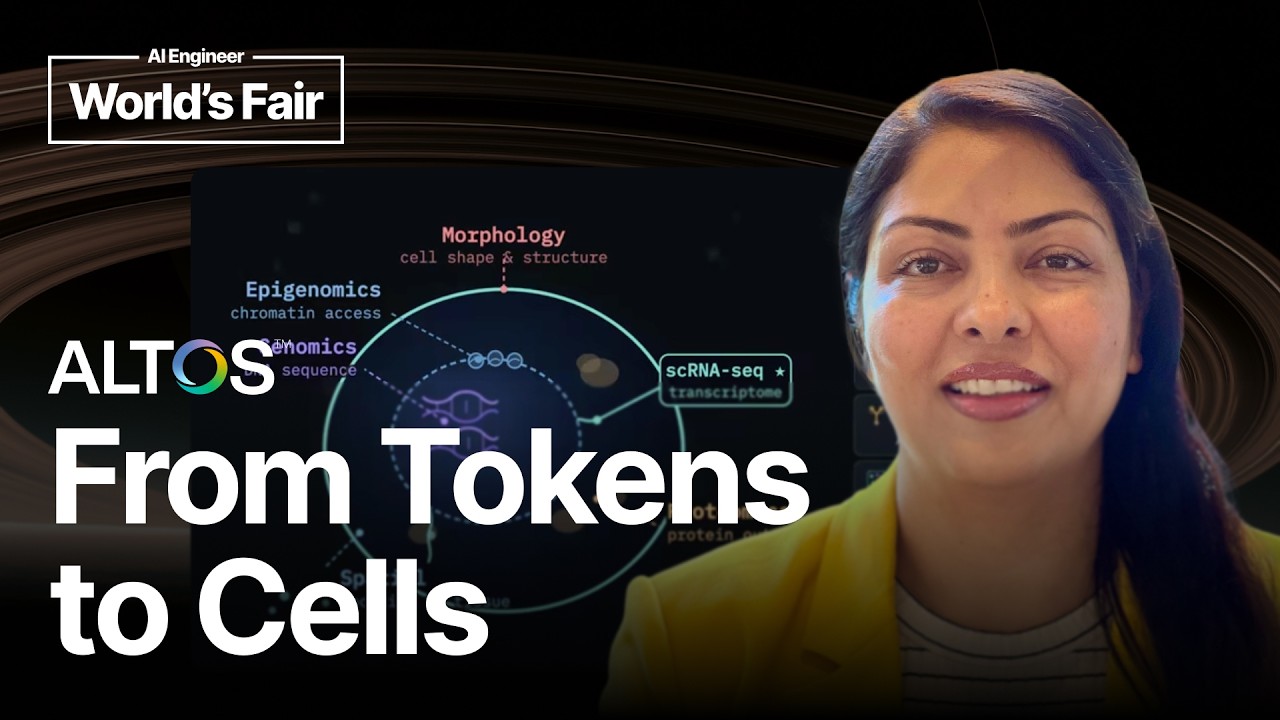
From Tokens to Cells: Foundation Models for Single-Cell Biology - Akram Baharlouei, Altos Labs

From Tokens to Cells: Foundation Models for Single-Cell Biology - Akram Baharlouei, Altos Labs

Akram Baharlouei from Altos Labs discusses the engineering hurdles in developing foundation models for single-cell biology. The talk covers the importance of single-cell analysis for cellular rejuvenation and drug discovery, the complexities and challenges of single-cell data (particularly RNA-seq), and a comparative analysis of current foundation model approaches, highlighting the limitations of transformer-based models and the potential of flow matching techniques like PrimeFlow.