Posts

You Didn't Ship a Bug. You Just Wrote It for a Human. - Ravi Madabhushi, Scalekit

You Didn't Ship a Bug. You Just Wrote It for a Human. - Ravi Madabhushi, Scalekit

Ravi Madabhushi details how existing infrastructure, designed for human users, fails AI agents, leading to issues like rate limits and over-permissioning. He argues for treating agents as first-class principals with fine-grained, context-aware authorization and robust visibility to prevent non-deterministic and potentially rogue behaviors.
From Blind Spots to Merged PRs: Continuous Agentic Performance Optimization - May Walter, Hud

From Blind Spots to Merged PRs: Continuous Agentic Performance Optimization - May Walter, Hud

May Walter, CTO of Hud, details a real-world case study on integrating AI agents into the SDLC for continuous performance optimization. The talk covers Hud's runtime intelligence layer, which uses production context to identify and fix high-ROI performance issues like N+1 queries and missing database indexes. It highlights the technical approach, challenges, and the development of a human-friendly reporting system that delivers measurable P90 latency improvements, enabling proactive optimization in mature codebases.

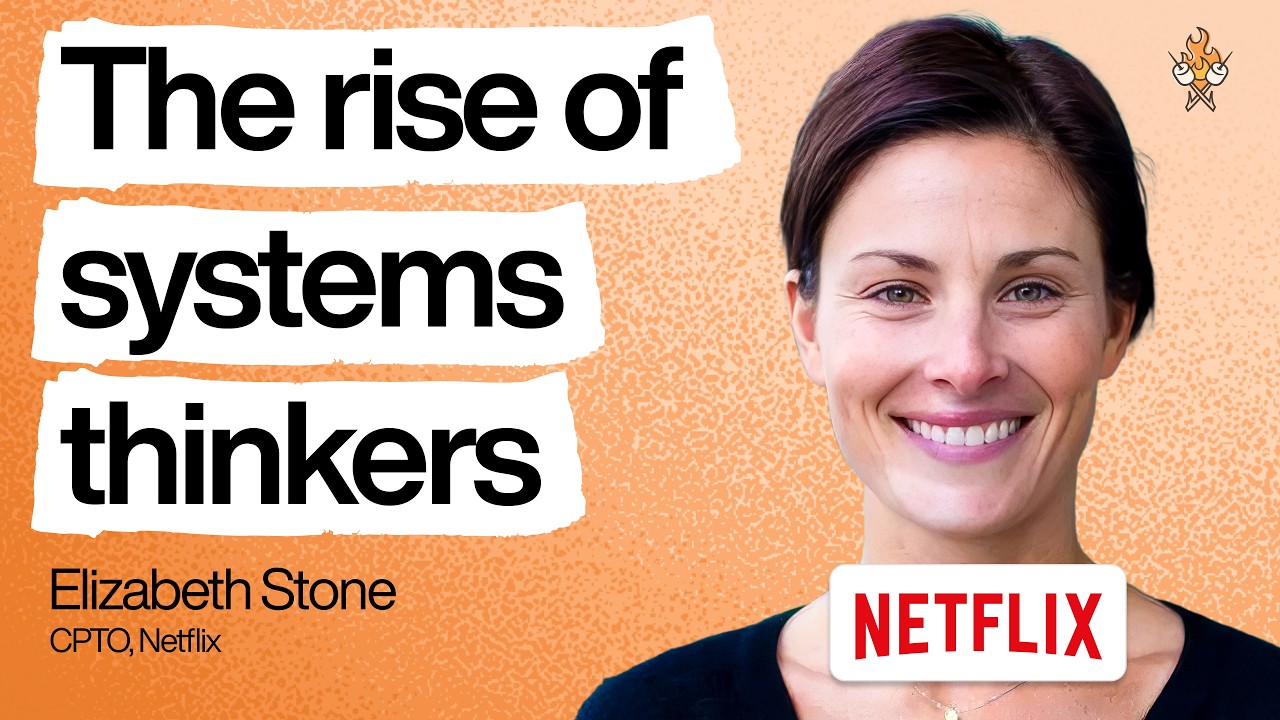
Why Netflix is betting on systems thinkers—not specialists—in the AI era | Elizabeth Stone (CPTO)

Why Netflix is betting on systems thinkers—not specialists—in the AI era | Elizabeth Stone (CPTO)

Elizabeth Stone, Netflix CPTO, discusses how AI is transforming product development and company culture. She highlights the increasing importance of "systems thinking," managing the influx of AI-generated output with clear guardrails, fostering "AI fluency" across all roles, and maintaining Netflix's unique "excellence as an operating system" through high talent density and a comfort with risk-taking. The conversation also explores AI's impact on content creation, the future of entertainment, and talent management.

A Practitioner's Guide to Graphs - Tim Ainge, Good Collective

A Practitioner's Guide to Graphs - Tim Ainge, Good Collective

A speed-run through the fundamentals of graphs for AI engineers, covering how to build effective graphs from unstructured text using schema-first approaches and entity resolution, and then exploring powerful graph-native algorithms like Personalized PageRank, Shortest Path, and Subgraph Matching, all illustrated with real-world applications to create smarter, cheaper, and more reliable AI solutions.

Content Is Code - Matt Palmer, Conductor

Content Is Code - Matt Palmer, Conductor

Matt Palmer discusses how code, empowered by AI, is becoming the fastest and most efficient medium for technical content creation, emphasizing that while code is cheap, structure and conscientiousness are now the most valuable assets for producing high-quality output. He predicts the rise of "content engineers" who leverage declarative pipelines to automate technical communication.

Agents Need Receipts, Not More Tool Calls - Armanas Povilionis, Alithea Bio

Agents Need Receipts, Not More Tool Calls - Armanas Povilionis, Alithea Bio

Armanas Povilionis introduces Froglet, an open-source protocol addressing the critical need for verifiable agent-to-agent collaboration in AI workflows, especially in scientific research. Froglet enables agents to discover, transact with, and receive tamper-proof receipts for services across organizational boundaries, transforming them into 'executive chefs' managing distributed supply chains rather than isolated 'cooks' with more tools. The protocol streamlines interactions into a signed flow (Descriptor -> Offer -> Quote -> Deal -> Receipt) and integrates with diverse agent harnesses and execution environments, abstracting complex operations for LLM-driven agents.