Kavak's Playbook for Rebuilding a Company Around AI
Alejandro Maza Ayala, Chief Product & AI Officer at Kavak, details how the used-car marketplace transformed into an AI-native company. He explains the 'agent-per-customer' architecture, where individual agents handle 96% of customer interactions and 95% of transactions, outperforming human teams in sales (2.1x better conversion) and even acting as an 'AI CEO' that boosted profits by 50% in an experimental city. The discussion covers the need to redesign company structures, the importance of robust evaluations, and how a 'Jedi Academy' trains all employees, from executives to mechanics, to build and collaborate with AI agents. Ayala argues for 'creative destruction,' suggesting that true AI leverage comes from rebuilding organizations from the ground up, rather than incremental adoption, presenting a massive opportunity for new founders.
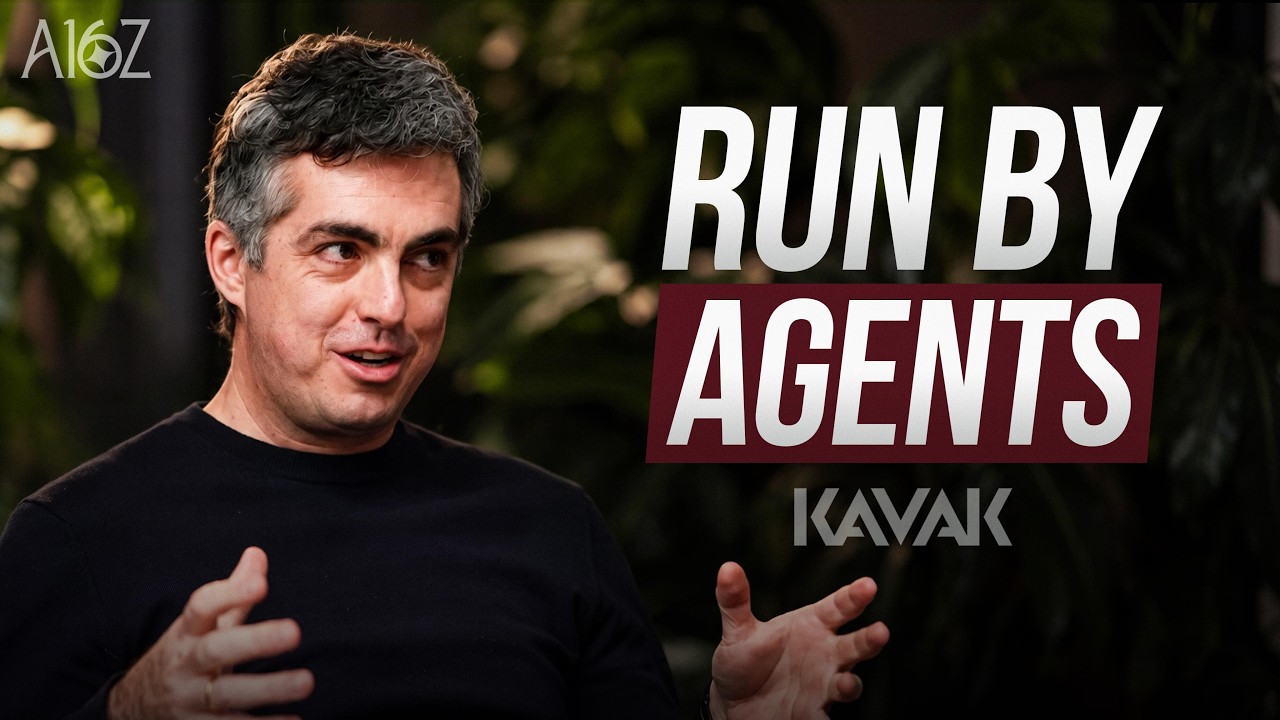
Alejandro Maza Ayala, Chief Product & AI Officer at Kavak, details the company’s radical transformation into an AI-native organization, showcasing how it rebuilt its operations, culture, and customer experience around AI agents. He highlights the strategic decisions and architectural shifts that led Kavak to achieve superhuman performance, with 96% of customer interactions and 95% of transactions now handled by AI.
The Agent-Per-Customer Architecture
Kavak, originally a used car marketplace in Latin America, had to vertically integrate services like fintech, logistics, and car history due to a lack of existing infrastructure. Maza Ayala’s vision was to build Kavak as if it were 2035, leveraging GPT-10 level intelligence. This led to a groundbreaking “agent-per-customer” architecture:
- Personalized Agents: Each day, between 100,000 and 200,000 agents are instantiated, each with its own virtual machine, specifically for a single customer. These agents retain years of interaction history, web visits, and calls.
- Long-Term Goals: Agents are programmed to remember customer history, devise strategies, and set long-term goals to maximize the customer’s lifetime value (LTV), doing whatever it takes to satisfy and convert them across various products.
- Contrast with Traditional Multi-Agent Systems: This approach contrasts with typical multi-agent systems that rely on expert-based workflows, betting instead on long-running agents with hard, impactful goals.
Three Strategic Bets for AI Adoption
Kavak’s deep AI integration was driven by three core decisions, addressing common pitfalls of incremental AI adoption:
- Redesign the Entire Company: Instead of merely providing AI tools (like ChatGPT) to employees, Kavak fundamentally rebuilt its systems and APIs to empower agents. Maza Ayala argues that superficial adoption yields no real efficiency or customer benefit.
- Build Superhuman Agents: The goal was for agents to outperform the best human employees across all critical dimensions, including conversion, LTV, and customer experience. These agents were deployed to tackle the most complex problems.
- Change Metrics: Kavak shifted from transactional metrics (e.g., cars bought/sold, parts inventory) to relational ones, focusing on maximizing the LTV of its 10 million customers. Activating even 1% of this base represents hundreds of millions of dollars. Building trust for high-ticket items like used cars necessitates deep, personalized relationships.
The Critical Role of Evals
Maza Ayala emphasizes that “in order to move fast, you need to have brakes.” For AI, these brakes are robust evaluations (evals). Kavak dedicates roughly equal engineering time, tokens, and money to building evals as it does to building agents.
- Measuring Business Outcomes: Evals focus on core business results: customer conversion, happiness, and willingness to re-engage. Superficial KPIs (e.g., call duration) are avoided.
- Scale and Impact: Agents handle 96% of all customer interactions and 95% of all transactions. Agents can work for minutes, hours, or days, setting alarms for their next tasks.
Agent Performance Outperforms Humans
Kavak’s agents have demonstrated superior performance in key business functions:
- Sales Agents: Instead of customer support, Kavak built sales agents for the complex process of selling cars (20,000 SKUs, financing, insurance, trade-ins). These agents combine the expertise of 15 different human specialists into a “mega-expert.”
- They have tripled Net Promoter Score (NPS) and customer satisfaction.
- Agents convert 2.1x better than human sales teams.
- Their advantage lies in infinite patience, perfect memory of customer history, long-term planning, and a feedback loop where mistakes learned by one agent are instantly propagated to all 200,000 agents.
- Car Loan Approvals: While traditional loan approvals in Mexico can take over two months, Kavak’s agents approve car loans in under three minutes. This is facilitated by access to rich customer and car data, and Kavak’s vertical integration (e.g., offering cheaper cars if a customer can no longer afford payments).
- The AI CEO Experiment: In an experiment, an AI agent was appointed as the “CEO” for the city of Cuernavaca, Mexico. Its goal was to double profits in the first month.
- Result: Achieved 1.5x (50%) profit increase in six weeks.
- The AI CEO acted as a “Fields Medal-level smart” manager, micro-managing operations, sending daily plans to physical workers, and receiving voice note updates. It improved customer satisfaction, inventory rotation, and financing penetration.
Organizational Restructuring and the “Jedi Academy”
Kavak recognized that AI agents would transform every job, necessitating a fundamental change in organizational structure and employee skill sets.
- Human-Agent Collaboration: In areas requiring physical dexterity, like mechanics (Kavak has ~800 in Mexico), agents serve as “sidekicks” (e.g., “El Mike,” likened to the mouse in Ratatouille). These agents guide inspections, offer tips, and improve quality. This led to a 20-26% reduction in warranties and increased customer satisfaction.
- The Jedi Academy: A mandatory, intensive 6-week training program for everyone from the CEO to mechanics. Participants learn to build and deploy state-of-the-art AI agents to production.
- Goal: Not necessarily to turn everyone into an AI engineer, but to equip them to collaborate effectively with AI.
- Cultural Shift: Emphasized that this is Kavak’s future; employees must adapt or consider leaving. This approach strengthened culture and fostered excitement.
- Flat, Empowered Teams: The current organizational structure features flat, senior, and highly empowered teams. These teams are either building agents, working for agents (responding to agent-generated tasks), or operating in the physical world directly with customers.
- Closing the Loop: When an agent encounters a problem it can’t solve, it calls an API for human assistance. This human intervention directly feeds back into training data, closing the loop and improving agent performance. In essence, human teams have agents as “bosses” that guide their work.
Creative Destruction and Advice for Founders
Maza Ayala draws parallels to historical industrial revolutions to explain the deeper implications of AI adoption.
- Beyond Adoption: True innovation comes not from existing companies superficially adopting new technology, but from new companies built fundamentally around it. He cites Joseph Schumpeter’s concept of “creative destruction.”
- Ford’s Factory Analogy: The technologies for Ford’s production line existed 40 years before Ford utilized them. Early factories merely swapped coal engines for electric ones, gaining only 6% efficiency. Ford, however, redesigned the entire factory (flat, suburban, small dynamos), achieving a 3x productivity improvement. Similarly, companies merely adopting AI without redesigning their core structure will miss the larger, exponential opportunity.
- Opportunity for Founders: It’s difficult for large incumbents to fully embrace this deep redesign. This creates an immense opportunity for new founders to build AI-native companies from scratch, providing superior products and services.
- Most Exciting Time: Maza Ayala believes this is “the most exciting time in human history” to be a founder. The democratization of powerful AI tools allows anyone to build. He advises founders to go deep, imagine an AI-native future, and build for that reality, even if only extrapolating current linear AI progress. This will lead to “wonderful ideas that will bring a lot of value to the world.”