Full Stack Greenfield Projects : Are they still relevant?
Bharat Goenka, co-founder of Tally, discusses the company's unconventional approach to software development through "Full Stack Greenfield" projects. He explains why building every component from scratch, despite being a high-risk strategy, has been crucial for Tally's success in serving the SMB market, fostering extreme customer loyalty, and aspiring to connect 200 million businesses. The talk delves into the historical context, the philosophy of questioning and choosing constraints, and the distinction between product and custom engineering.
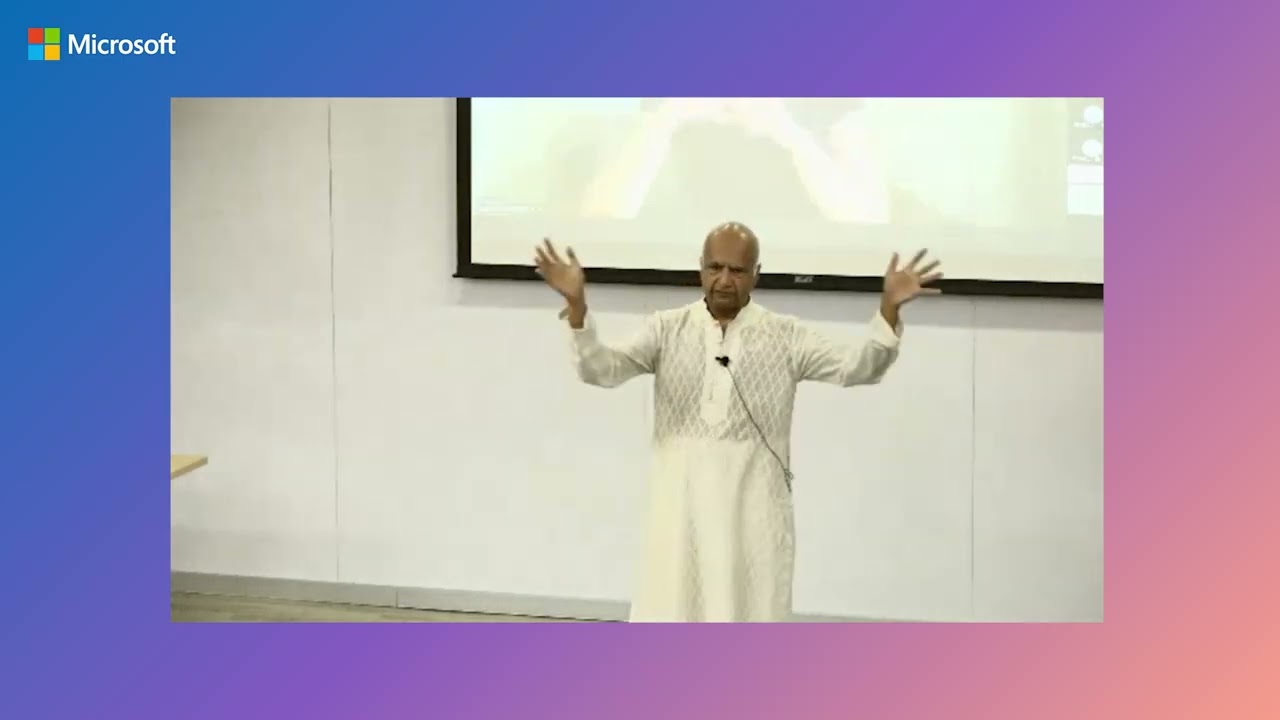
The speaker, Bharat Goenka, co-founder of Tally, delves into the philosophy and practice of “Full Stack Greenfield” projects, a core tenet of Tally’s software development strategy. He asserts that Tally, a single-product company serving 2.7 million SMB customers, is in the midst of its sixth such project, a testament to its repeated success despite being an unusual and high-risk approach.
What is Full Stack Greenfield?
Goenka defines “Full Stack Greenfield” as building software using absolutely nothing of an external stack. This means developing every component in-house: databases, GUI engines, math routines, and memory management for business objects. For business software, this is highly uncommon. The central question he poses is: “Why would anyone do such a thing?” Beyond intellectual satisfaction, he argues, it’s about confronting unique problems and transcending existing constraints that commercial off-the-shelf solutions impose.
Historical Imperatives and the Indian Context (1986)
Tally’s first Full Stack Greenfield project emerged from the specific challenges of India in 1986:
- Unstable Power: Frequent power cuts meant existing databases were prone to corruption during writes, and UPS systems were non-existent. Selling software in such an environment required a database built to recover instantly and seamlessly, a capability not offered by standard solutions like IBM ISM DB or DB3.
- Limited Hardware: Software had to run efficiently on 4.77 MHz processors, 640 KB RAM, and 20 MB hard drives. This demanded extreme optimization and control over the entire stack.
- SMB Market Realities: The software needed to function reliably in diverse, often remote, locations with minimal IT support. This necessitated a focus on resilience and ease of use that off-the-shelf components couldn’t guarantee.
These challenges forced Tally to look beyond the “functional side” of the problem to the environmental circumstances preventing actual product adoption, leading them to build their own foundational technologies.
Beyond the “Tina Syndrome”: Lovable Software
Goenka introduces the “Tina syndrome” (“There Is No Alternative”) to describe situations where users tolerate software not because it’s good, but because there are no better options. He contends that many software developers mistakenly attribute user retention to product quality rather than this lack of alternatives.
He argues that users switch not for more functionality, but for delight: “it’s faster,” “it is far more responsive,” “it’s just it’s just more lovable because of the fundamental character of it.” The speaker laments that as hardware improved dramatically (multi-thousand-fold increase in processor speed, memory, storage, network), software hasn’t kept pace in terms of speed and responsiveness. This is because programmers have become “lazier,” relying on hardware improvements rather than solving the “lovability problem” through deep optimization.
The Emotional Connect: Tally’s Unique Customer Loyalty
Goenka shares anecdotes illustrating extreme customer loyalty, including a user with a Tally tattoo and others who changed their surnames to “Tally Data.” He emphasizes that this level of emotional attachment comes from a deep alignment with the customer’s needs and the product’s ability to seamlessly support their business growth.
He recounts a story of a large department store owner, Surendra Pal, who outgrew Tally’s architecture but refused to switch, declaring, “Every drop of blood will tell you Tally.” This showcases the profound impact of a product that deeply integrates into a user’s business life. The key, Goenka explains, is not just functionality (which can be broken down into data manipulation fundamentals) but speed and instantaneous impact.
Instantaneous Impact: A Core Full Stack Advantage
Tally’s software allows users to modify old transactions, even from 15 years prior, and see the “cascading impact” on reports instantly, across any arbitrary date range. This contrasts with traditional software that requires “rectification entries” or doesn’t update reports in real-time. This “instant” impact, measured only by “computing instrumentation,” is a direct result of building their own database and data structures, enabling performance that off-the-shelf solutions cannot provide in constrained environments.
The SMB Market: A “Dead Zone” and Unique Constraints
Goenka references Peter Thiel’s “Zero to One” to describe the SMB market as a “dead zone” for product companies. SMBs have enterprise-like characteristics (complex business needs, resistance to self-service) but consumer-like affordability.
- No Sales Engine: Unlike enterprise software, SMBs cannot afford the cost of a dedicated sales and support engine.
- Expect Service: In developing markets like India, SMBs expect service (like a chaiwala delivering tea), not self-service.
- Affordable Devices: SMBs cannot afford high-end hardware. Software must run fast and reliably on the devices they can afford.
This combination of constraints means Tally cannot simply “take advantage of progress of the stack” or tell customers to “upgrade.” Their software’s “lovability” must come from deep optimization for these specific, resource-constrained environments, again necessitating a Full Stack Greenfield approach.
Current Aspirations: From 2.7 Million to 200 Million Customers
Tally’s current Full Stack Greenfield project aims to scale from 2.7 million business customers to 200 million. This requires addressing a new challenge: the “connected world.”
- Disconnected Business Data: While personal productivity is connected, business data often remains siloed. Businesses are not “islands”; they interact with customers, suppliers, banks, and government.
- The BMW Problem: Goenka illustrates the challenge of connecting disparate business data with the “BMW” example (Biscary Beller Mineral Water vs. Aquafina). Different businesses, even dealing with the same physical product, use vastly different “abstractions” (SKUs, product descriptions). Aligning these abstractions at a technical level is complex because it requires understanding the mental models and growth trajectory of various businesses.
- Building an OS: To achieve this scale and interconnectedness, especially for a billion users where 80-90% cannot afford expensive software, Tally is even building its own operating system. This is driven by the need to manage infrastructure costs (which decline for compute/memory but increase for management teams) and ensure an affordable, low-management solution.
Choosing Your Constraints, Not Being a Victim
A core philosophy for Tally is to “break the assumptions of constraints.” Goenka argues that most software development is done “on top of constraints” without questioning their validity. His advice to the MSR audience is to “go below the constraints,” to understand why a constraint exists.
- Examined Constraints: Tally examines fundamental constraints (e.g., multilingual keyboards for concurrent language input) even if they choose not to build a solution themselves, making it a deliberate choice rather than a passive acceptance.
- Product Engineering vs. Custom Software: He distinguishes between product engineering (for a completely unknown buyer and seller) and custom software (90% of code in the world). Productization requires a different engineering mindset focused on tradability, usability for unknown users, and packaging.
Managing Risk and the Nature of the Industry
Addressing the risk of a new Full Stack Greenfield release, Goenka asserts:
- No Customer Loyalty: There is no “customer loyalty”; customers are “married to their business,” and will always choose the best product for their needs.
- Onus to Build the Best: Tally’s confidence comes from the belief that they must always build the best product.
- Zero-One Game: Software is a “zero-one game”; companies either “win everything or lose everything.” This belief allows them to take fundamental risks, understanding that success or failure is absolute.
- “Fail Fast” Critiqued: He dismisses “fail fast” and “MVP” (Minimum Viable Product) as excuses, arguing they often lead to “failing forever” or building something that is merely “shipped” but not truly competitive.
Hard Constraints vs. Deliberate Choices
Finally, Goenka differentiates between unchangeable “hard constraints” (like the speed of light, which limits round-trip latency for cloud solutions) and choices made with “deliberation rather than fatality.” For instance, Tally insists on on-premise software for SMBs due to latency and cost, believing even professional users prefer local clients. While they might build an OS, they might not build their own chips, making choices about which boundaries to accept consciously.
Tally’s journey exemplifies a commitment to radical self-reliance in software development, driven by a deep understanding of its market’s unique challenges and a relentless pursuit of product excellence and user delight.