The $9B startup that wants to create a billion new developers
Replit co-founder and CEO Amjad Masad discusses the company's 10-year journey from a browser IDE to an AI-native "vibe coding" platform, empowering non-technical domain experts to build and deploy real software, and what the future holds with parallel agents and a post-prompting world.
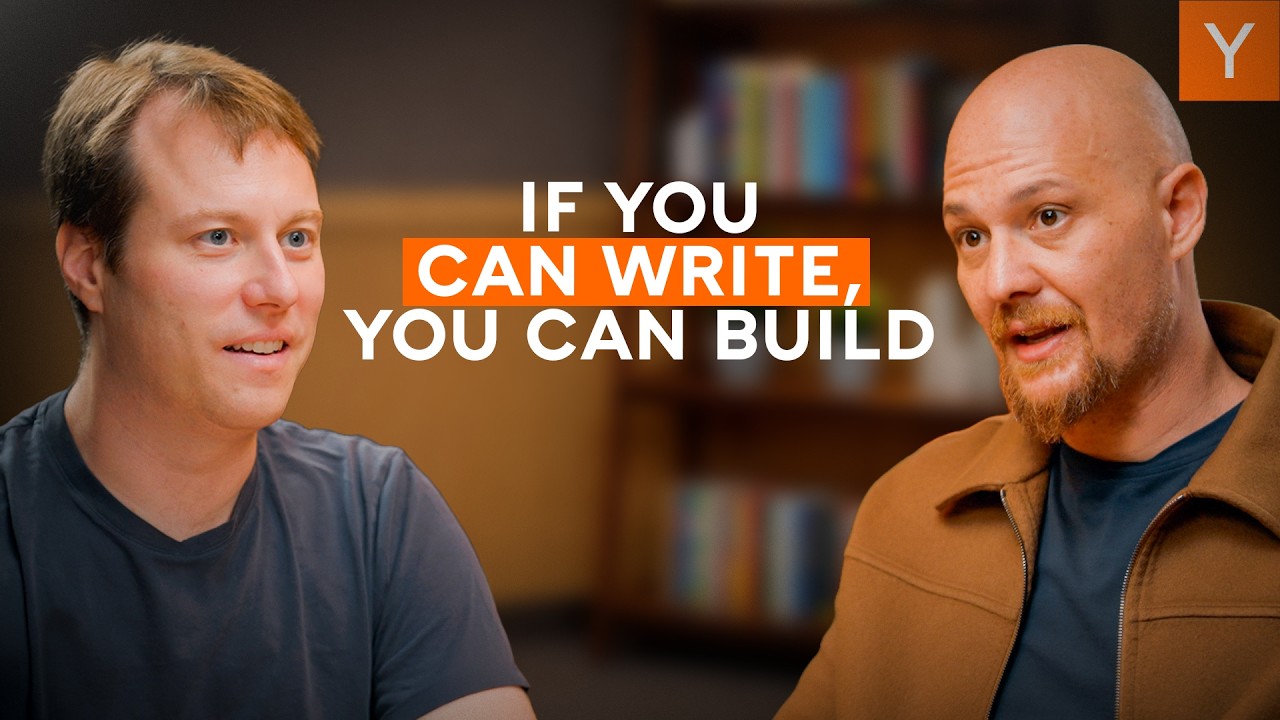
Replit’s ambition is to empower anyone with an idea to create a fully deployed, hosted, and scalable application without needing to worry about the technical complexities. The mission, which has evolved over 10 years, began by solving the initial hurdles of setting up development and deployment environments. The final, most intimidating barrier was coding itself. In September 2024, Replit introduced “vibe coding,” which abstracts away code entirely, allowing users to build software by interfacing with an AI agent through natural language.
A New Generation of AI-Native Builders
Initially, Replit’s mission was to “create a billion new developers.” However, the team observed that many traditional developers enjoy the intricate process of setting up their tools and configurations—the “accidental complexity” of software development. The users deriving the most value were often tech-adjacent professionals: product managers, designers, and entrepreneurs who were passionate about solving a problem but were bottlenecked by the need for deep technical expertise.
This led to a strategic shift in 2023 to explicitly target this new generation of AI-native builders. These are creators who can now build sophisticated software without needing to understand every component of the underlying system. The platform is designed to bring back the joy of creation, reminiscent of simpler tools like VB6, but for the modern web.
Who is Building and What Are They Building?
The platform enables domain experts—the people closest to the problem—to build the exact solutions they need. This has unlocked a wide range of applications across personal, enterprise, and entrepreneurial use cases.
- Vertical SaaS and Expert Tools: A physical therapist with deep knowledge of fascia release, after spending hundreds of thousands of dollars on offshore developers, successfully built a sophisticated health-tech app on Replit. The app includes features for body scans and tracking range of motion on a 3D model.
- Niche Business Solutions: Founders are creating SaaS products for industries often overlooked by Silicon Valley, such as software for pool maintenance companies and sports clubs still running on MS-DOS.
- Personal and Family Software: Users are building custom applications for their personal lives, such as a mom in Korea who developed software to manage her child’s rare health condition or another who created a “chore hero” iPad app for her kids.
- Enterprise and Internal Tools: In the enterprise, Replit serves two main purposes.
- Accelerated Product Development: Companies like Whoop use Replit to increase the number of ideas they can prototype and test by an order of magnitude, empowering product and design teams to build features directly.
- Internal Tools and Automation: Roles like RevOps, which sit at the nexus of various data flows (CRM, Gong, etc.), can build custom tools like quote configurators. This saves companies millions on SaaS tool licenses and avoids creating new data silos.
Agent 4: Parallelism, Design, and Teamwork
Replit aligns its major releases with the massive step-changes in AI capabilities, which occur roughly twice a year. Agent 4 introduces several key innovations based on the emergence of long-horizon reasoning and the need for a more interactive, asynchronous workflow.
- Parallel Agents: To combat the “sit and wait” nature of autonomous agents, users can now kick off multiple agents to work on different tasks in parallel. This required solving complex challenges like handling merge conflicts automatically.
- Built-in Design Canvas: While one agent is coding, the user can work on designing the next feature or page in a visual canvas. This creates a state of flow, as the user is never blocked.
- Multi-User Collaboration: The architecture for parallel agents naturally extends to teamwork. Multiple users can join a session, each getting their own VM, and work in parallel. The orchestrator can subdivide tasks from a shared prompt across different users and agents.
- Unified Project Context: Agent 4 understands the entire project context. If you build a web app, you can simply ask it to “make a mobile app.” It will generate the mobile app, lay it out on the canvas, and handle deployment to the appropriate app stores, allowing you to run your entire company from Replit.
The Future: A Post-Prompting World
The skills required to succeed are shifting away from meticulous prompt engineering and towards a “post-prompting” paradigm. The future is less about detailed instructions and more about giving agents high-level goals, such as “build me a SaaS company and try to market it.”
The skills that will matter most are:
- Understanding What’s Possible: Staying plugged into the rapid advancements in AI to know what to even ask for.
- Persistence: If a tool can’t build something today, try again in a few weeks. The capabilities are improving that quickly.
- Idea Generation: Creativity and the ability to identify problems to solve remain fundamentally human and crucial.
In this future, companies will be composed primarily of “builders and salespeople.” The builders will act as internal entrepreneurs, identifying problems across the organization—from support ticket prioritization to HR onboarding—and deputizing agents to build solutions.