Software development

From AI-Assisted to AI-Native: Building a Frontier Development Team — Clare Liguori, AWS

From AI-Assisted to AI-Native: Building a Frontier Development Team — Clare Liguori, AWS

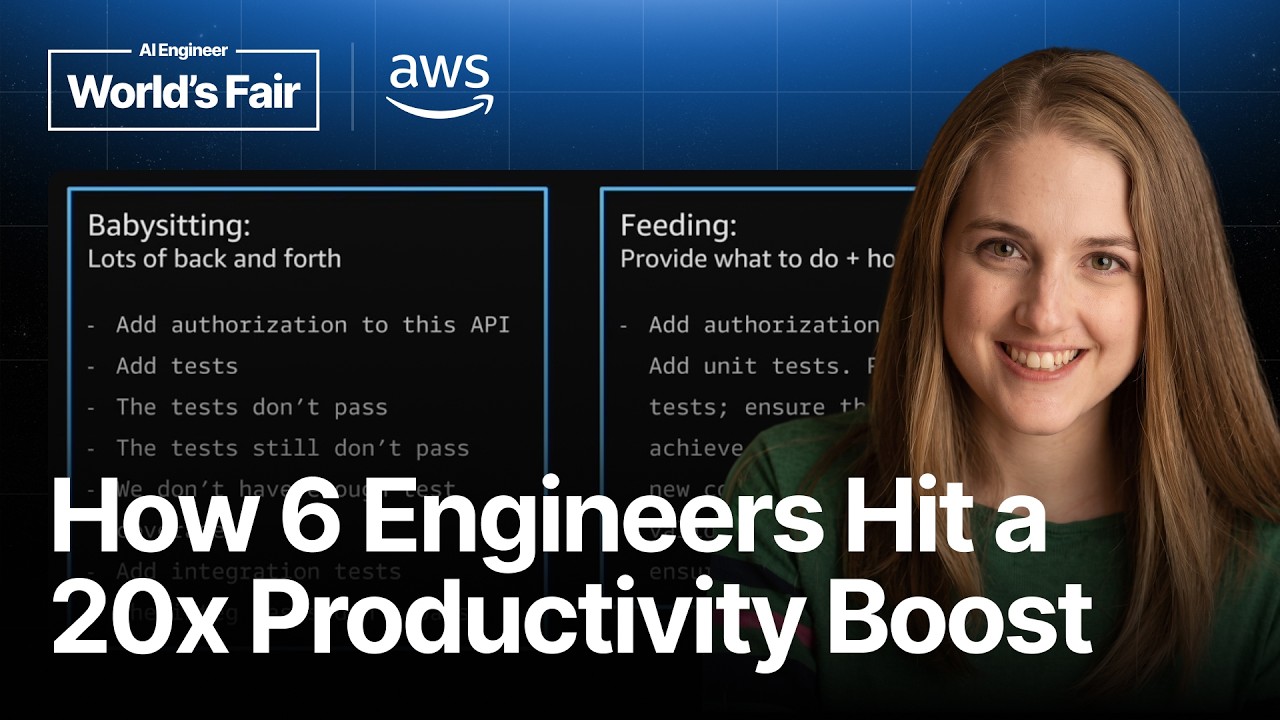
Clare Liguori, a Senior Principal Engineer at AWS, reveals how Amazon teams are achieving 4.5x to 10x productivity gains through 'frontier development' with AI coding assistants like Kuro. She emphasizes that success isn't about the tools, but about fundamentally changing how engineers work, outlining five core habits: investing in agent context, embracing an initial slowdown for long-term speedup, feeding agents comprehensive instructions instead of micromanaging, making design intent explicit before coding, and shifting left with local, deterministic testing. Liguori also addresses new challenges like burnout and decision-making becoming the primary bottleneck in highly accelerated development cycles.

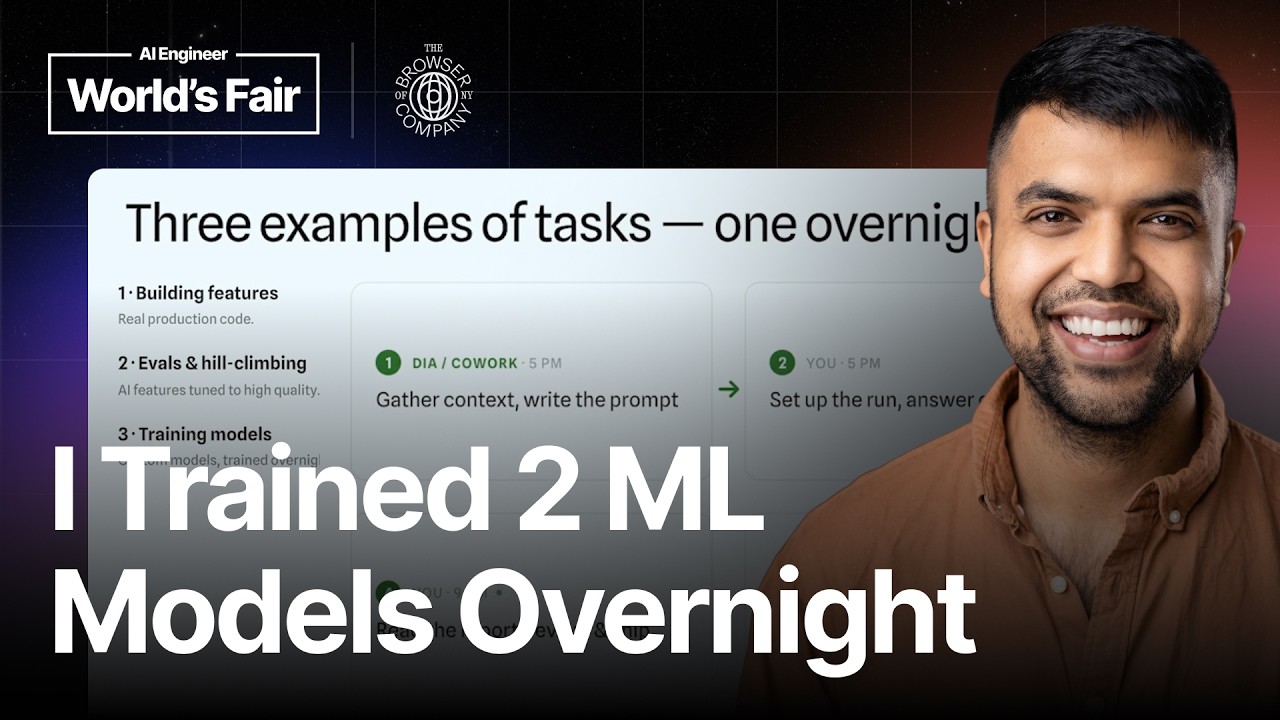
Prototyping as Leadership: How a CTO Ships with AI Agents — Hursh Agrawal, The Browser Company

Prototyping as Leadership: How a CTO Ships with AI Agents — Hursh Agrawal, The Browser Company

Hursh Agrawal, CTO of The Browser Company, argues that AI agents have transformed the manager's schedule into usable building time. He outlines how leaders, leveraging their deep business context, can utilize an overnight loop with AI coding agents to ship features, optimize AI models, and even train custom classifiers, which is critical for staying calibrated with rapidly evolving frontier models and effectively communicating new product possibilities.

What Is RAD? Why It Matters in the Age of AI Coding

What Is RAD? Why It Matters in the Age of AI Coding

This video explores how James Martin's 1991 Rapid Application Development (RAD) methodology, with its emphasis on rapid prototyping, iterative development, and user feedback, offers a robust framework for contemporary AI coding and "vibe coding" workflows. It highlights how AI agents accelerate prototyping but introduces new challenges regarding production readiness and security. The solution proposed is spec-driven development, where human expertise formalizes requirements and verifies AI-generated code based on insights gained from early prototypes, ensuring quality and mitigating risks.

Velocity Sickness: What Happens When Your Whole Team Gets 10x Faster — Matt Dailey, Ref.

Velocity Sickness: What Happens When Your Whole Team Gets 10x Faster — Matt Dailey, Ref.

Matt Dailey introduces "velocity sickness" – the stress of increased AI output without impact. He proposes shifting from ephemeral chat-based agent interactions to durable, shared documents as the "decision layer" to separate planning from implementation, enabling teams to own their code and prioritize ideas effectively.

Realtime multiplayer, automation, and you! — Idan Gazit, GitHub

Realtime multiplayer, automation, and you! — Idan Gazit, GitHub

Idan Gazit, head of GitHub Next, discusses the future of AI in software development, moving beyond personal productivity to enabling group collaboration and advanced automation. He introduces two prototypes: "Agentic Workflows" for autonomous, secure code upgrades and task execution using natural language, and "ACE," a real-time collaborative development environment designed to integrate AI into team workflows, addressing the 95% of development work beyond mere typing.

Agentic Engineering vs Software Engineering: Beyond Vibe Coding

Agentic Engineering vs Software Engineering: Beyond Vibe Coding

Anna Gutowska explains the paradigm shift in software engineering towards "agentic engineering," where AI agents execute goals defined by developers. She differentiates this from traditional, AI-assisted, and vibe coding, highlighting the increased importance of human oversight, orchestration, and verification in a world of probabilistic AI systems, and how this redefines the developer's role.