Software development

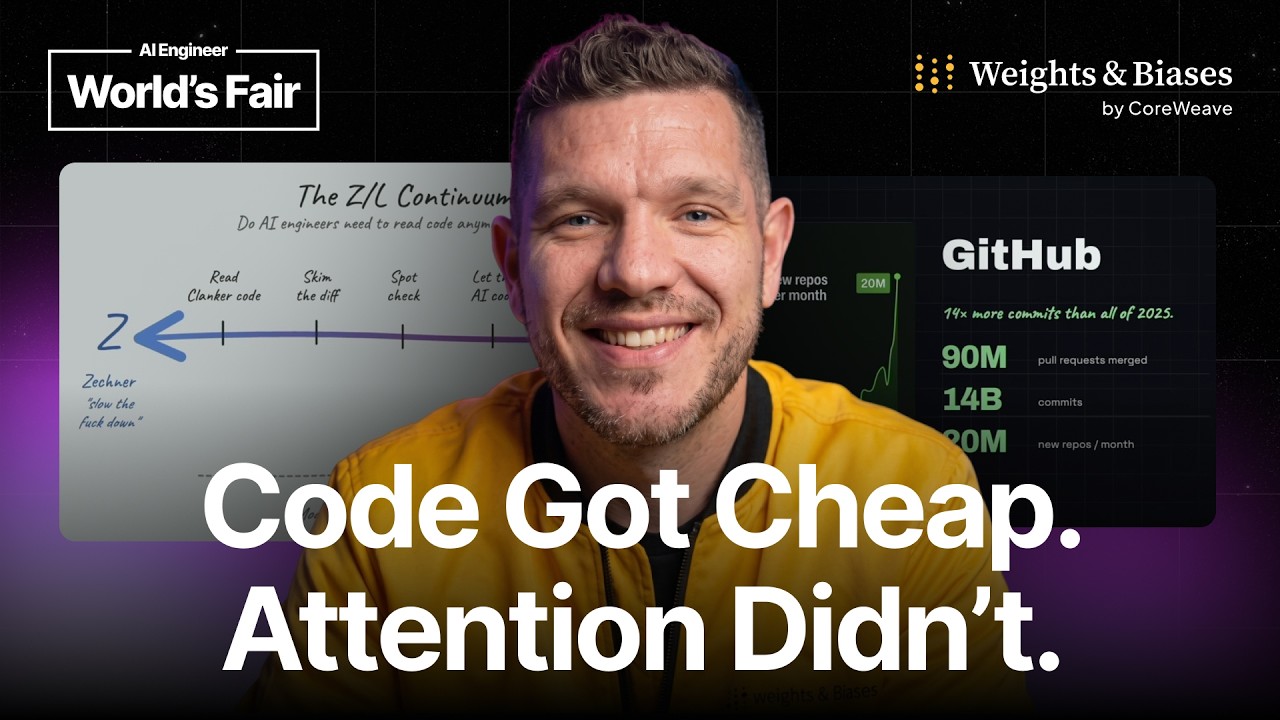
Should AI Engineers Still Read Code in 2026? The Z/L Continuum — Alex Volkov, ThursdAI

Should AI Engineers Still Read Code in 2026? The Z/L Continuum — Alex Volkov, ThursdAI

Alex Volkov introduces the "Z/L Continuum," a framework for navigating the tension between rapid AI-generated code production and the critical need for human review. He argues that the key lies in understanding that the continuum applies to tasks, not individuals, and presents a pragmatic routing table for verifying changes based on their criticality, highlighting the shift towards engineering systems that build and verify code, rather than meticulously inspecting every line. The talk also touches on emerging capabilities like Fable and "loops" and the importance of flexibility and human judgment in the evolving AI engineering landscape.

Field Guide to Fable — Thariq Shihipar, Anthropic

Field Guide to Fable — Thariq Shihipar, Anthropic

Thariq Shihipar from Anthropic introduces Fable, their newest model, as a major leap forward, emphasizing "capability overhang" where tool use unlocks unprecedented intelligence. He provides a "field guide" on working with Fable, discussing evolving prompt engineering, advanced tool interactions (like HTML reports), and strategies for identifying project unknowns. He concludes by challenging the necessity of traditional tradeoffs, advocating for ambitious development that is both good, fast, and cheap, and urging AI engineers to prove the transformative power of AI.

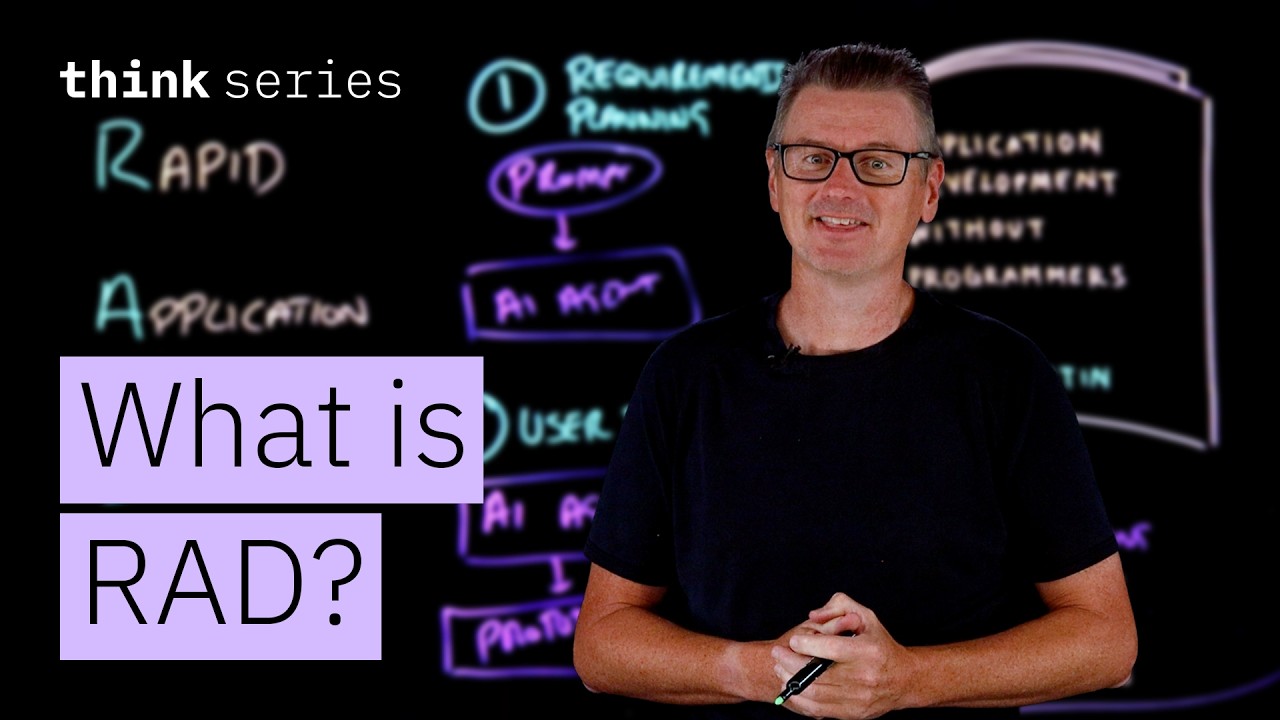
What Is AI Code Review? Fixing Slow PRs & Broken Workflows with AI

What Is AI Code Review? Fixing Slow PRs & Broken Workflows with AI

Anna Gutowska explains how AI code review enhances software development by addressing the slowness and inconsistency of traditional methods. The video delves into the benefits of AI in accelerating reviews, improving code quality, fostering developer learning, and reducing technical debt. It covers the underlying technologies like static/dynamic analysis and LLMs, discusses critical considerations such as over-reliance and context, and provides best practices for integrating AI while emphasizing the indispensable role of human oversight.

The Rise of the Full-Stack Builder and Hyper-Leveraged Generalist with Microsoft CEO Satya Nadella

The Rise of the Full-Stack Builder and Hyper-Leveraged Generalist with Microsoft CEO Satya Nadella

Microsoft CEO Satya Nadella discusses the future of AI at Microsoft Build, emphasizing an ecosystem approach where every company can create its own "frontier intelligence." He highlights the critical role of private evaluations as a new form of intellectual property, the strategic use of multi-modal harnesses for enterprise, and how autonomous AI agents are reshaping software development and business models. Nadella also shares insights on the societal impact of AI, from data center investments to the potential for AI-driven transformation in education.

Agents Don't Do Standups: Building the Post-Engineer Engineering Org — Mike Spitz, PFF

Agents Don't Do Standups: Building the Post-Engineer Engineering Org — Mike Spitz, PFF

A case study from PFF reveals how a two-engineer team, by leveraging AI agents, achieved a 25x increase in deployment frequency and 10x the output of a ten-engineer team. CTO Mike Spitz explains their core principle: shifting focus from making engineers faster to making AI agents faster. This talk deconstructs the resulting transformation, which eliminated traditional agile ceremonies like stand-ups and sprint planning in favor of an automated, spec-to-PR workflow, redefining the roles of engineers and processes in a modern software organization.

CI/CD Is Dead, Agents Need Continuous Compute and Computers — Hugo Santos and Madison Faulkner

CI/CD Is Dead, Agents Need Continuous Compute and Computers — Hugo Santos and Madison Faulkner

Madison Faulkner and Hugo Santos explain why traditional CI/CD, built for human developers, is failing under the load of AI agents. They propose a new paradigm of 'Continuous Compute' centered on intent-driven agent loops, fast inline validation, and a pre-merge layer where humans review outcomes, not diffs, paving the way for a 'multiverse' of parallel development.