Thinking in Platforms • Kasper von Grünberg & Luca Galante • GOTO 2026
Kaspar von Grünberg and Luca Galante discuss their book "Thinking in Platforms," tracing platform engineering's origins from addressing key person dependencies to its critical role as an "operating model" for AI-first organizations. They highlight how AI agents necessitate standardized, productized internal platforms for effective deployment, emphasizing that platform efforts often fail due to social rather than technical challenges.
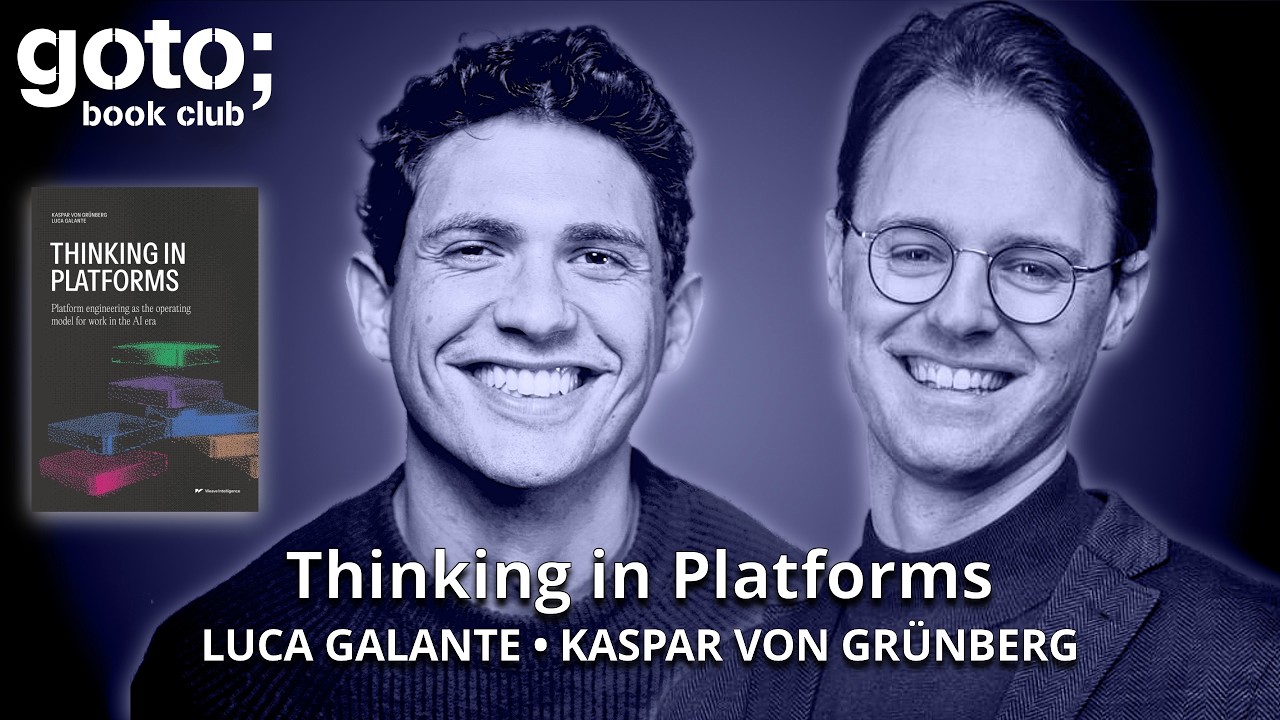
Kaspar von Grünberg and Luca Galante, co-authors of “Thinking in Platforms,” delve into the origins, evolution, and future of platform engineering, particularly its critical role in an AI-first world.
The Genesis of Platform Engineering
The discussion opens with the personal journey of the authors into platform engineering, rooted in a “key person dependency” problem. They recount an incident where their entire software codebase and company were held hostage by a single backend engineer, highlighting the fragility of systems reliant on individual “heroes.” This experience underscored the need for more reliable, systemic approaches to software development.
Platform as a Product: The Industrialization Parallel
They define the core concept of a “digital platform” as treating the internal setup or “workbench” of software creation as a product rather than something that “just happens.” This idea draws a direct parallel to the industrial revolution, specifically Henry Ford’s shift from artisan workshops to standardized assembly lines. Just as Ford productized the means of work to dramatically increase efficiency and scale in manufacturing, platform engineering aims to standardize and productize the development environment, offering “high standardized workbenches” to developers. This prevents repetitive, undifferentiated heavy lifting, allowing developers to focus on creativity while ensuring consistency and speed.
“Thinking in Platforms”: A Practical Guide
The book is structured into three main parts:
- Foundational Principles: Explores the historical roots of platform engineering, key concepts like “platform as a product,” and contrasts it with less effective “hero-based” or bureaucratic production systems.
- Paths to Outcome Conceptual Framework: Introduces the “golden path” concept—the ideal, paved road developers are gently nudged onto. It details how orchestrating these paths generates wider business value.
- Practical Playbook: The most extensive section, offering a pragmatic guide on implementing platform engineering. It covers starting with Minimum Viable Platforms (MVPs) and progressively achieving full enterprise adoption. A crucial insight here is that platform efforts often fail not on the technical side, but on the social side—gaining buy-in from developers, executives, security, and governance teams.
AI Agents: A Game Changer for Platform Engineering
The advent of AI, particularly agents, significantly amplifies the necessity of platform engineering. The authors argue that agents make platforms non-optional. An AI agent dropped into an enterprise environment riddled with undocumented “tribal knowledge” will fail for the same reasons a new human hire would, but at scale and much faster. Kaspar uses the analogy of “hiring a brilliant intern from Ivy League and sending them at a Chinese work environment where they don’t speak a word of Chinese.” For agents to be productive, robust infrastructure—including context management, security, observability, and governance—must be in place before they are deployed. The old rule of thumb that a platform team was justified only with 100+ developers no longer holds; a single person running a thousand agents now necessitates a sophisticated platform.
Platform Engineering Beyond IT
Initially focused on IT and developer experience, platform engineering is rapidly expanding its scope. It has already moved into areas like security, observability, DataOps, and MLOps. The influence of AI is accelerating this trend, transforming platform engineering from a mere software discipline into the “operating model” for AI-first organizations across the entire enterprise. This includes marketing, legal, and other knowledge-work functions. The traditional threshold for platform adoption is also lowering, with even small teams benefiting from platform principles to manage AI workflows effectively and avoid creating a chaotic mess. The authors emphasize that platform engineering, rooted in long-standing principles of organizing work, offers a “reasonable and safe bet” for any organization seeking competitive advantage in the AI era.