Devops

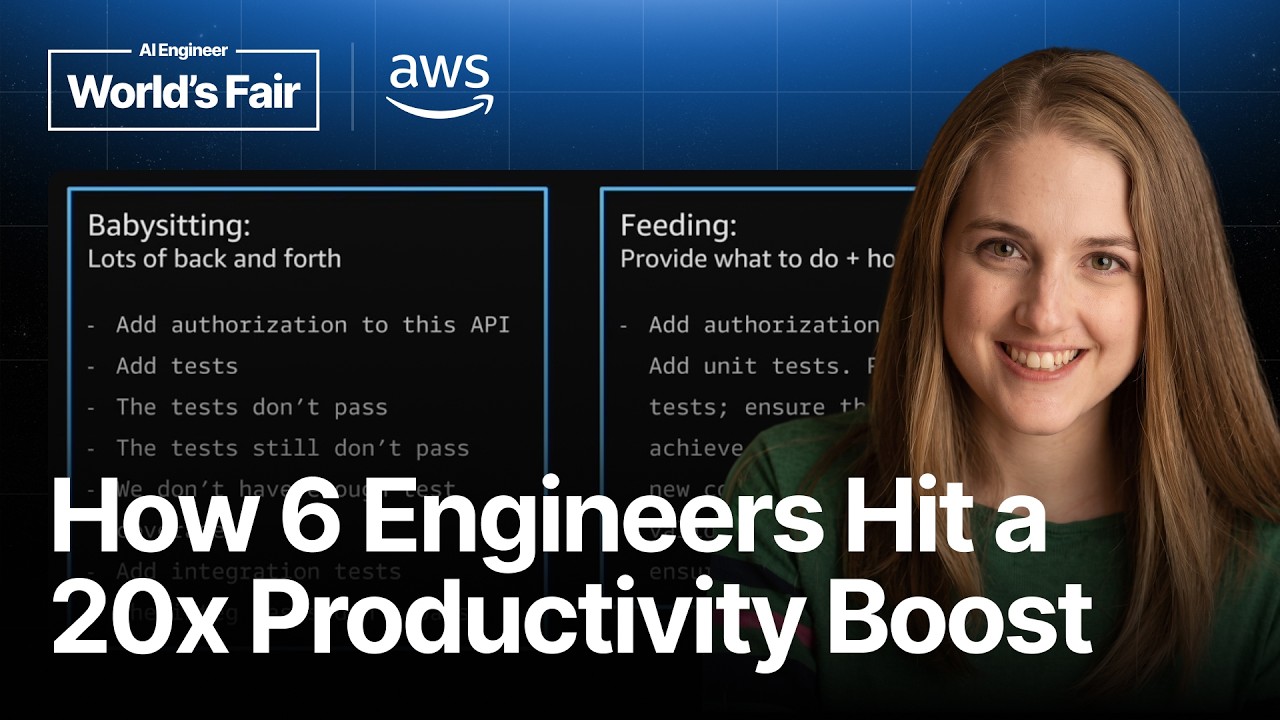
From AI-Assisted to AI-Native: Building a Frontier Development Team — Clare Liguori, AWS

From AI-Assisted to AI-Native: Building a Frontier Development Team — Clare Liguori, AWS

Clare Liguori, a Senior Principal Engineer at AWS, reveals how Amazon teams are achieving 4.5x to 10x productivity gains through 'frontier development' with AI coding assistants like Kuro. She emphasizes that success isn't about the tools, but about fundamentally changing how engineers work, outlining five core habits: investing in agent context, embracing an initial slowdown for long-term speedup, feeding agents comprehensive instructions instead of micromanaging, making design intent explicit before coding, and shifting left with local, deterministic testing. Liguori also addresses new challenges like burnout and decision-making becoming the primary bottleneck in highly accelerated development cycles.

Platform Engineering for Developers, Architects & the Rest of Us • Daniel Bryant • GOTO 2025

Platform Engineering for Developers, Architects & the Rest of Us • Daniel Bryant • GOTO 2025

Daniel Bryant discusses platform engineering for software developers and architects, emphasizing treating platforms as internal products with developers as customers. He outlines a three-layered architecture, the evolution from monolithic systems to microservices, and the importance of 'golden bricks' over 'golden paths' for composability. Key takeaways include API-first design, minimizing cognitive load, avoiding leaky abstractions, and measuring success through frameworks like DORA and DevEx to achieve speed, safety, and scale.

Give the Agent a Budget, Not a Token — Sachin Malhotra, Anthropic

Give the Agent a Budget, Not a Token — Sachin Malhotra, Anthropic

Sachin Malhotra's talk outlines a critical framework for safely deploying autonomous agents in production, moving beyond simple token-based access. He introduces 'asymmetric verbs,' refilling 'rate limits,' 'trip wires' for aggregate monitoring, and the 'undo test' as a lens. A central tenet is that infrastructure (via a proxy) must stamp an agent's identity, preventing agents from circumventing controls and ensuring accountability, thus providing a "budget" instead of an unbounded "token."

Modern Enterprise Architecture: Architecting for Outcomes • Simon Rohrer • GOTO 2025

Modern Enterprise Architecture: Architecting for Outcomes • Simon Rohrer • GOTO 2025

Simon Rohrer challenges traditional Enterprise Architecture (EA) principles, proposing a modern approach focused on outcomes, continuous evolution, and socio-technical alignment. He outlines five key tenets: Aligning Value, People & Technology; achieving Better Value Sooner, Safer, Happier; implementing Continuous Conversational & Automated Governance; scaling DevOps across the enterprise; and fostering Evolutionary Enterprise Architecture.

Circleback CEO Ali Haghani: Recording Company Meetings Will Become The Norm

Circleback CEO Ali Haghani: Recording Company Meetings Will Become The Norm

Ali Haghani, co-founder of CircleBack, shares his unique hardware setup and delves into how his AI notetaker streamlines business operations, from interview tracking to customer support. He discusses the shift from manual coding to AI-orchestrated development, the nuances of prompt engineering, and his vision for why recording meetings with AI is becoming essential for leveraging LLMs and agents effectively in enterprises, ultimately reshaping the future of software engineering.

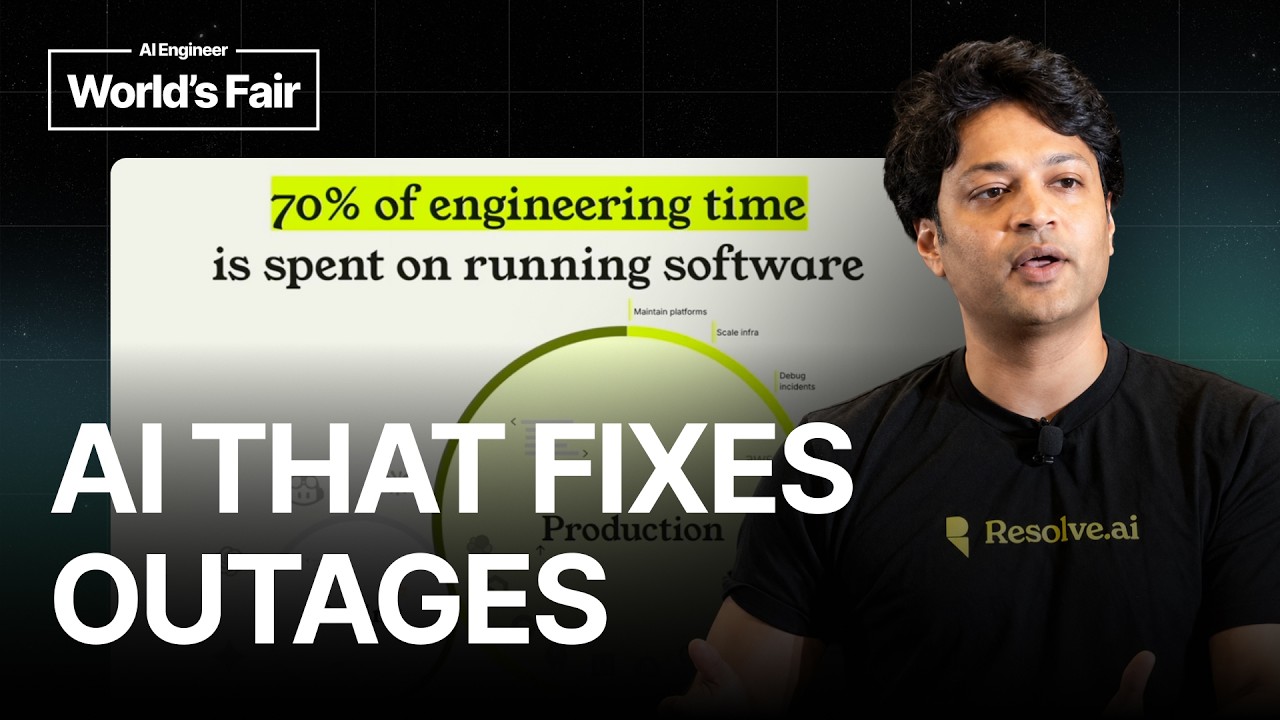
Always-on agents run production without the on-call tax — Justin Smith, Resolve AI

Always-on agents run production without the on-call tax — Justin Smith, Resolve AI

Justin Smith from Resolve AI discusses how AI agents address the increasing operational burden on engineers, highlighting that 70% of an engineer's time is spent running code. He introduces Resolve AI's background agents, which autonomously monitor deployments, perform health checks, generate reports, and answer engineering questions by leveraging deep production context and a self-learning knowledge system, effectively reducing the "on-call tax" and managing system complexity.