Software engineering

AI Writes the Code. So What's Left for Engineers? - Laurie Voss, Arize AI

AI Writes the Code. So What's Left for Engineers? - Laurie Voss, Arize AI

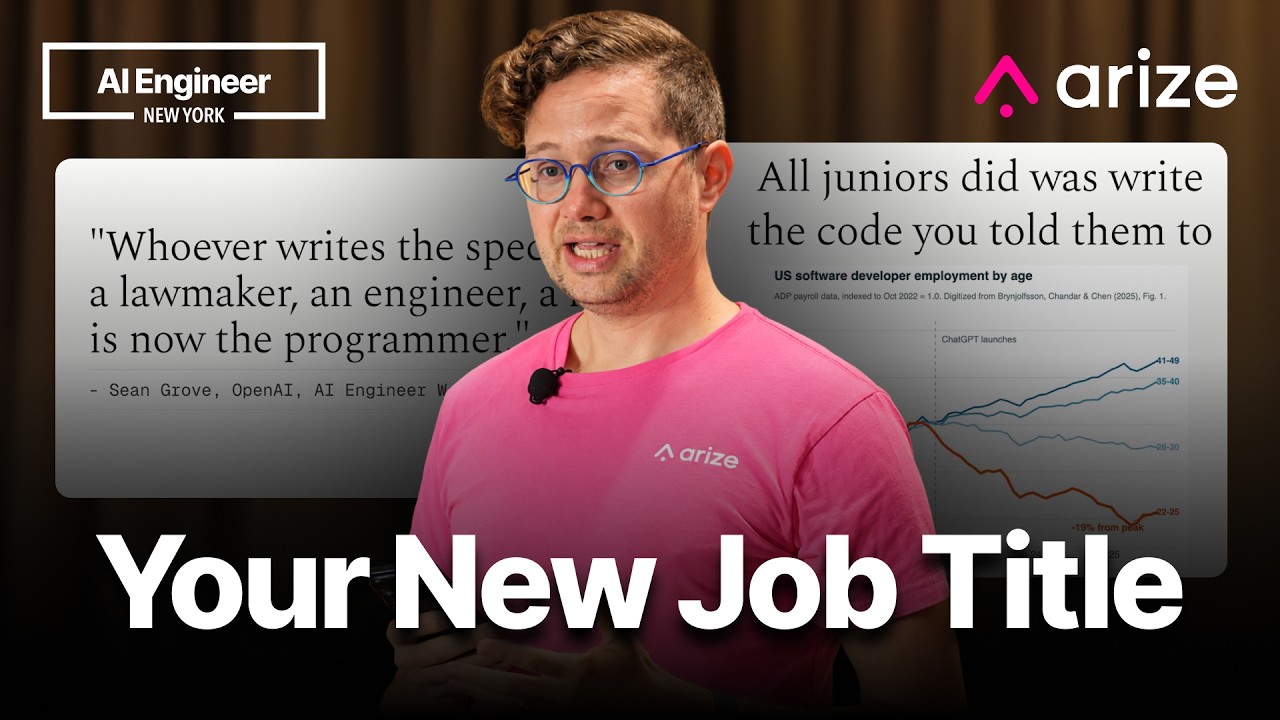
Laurie Voss, head of developer relations at Arize AI and co-founder of npm, argues that coding agents have made writing code nearly free, so the bottleneck keeps moving first to code review, then to operations and security. What agents can't take over is discovering what people actually need and defining what 'good' means. He introduces the product engineer as the role that remains, examines the collapse in junior engineering hiring, and offers practical advice for engineering leaders.
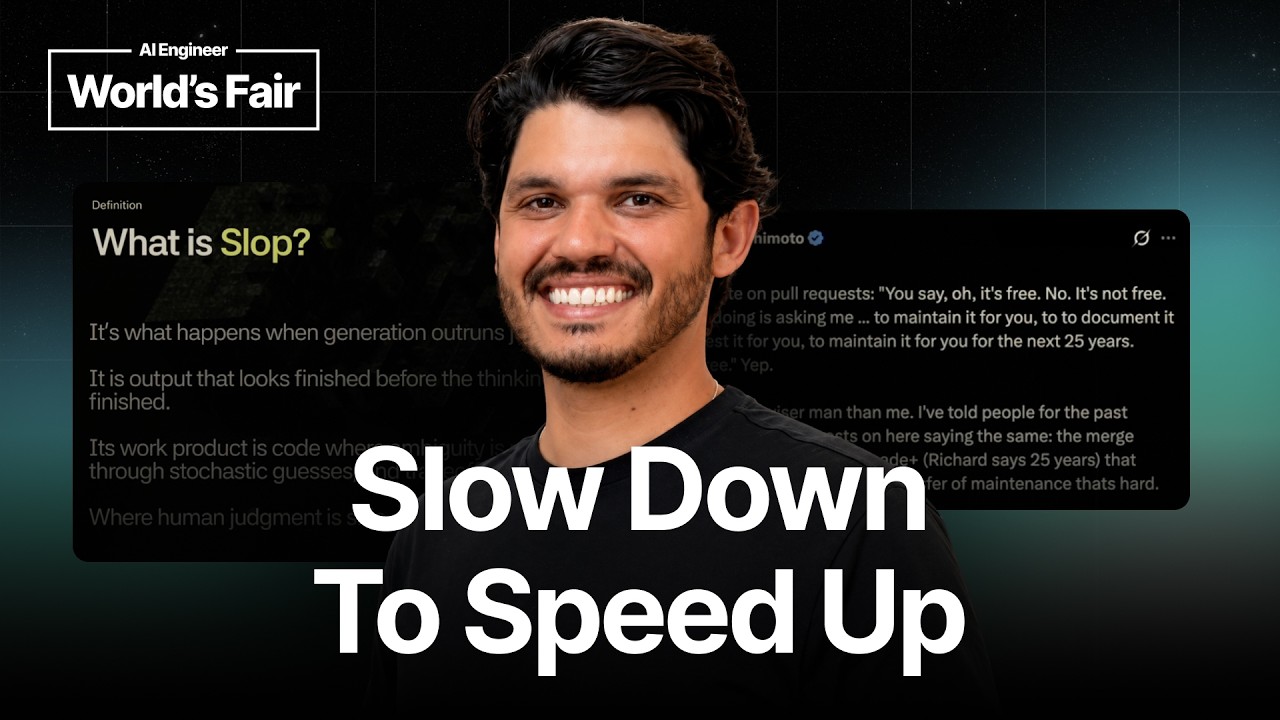
Generation Is Cheap, Review Is Expensive: How to Stop Shipping AI Slop — Gabriel Martinez, G2i

Generation Is Cheap, Review Is Expensive: How to Stop Shipping AI Slop — Gabriel Martinez, G2i

Gabriel Martinez of G2i argues that slop is not AI-written code but work that looks finished before the thinking behind it is done. He connects it to missing judgment, code as a liability, misaligned incentives that reward merging speed over review, oversized PRs and documents that push understanding onto reviewers, and the case for conventions, diagrams as review surfaces, and small changes. He closes by explaining why G2i built ORC to keep humans in control of agent-generated work.

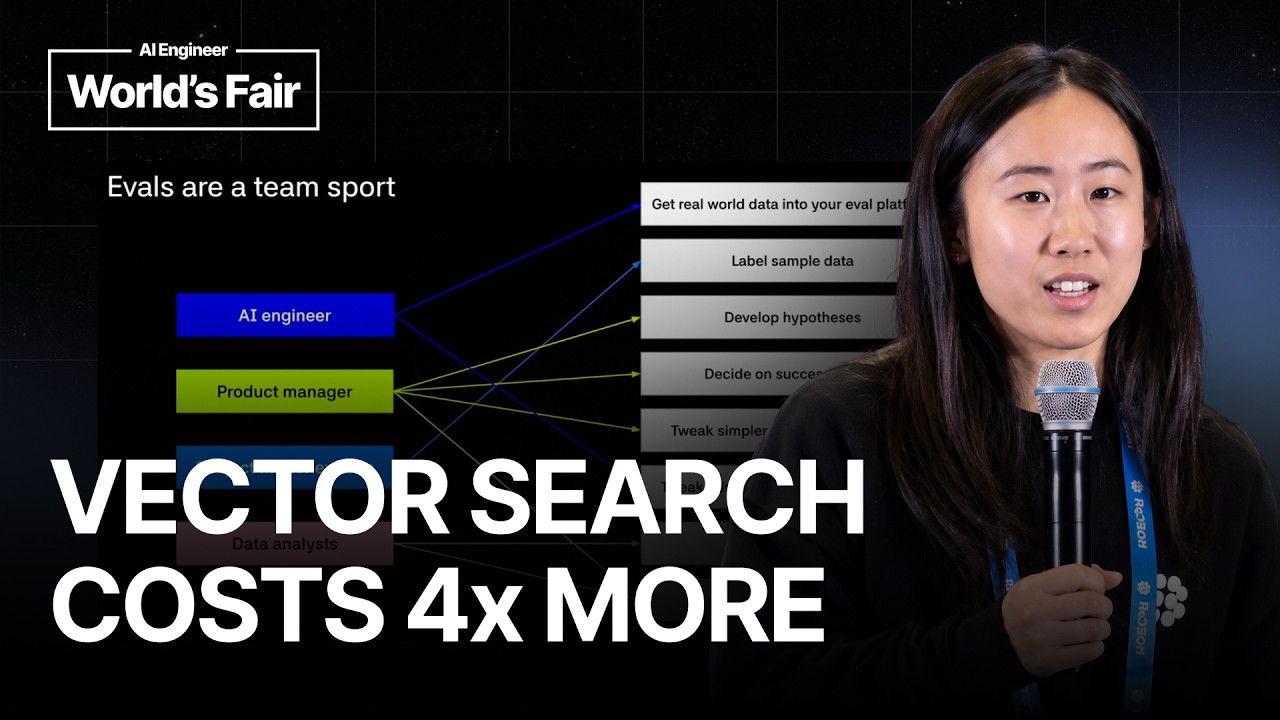
Agentic Search vs Vector Search for Coding Agents: We Ran the Eval — Braintrust

Agentic Search vs Vector Search for Coding Agents: We Ran the Eval — Braintrust

This talk by Jess Wang from Braintrust delves into the critical importance of evaluations (evals) in AI development, moving beyond subjective "vibes" to data-driven decision-making. She breaks down the four core components of an eval—dataset, task, scoring, and experiments—and illustrates the continuous improvement "eval flywheel" integrating observability. The central experiment compares agentic search against vector search for a coding agent tasked with finding buggy code in Microsoft's TypeScript Go repo. While both methods achieved identical accuracy, vector search proved four times more expensive due to its inability to capture surrounding context within code chunks, leading to excessive, inefficient searches. Wang concludes with practical caveats and best practices for conducting effective LLM evals.

AI Can Write the Proof. Who Checks It? — Leonardo de Moura

AI Can Write the Proof. Who Checks It? — Leonardo de Moura

Leonardo de Moura discusses Lean's journey, from its strict "cathedral model" of core development to its current extensibility. He reveals insights from the Collatz exploit, showcasing AI's role in uncovering kernel vulnerabilities and the critical need for robust formal verification. The conversation highlights AI's transformative impact, from generating complex, optimized code (like the zlib proof) to its limitations in true creativity, emphasizing the enduring human responsibility in defining specifications, curating knowledge, and maintaining trust in an AI-assisted future for software and mathematics.

The Universal Remote Control for AI — Alex Hancock, Block

The Universal Remote Control for AI — Alex Hancock, Block

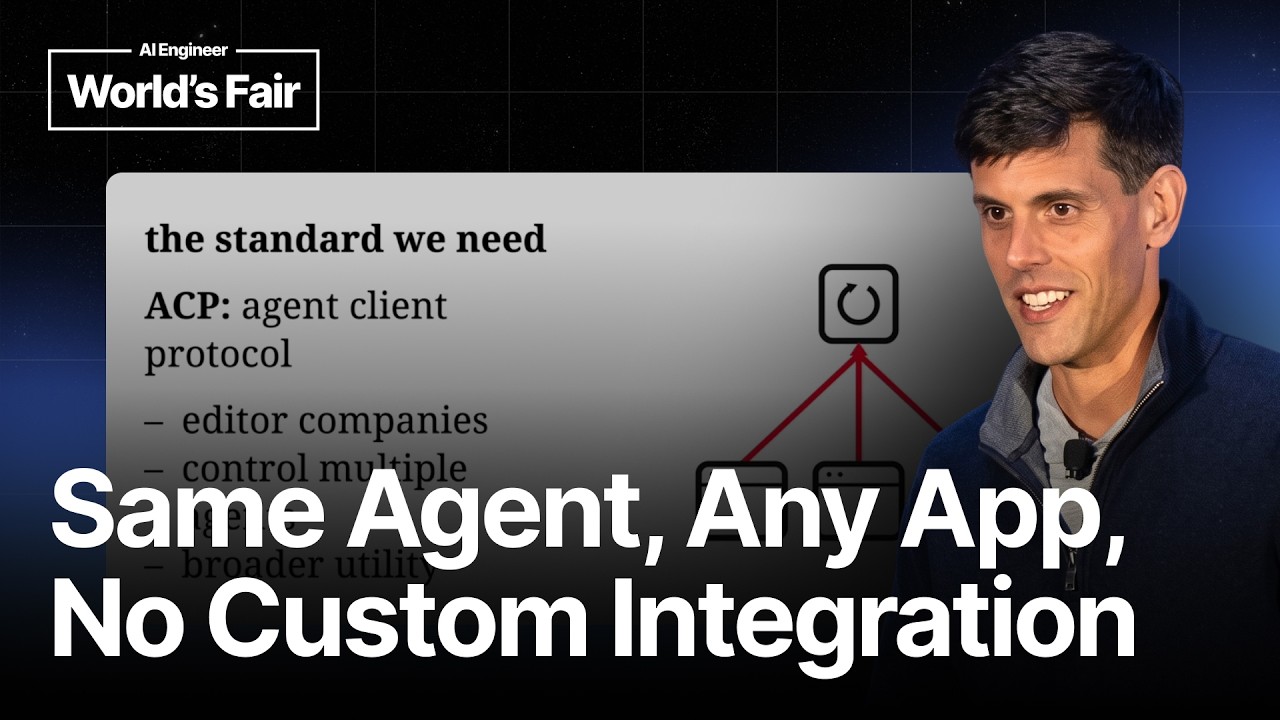
Alex Hancock discusses the need for a standardized protocol for client-to-agent communication in AI, similar to how MCP standardizes agent-to-tool interaction. He introduces the Agent Client Protocol (ACP), born from Zed and JetBrains, as a JSON RPC-based solution for client software to control agent harnesses, send tasks, and receive updates. Hancock demonstrates ACP's flexibility with multiple clients driving a single agent and highlights how its new remote transport capability, combined with MCP and model APIs, enables independent placement of all agentic stack components, fostering a competitive ecosystem that will significantly enhance user experience.

Code Quality in the Age of AI: Why Great Code Isn't Enough

Code Quality in the Age of AI: Why Great Code Isn't Enough

Meenakshi Kodati discusses how AI is transforming software engineering, shifting the focus from coding to critical decision-making. As AI rapidly generates code, the true challenge and value lie in architectural choices, system-level understanding, governance, testing, and continuous quality assurance to deliver meaningful business outcomes, emphasizing human judgment over mere implementation.