Memory and Continual Learning: Engram's Dan Biderman and Jessy Lin
Dan Biderman and Jessy Lin of Engram introduce their "always training" paradigm, focusing on baking a team's knowledge directly into a model's weights to achieve true memory and continual learning. This contrarian approach, which they call a "RAG killer" for specific use cases, promises up to 100x token savings and superior performance by internalizing context rather than relying on ever-larger context windows or external retrieval, envisioning a future where everyone has their own continually learning, personalized AI model.
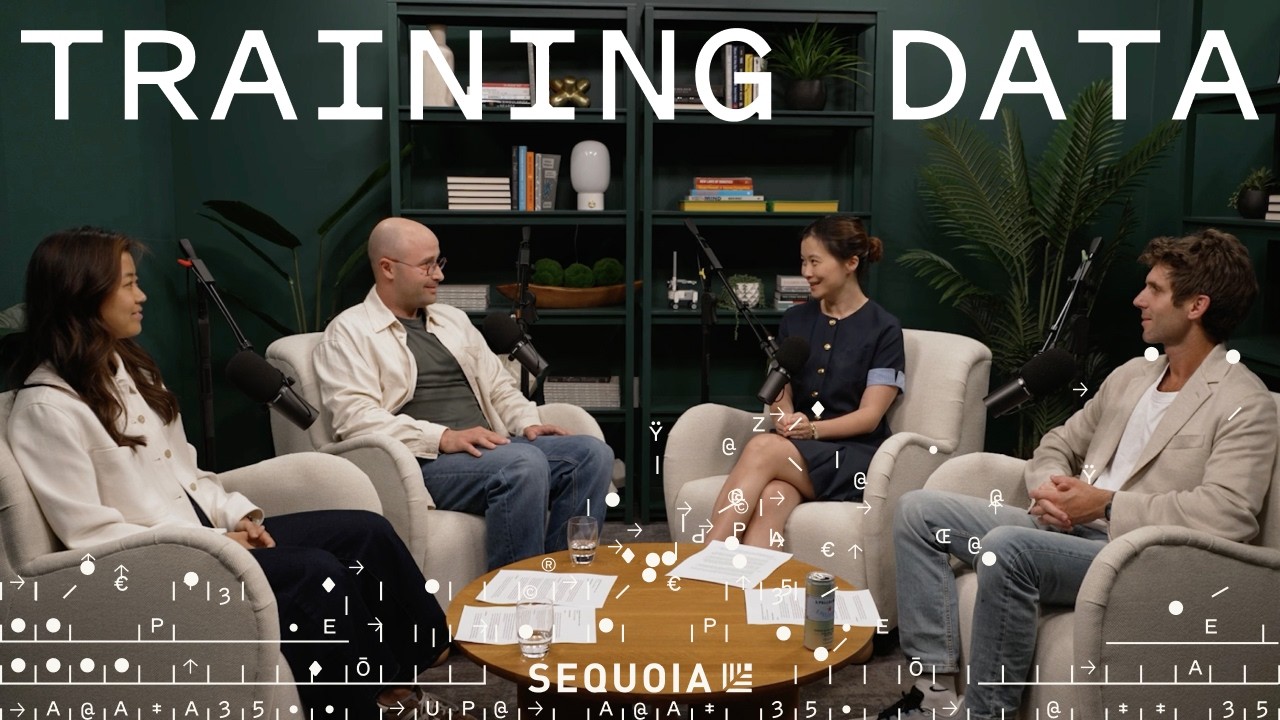
Engram, co-founded by Dan Biderman and Jessy Lin, posits that memory and continual learning represent the true bottleneck in making AI models more useful, rather than raw intelligence. Their core premise, dubbed “always training,” advocates for deeply baking specific knowledge into a model’s weights, analogous to how pre-training imprints general knowledge, instead of relying heavily on context windows or Retrieval-Augmented Generation (RAG).
Internalizing Knowledge vs. Externalization
The current industry standard for providing models with new information involves extensive context engineering, such as crafting large prompts or using multi-turn conversations. While recognizing the utility of such tools, Engram argues this approach falls short of true memory and continual learning. They highlight two main issues with externalized memory:
- Cost and Complexity: The sheer volume of tokens generated daily (potentially tens of millions per individual) makes searching and re-reading computationally expensive and confusing for models without significant breakthroughs.
- Lack of Deep Understanding: Simply providing context at test time doesn’t allow models to internalize information. An experienced employee understands company-wide initiatives, processes, and culture implicitly, a level of understanding that superficial context provision cannot achieve.
Engram’s Approach and Architecture
Engram’s solution involves training