Memory

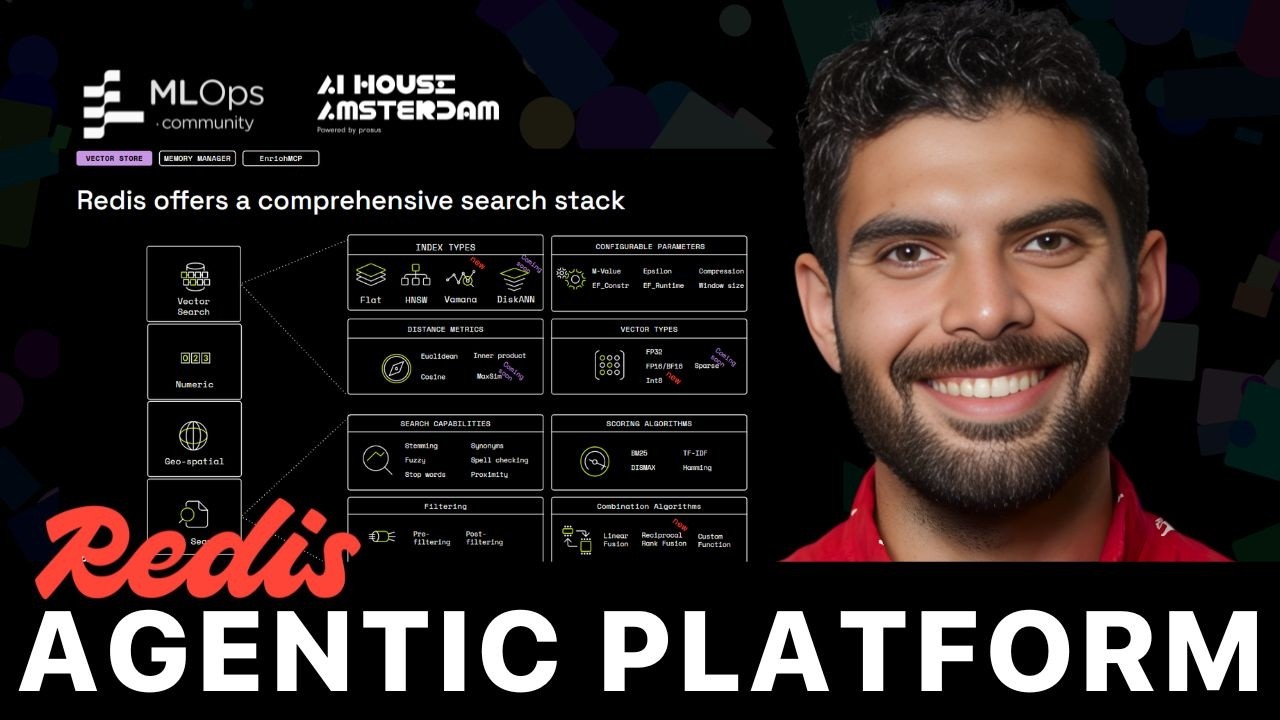
Context Engineering 2.0: MCP, Agentic RAG & Memory // Simba Khadder

Context Engineering 2.0: MCP, Agentic RAG & Memory // Simba Khadder

Simba Khadder of Redis introduces Context Engineering 2.0, a new paradigm for AI agents that unifies structured data, unstructured data (RAG), and memory into a single, schema-driven surface. He critiques current methods like Text-to-SQL and direct API wrapping, proposing a unified context engine to provide reliable, observable, and performant data access for agents.

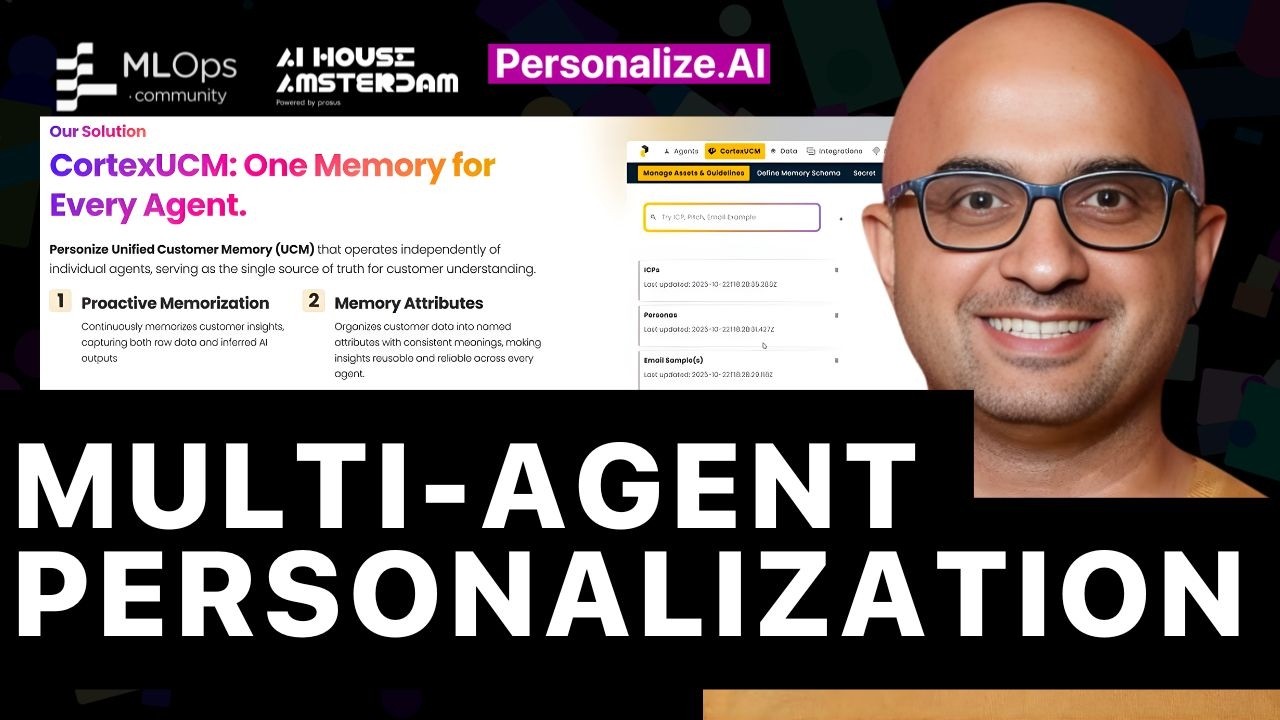
Multi-Agent Personalization with Shared Memory: From Email to Website to Proposal // Hamed Taheri

Multi-Agent Personalization with Shared Memory: From Email to Website to Proposal // Hamed Taheri

This talk explores the challenges of using multi-agent systems for mass personalization, highlighting the inconsistencies and inaccuracies that arise from traditional methods like RAG and function calling. The speaker introduces Cortex UCM, a unified customer memory system that proactively infers and standardizes customer insights. This shared, structured memory layer enables agents to achieve a deep, consistent understanding of customers, leading to high-quality, scalable generative personalization for emails, websites, and product pages.

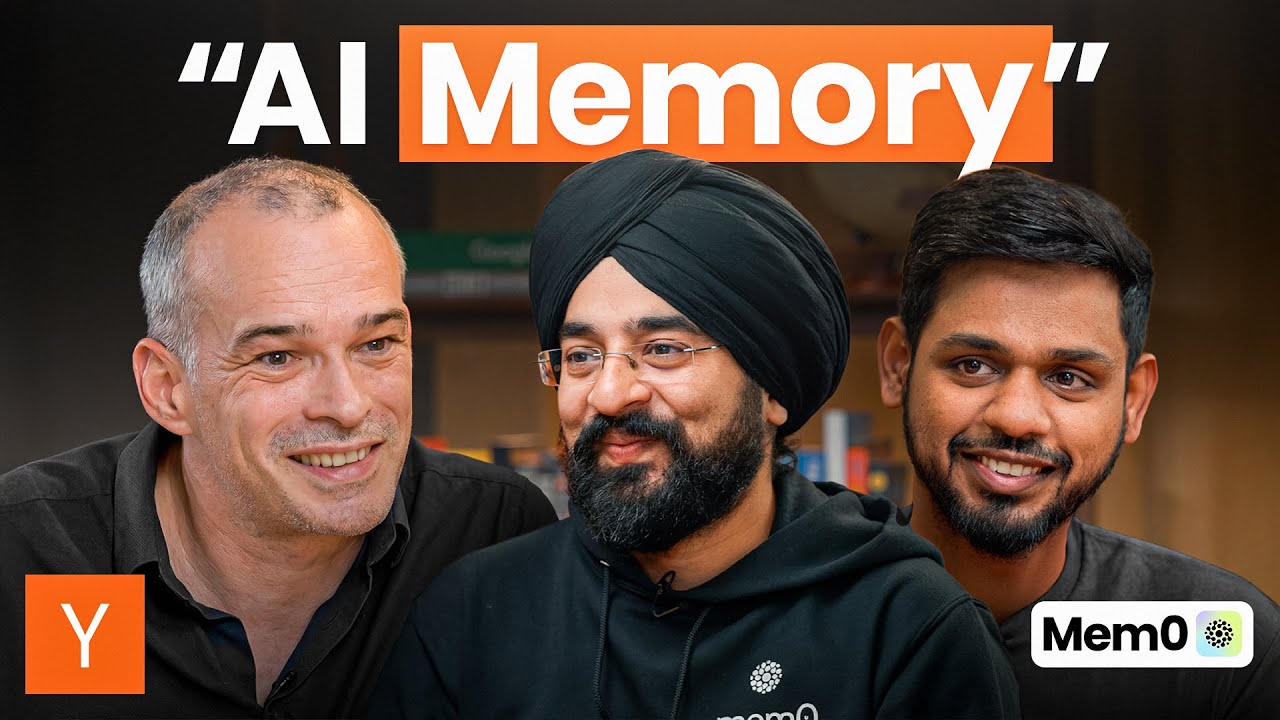
Why AI Agents Forget Everything (And How To Fix That)

Why AI Agents Forget Everything (And How To Fix That)

Mem0 is building a model-neutral, persistent memory layer for AI agents to solve the fundamental statelessness of LLMs. Co-founders Taranjeet Singh and Deshraj Yadav discuss their hybrid memory architecture, which reduces cost and latency compared to context stuffing, and their vision for a future where user memory is portable across all AI applications.

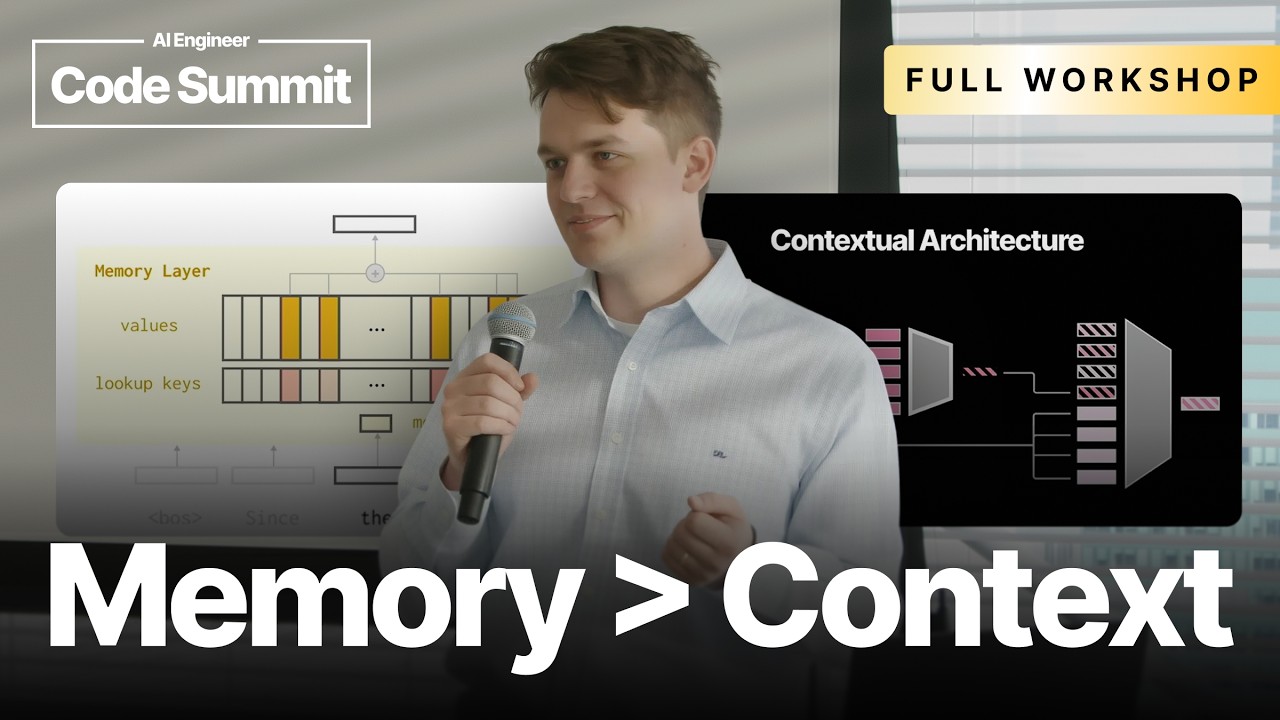
Memory in LLMs: Weights and Activations - Jack Morris, Cornell

Memory in LLMs: Weights and Activations - Jack Morris, Cornell

This talk explores the limitations of current methods for providing knowledge to LLMs, such as large context windows and Retrieval-Augmented Generation (RAG). The speaker argues that the future lies in training knowledge directly into the model's weights. This is achieved through a combination of generating large synthetic datasets from small amounts of source material and using parameter-efficient fine-tuning (PEFT) techniques like LoRA to avoid catastrophic forgetting. The goal is to create more capable, personalized, and efficient models by fundamentally altering how they store and access information.

Shaping Model Behavior in GPT-5.1— the OpenAI Podcast Ep. 11

Shaping Model Behavior in GPT-5.1— the OpenAI Podcast Ep. 11

Researchers and product managers from OpenAI discuss the evolution from GPT-5 to GPT-5.1, detailing the shift to universal reasoning models. They explore the nuanced concept of model "personality," the technical challenges of balancing steerability with safety, and how features like Memory and improved context awareness are creating more emotionally intelligent and personalized AI interactions.

Overcoming Agentic Memory Management Challenges

Overcoming Agentic Memory Management Challenges

Biswaroop Bhattacharjee from Prem AI discusses Cortex, a novel AI memory system inspired by human cognition. The conversation explores moving beyond traditional flat memory structures to hierarchical, context-aware systems that enable more sophisticated and less noisy retrieval for AI agents.