Ai architecture

Building AI Agent Systems and Scaling Challenges in Agentic AI

Building AI Agent Systems and Scaling Challenges in Agentic AI

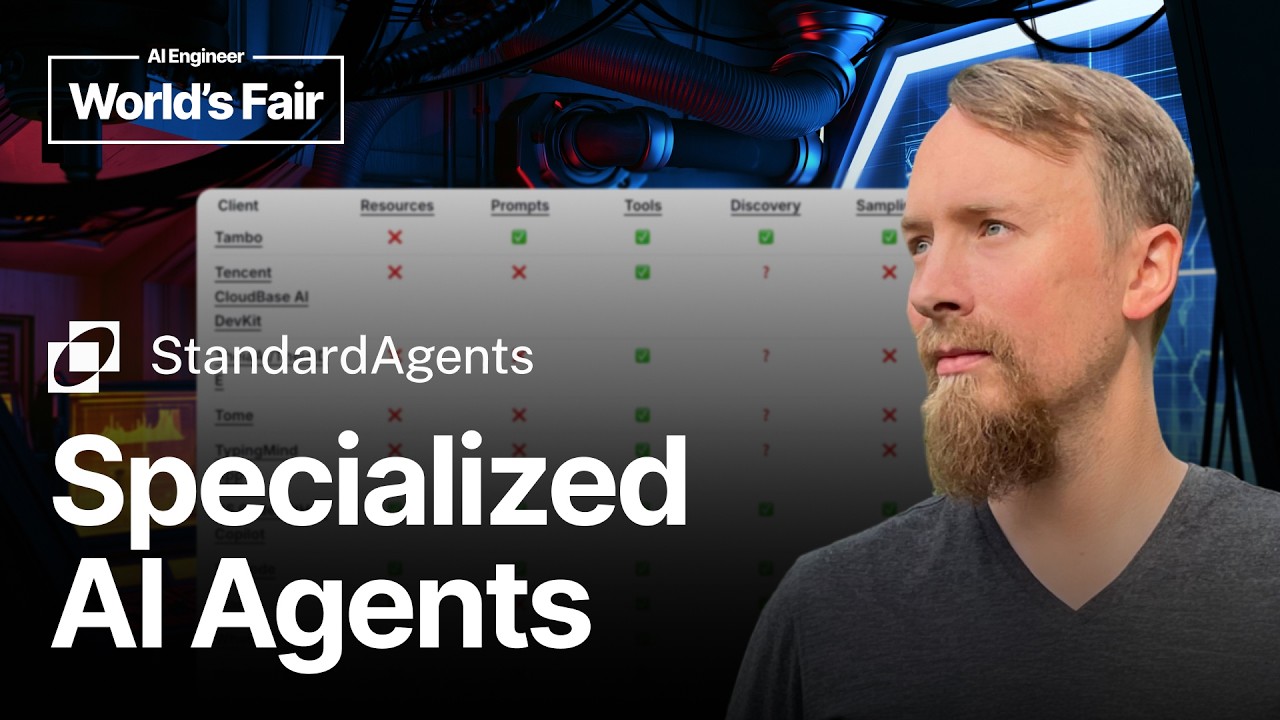
Scaling agentic AI systems presents unique challenges beyond traditional software scaling. This summary explains why expanding a single agent's capabilities leads to non-linear increases in cost, latency, and failure propagation. The talk frames this as a systems design problem solved by moving from a monolithic agent to a multi-agent architecture with distributed responsibilities, and it explores the critical architectural trade-offs between horizontal and vertical scaling of agent capabilities.

What Breaks When You Build AI Under Sovereignty Constraints - Bilge Yücel, deepset GmbH

What Breaks When You Build AI Under Sovereignty Constraints - Bilge Yücel, deepset GmbH

Bilge Yücel explains that true AI sovereignty is a technical challenge, not just a policy issue, built on four pillars: data, model, infrastructure, and operations. This talk explores the common pitfalls of retrofitting sovereignty—from performance regressions after swapping models to discovering deep vendor lock-in when moving on-prem—and presents a checklist for building genuinely sovereign systems.

Why AI Agents Break Zero Trust at the Last Mile

Why AI Agents Break Zero Trust at the Last Mile

AI agents introduce a critical security gap when connecting to legacy enterprise systems, known as the 'agentic last mile identity problem'. This summary explains how losing user identity, context, and delegation breaks zero-trust principles and outlines a solution using a policy-driven vault to manage access and issue short-term credentials.

Why AI Agents Need an Operating System

Why AI Agents Need an Operating System

Current AI agents are powerful but lack memory, context, and safety, behaving like "genius goldfish." This summary explains the necessity of an AI Agent Operating System (OS) to provide essential infrastructure for managing memory, tools, identity, and governance, making agents reliable, scalable, and trustworthy.

Will machines ever be intelligent?

Will machines ever be intelligent?

Doug Burger, Nicolò Fusi, and Subutai Ahmad explore the intelligence of AI, contrasting transformer-based LLMs with the human brain's distributed, continuously learning architecture. They delve into differences in efficiency, representation, and sensory-motor grounding, debating what intelligence truly means and how future AI might bridge the gap.

Guide to Architect Secure AI Agents: Best Practices for Safety

Guide to Architect Secure AI Agents: Best Practices for Safety

AI agents offer immense power but come with significant security risks. This guide outlines a comprehensive architecture for securing AI agents using DevSecOps, robust access controls, threat monitoring, and a principle-of-least-privilege approach to mitigate dangers like prompt injection and data leaks.