OpenClaw in Your Hand: Building a Physical AI Terminal - Lech Kalinowski, Callstack
Dr. Lech Kalinowski presents Vault, a unique AI-native handheld terminal built on an ESP32-S3, featuring a dual-display (OLED for live interaction, e-paper for static content) and powered by a single battery. It operates in four modes—shell, assist, control, and an LLM-native RPG—and controls autonomous OpenClaw agents against a local, self-hosted 120B parameter GPT model served by NVIDIA TensorRT-LLM. The talk delves into the AI-native architecture, why inference remains on the backend, real-time agent thinking surfacing on e-paper, engineering challenges, and LLM-native game design, highlighting the potential for calm, text-first AI interaction.
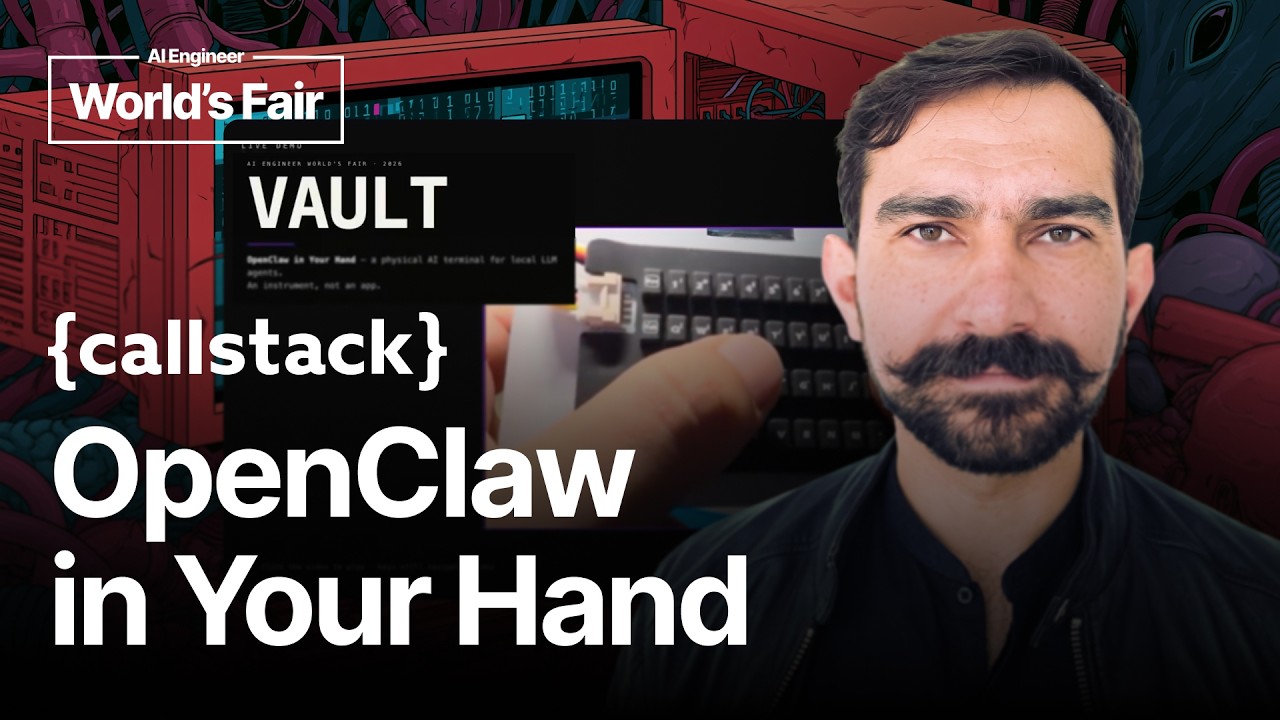
Dr. Lech Kalinowski introduces Vault, an AI-native, text-first, dual-display handheld terminal, born from a desire to build a physical device that feels like it’s from the future. His initial motivation was to create a remote controller for his OpenClaw instance on a DGX Park, recognizing that initial interactions with LLMs are primarily text-based.
Vault Device Design and Functionality
Vault is built around a single ESP32-S3 microcontroller and powered by one battery cell. Its core innovation lies in its dual-display approach: a fast, emissive OLED for dynamic