David Silver and Lasse Espeholt of Ineffable Intelligence: A Superlearner for the Age of Experience
David Silver, co-founder of Ineffable Intelligence, outlines his bold vision for building a "superlearner"—an AI that discovers science, mathematics, and language autonomously, free from human data or explicit guidance. Drawing parallels to AlphaGo Zero's success, Silver argues that human-language reasoning is a ceiling, not a foundation, for advanced AI. He details their approach using complex simulated "crucibles" and simple rewards, aiming to develop the "science of superintelligence" in simulation for safety and accelerated progress. With a powerful GPU cluster and a small, elite team, Silver forecasts strong evidence within a year and superintelligence within three.
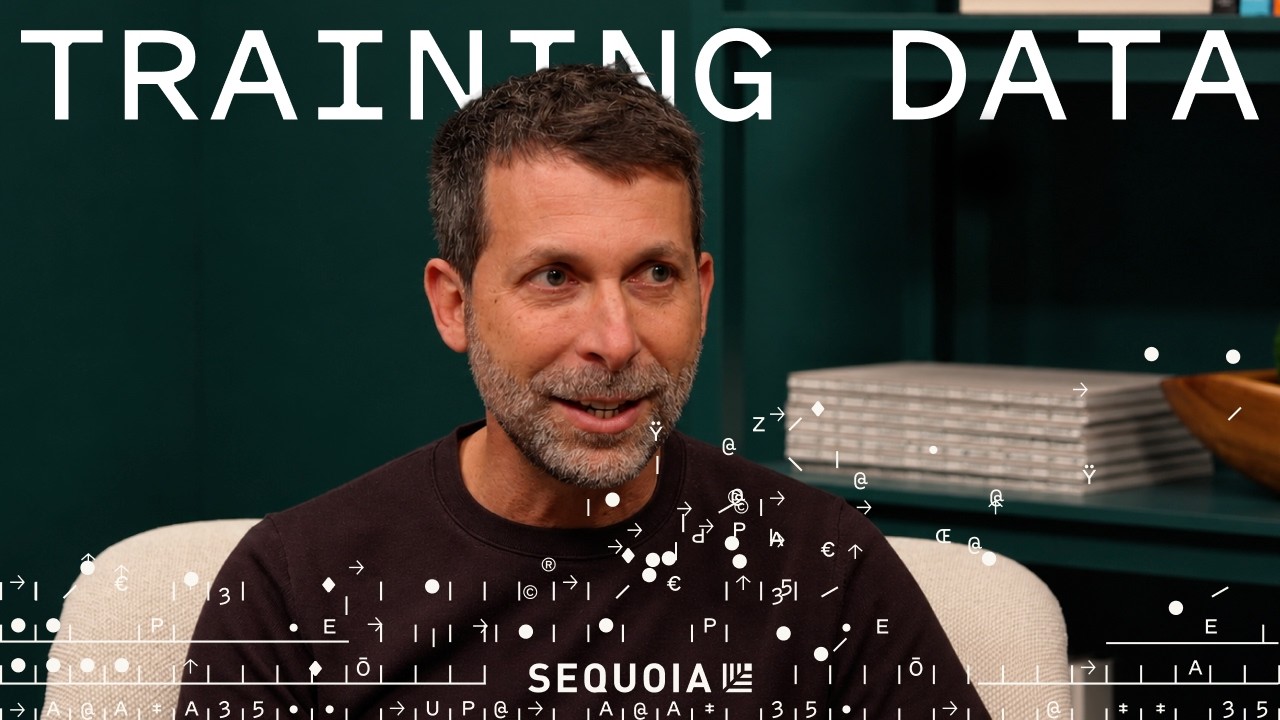
David Silver, co-founder of Ineffable Intelligence, outlines his conviction that the path to superintelligence lies in reinforcement learning (RL) from direct experience, where systems autonomously discover knowledge without reliance on human data. This conviction, stemming from his PhD work on Go and the development of AlphaGo, has been reaffirmed, noting that while LLMs demonstrate rapid fine-tuning capabilities at scale, their reliance on human data might ultimately be a limiting factor.
The Ineffable Bet: Beyond LLMs and Human Priors
Silver’s departure from DeepMind was driven by a passionate belief in an alternative path to superintelligence—one that does not leverage LLM-based products as an intermediate step. He argues that while tens of thousands of researchers are doubling down on LLMs, there’s an underserved area: building systems that learn purely from experience. The company name, “Ineffable,” reflects the belief that superintelligence will discover knowledge so profound it may be inexpressible in human language, and also a playful assertion that this approach “can’t possibly f*** up.”
Lasse Espeholt, another co-founder, brings extensive experience in scaling reinforcement learning on GPUs, having worked on foundational systems like IMPALA and SEED RL at DeepMind and Google Brain. His work laid the groundwork for large-scale, parallel RL architectures widely used today.
Defining the Superlearner and Autonomous Discovery
A superlearner is defined by two capacities:
- Depth: Starting from scratch and surpassing human knowledge, akin to humanity’s collective discovery of language, science, and mathematics without a blueprint or massive dataset.
- Breadth: Adaptability to any experience stream (simulated, digital, physical) to continuously learn.
This contrasts with current LLMs, which, while making discoveries, often require significant human-in-the-loop effort and may not be the optimal vehicle for embodied, real-world learning. Silver posits that human-language reasoning is a ceiling, not a foundation, embedding biases and limiting potential for more sophisticated, parallelizable forms of neural reasoning.
Methodology: Crucibles and Emergent Complexity
Ineffable Intelligence focuses on:
- Building a state-of-the-art RL stack capable of massive scale and continuous learning.
- Designing “Crucibles”: Simulated environments engineered for emergent complexity, rather than handcrafted puzzles. These environments leverage elements like physics engines and multi-agent interactions to create worlds vastly more complex than standard benchmarks. The Go example illustrates how simple rules with multiple interacting agents can create infinite layers of strategic complexity.
Crucially, agents are given simple, open-ended objectives rather than specific breadcrumbs towards desired outcomes (e.g., rediscovering language or science). The philosophy is that simply described goals in complex environments can give rise to emergent complexity, mirroring evolution (survival of the fittest leading to biodiversity) or human history (simple goals leading to communication, trade, arithmetic, and science).
The AlphaGo Zero Paradigm: The Power of Removing Human Priors
Silver highlights the AlphaGo to AlphaZero transition as a prime example of the power of removing human priors. AlphaGo took two years of human-in-the-loop development leveraging human data; AlphaZero, starting from scratch and learning purely through self-play, surpassed AlphaGo in just two days (or hours for chess). This demonstrated that letting go of human data allows the discovery of algorithms that can continually learn and far surpass human-derived knowledge. Ineffable’s approach is a pragmatic choice to avoid the current LLM paradigm’s reliance on vast human datasets, which can limit discovery of truly novel algorithms.
The Role of Simulation and Compute
Simulation is central to Ineffable’s strategy. They argue that if a superintelligence can be built in simulation, it will happen 10-100 times faster due to infinite parallelization, perfect reproducibility, and inherent safety. They believe simulations can be sufficiently complex: Turing-complete environments can represent computation, abstract representations can model economics, and communication channels enable language – allowing agents to develop their own science.
Ineffable is leveraging a large GPU cluster on Google Cloud Platform (Vera Rubin)—the first customer for this cluster. The architecture prioritizes high bandwidth between nodes, critical for the fast iteration cycles of RL. While GPUs are optimized for training and inference, Ineffable is working to make simulations GPU-efficient, exploring techniques like model-based RL and optimized data reuse. They acknowledge that RL scaling laws are a complex research direction due to non-stationarity of problems.
Alignment and the Science of Superintelligence
Silver critically views current alignment approaches based on human language and data as reaching their limits, as increasingly powerful agents can learn to overwhelm priors, exhibit subtifuge, and think differently than they communicate. Ineffable’s primary contribution to alignment is to **develop the