Ben Horowitz and Ali Ghodsi: How to Run a Billion-Dollar Business
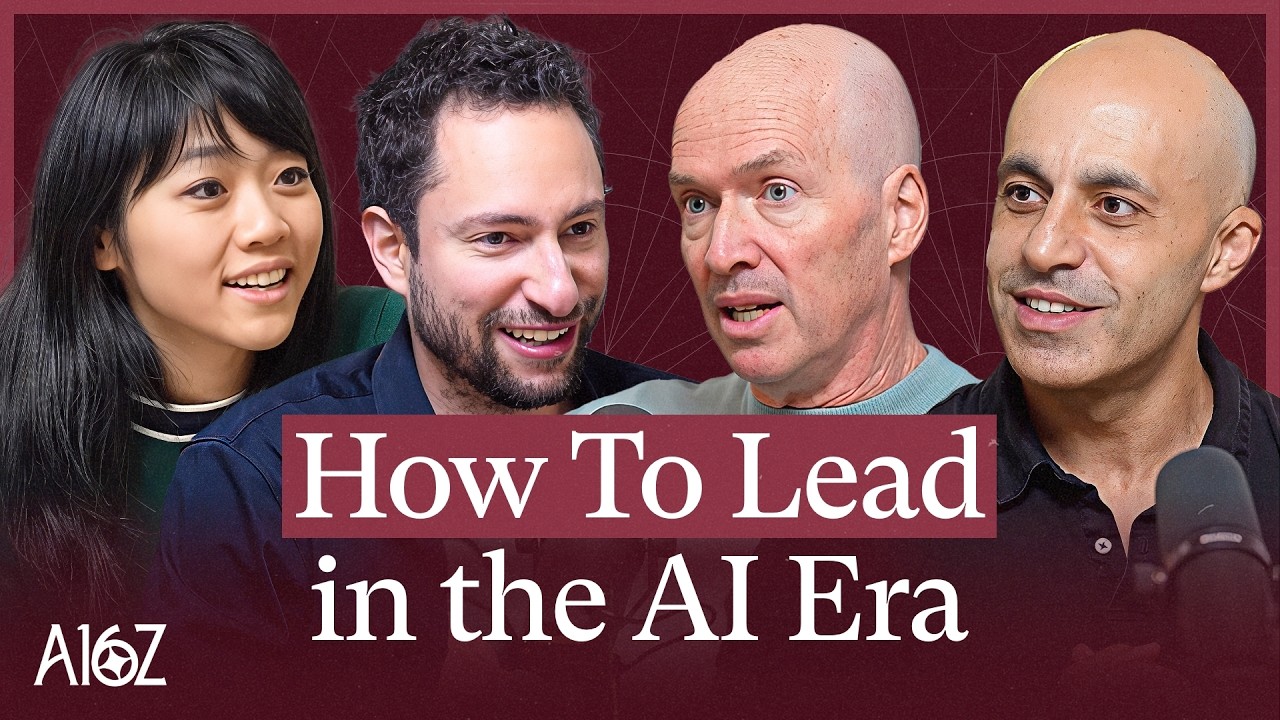
In a conversation with a16z, Databricks CEO Ali Ghodsi and co-founder Ben Horowitz share pivotal stories and lessons from building Databricks. They cover Ali's transition to CEO, the strategies behind scaling an intense yet sustainable culture, the art of high-stakes dealmaking with giants like Microsoft, and the mindset required to turn down lucrative acquisition offers to build a trillion-dollar company.
The Transition to CEO and a Strategic Pivot
When Ali Ghodsi took over as CEO of Databricks in 2016, the company faced a fundamental challenge: its most popular creation, the open-source project Apache Spark, was also its biggest competitor. Cloud vendors were offering open-source Spark, making it difficult for Databricks to sell its own value-added version. Ghodsi, having been with the company for a few years, knew that a “very serious, aggressive, and painful” pivot was necessary to differentiate the commercial Databricks product.
Ben Horowitz notes that Ali’s key strengths as a CEO are his deep technical expertise, his rapid learning curve in go-to-market and business development, and his decisiveness. Horowitz praises Ghodsi’s willingness to trust his own judgment and tackle existential threats head-on, such as the strategic decision to build a data warehouse, an idea that seemed “insane” at the time but proved crucial.
From Academic to Business Leader
Ali Ghodsi’s journey from an academic and engineering leader to a CEO was a process of intense, deliberate learning. He advises leaders stepping into new domains to follow a clear process:
- Admit Ignorance: Acknowledge that you don’t know everything about the new role.
- Become a Student: Go deep into the details and learn from the best. Ghodsi actively networked with top product managers and executives, asking “lots and lots of dumb questions” to understand their playbooks.
- Hire the Best: A leader’s effectiveness is amplified by their team. The goal is to hire people so great that you learn from them, creating what Andy Grove called “managerial leverage.”
A common mistake for founders, particularly technical ones, is to hire people in their own archetype for roles that require a completely different skill set, like hiring a sales leader who is more of an engineer. Databricks initially made this mistake, with nearly every leadership role filled by a PhD in computer science.
Building a High-Performance Culture
Radical Candor and Effective Feedback
Ghodsi emphasizes that for feedback to be effective, it must be framed as a genuine attempt to help, not to criticize. The recipient should feel they are being supported in their career growth. Horowitz adds that the frequency of feedback is critical. Small, consistent corrections are much more effective and less offensive than saving everything for a formal annual review. Constant, real-time feedback desensitizes people to criticism and makes it a normal part of the culture.
“If every day if I see you doing something I don’t like, I go, ‘No, don’t do it that way. Do it this way.’ Then you get desensitized to it… that’s how you save their feelings because they’re used to you.” - Ben Horowitz
Scaling Intensity Without Burnout
Databricks is known for its high-intensity culture. Ghodsi shares how they scale this ethos across thousands of employees:
- Tone at the Top: The leadership must set the standard. If the CEO is the hardest-working person, it permeates the organization.
- Hire for It: Use back-channel references to vet for a strong work ethic, as candidates who boast about it are often not the hardest workers.
- Connect Work to Impact: People will work incredibly hard if they feel they are having an impact and are part of a winning team. If they feel their work doesn’t matter, no amount of motivation will help. The leader’s job is to create a sense of winning and purpose.
- Avoid Burnout: Intensity must be sustainable. Databricks actively monitors work-life balance scores and intervenes when teams show signs of burnout, encouraging time off and offsites.
The Art of the Deal: The Microsoft Partnership
The 2017 partnership with Microsoft was a game-changing moment for Databricks. The deal came about through a combination of luck, timing, and strategy.
- Timing: Microsoft was looking for an alternative to Hortonworks, who had a competing product and a strained relationship with them. This created a timely opening.
- Strategy: To ensure Microsoft had “skin in the game,” Horowitz and Ghodsi insisted on a significant upfront financial commitment. Their tactic was to challenge Microsoft to provide a sales forecast and then ask for a small portion of that forecast as a pre-commitment. This large check ensured someone at Microsoft would be accountable if the partnership failed.
- Grit: High-stakes deals often die multiple times before closing. The Microsoft deal was blocked internally on numerous occasions. Ghodsi’s persistence, including frequent flights to Redmond to meet with engineers and executives, was essential to overcoming resistance and getting the deal done.
Acquisition Philosophy: People, Product, then Financials
Databricks approaches acquisitions with a philosophy that inverts the typical corporate development model.
- Team and Founders: The primary focus is on the people. Do they share the same culture and vision? Can they build together with the Databricks team for the next five years? Enormous amounts of time are spent with the founders to ensure a cultural fit.
- Product and Integration: The second priority is the product and its technical integration. To maintain a cohesive platform and go-to-market motion, acquired products must be deeply integrated, sometimes even rewritten, to feel like a native Databricks product.
- Financials: The revenue and financial models are the last consideration. This approach avoids the common trap of “buying revenue,” where a company is acquired for its sales stream, only for its key people to leave and its product to languish without proper integration.
Aiming Higher: The “One Shot” Mentality
Early on, Horowitz and the a16z team consistently pushed Ghodsi to think bigger, urging him to position Databricks alongside giants like Google. This encouragement to raise ambitions was critical when a major acquisition offer came in, valued at six times Databricks’ valuation at the time.
While his co-founders were ready to sell, Ghodsi consulted with Horowitz. Instead of pushing him one way, Horowitz shared his own experience, framing the decision around avoiding future regret.
“You can sell, you’re going to make a lot of money, and you’ll be super successful in life. But, you know, if you’re like me, you’re going to look back the rest of your life thinking, ‘I missed that one shot. That was the one thing. I should have taken it all the way. And now I’ll never know how far I could have taken it.’ So, do you want to live with that or do you want to just have the money?” - Ben Horowitz to Ali Ghodsi
This conversation solidified Ghodsi’s resolve to decline the offer and continue building, driven by the rare opportunity to create a truly massive, market-defining company.