No Priors Ep. 132 | With Decagon CEO and Co-Founder Jesse Zhang
Jesse Zhang, co-founder and CEO of Decagon, discusses how their AI agents are revolutionizing customer service for large enterprises by replacing mundane human labor. He covers their go-to-market strategy, the importance of a hardworking in-office culture, his journey as a second-time founder, and the future of an agentic world where AIs interact on behalf of companies and consumers.
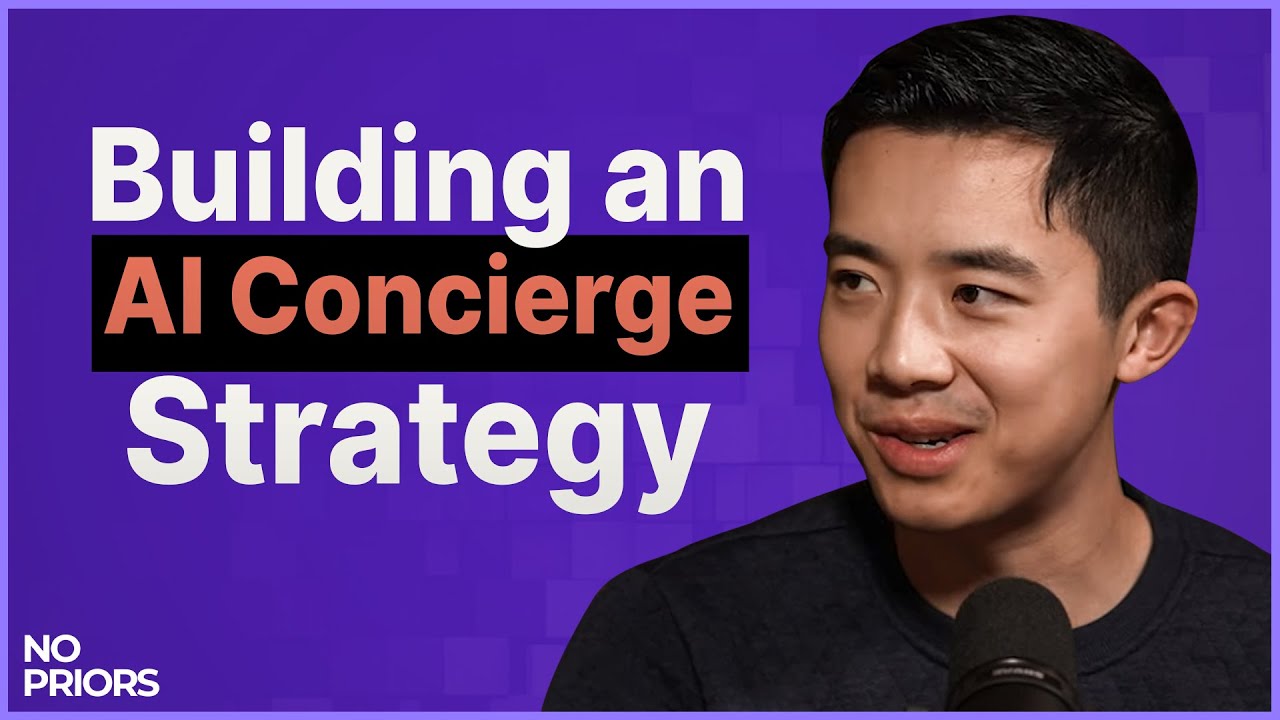
Decagon is building AI agents designed to provide engaging, personalized customer service conversations for large enterprises like banks, airlines, and tech companies. The goal is to resolve user issues efficiently, saving companies money while simultaneously increasing customer engagement and revenue. This model is evolving into a “concierge for the brand,” becoming the primary conversational UI for user interaction.
Go-to-Market and Enterprise Adoption
Decagon began by partnering with digital-native, late-stage tech companies like Rippling and Notion, which allowed for rapid product iteration. The company was quickly pulled upmarket by high demand from large enterprises, which house the largest contact volumes. This shift was faster than anticipated, partly because enterprises are moving quickly to adopt AI.
A key dynamic is that AI adoption in the enterprise is now a top-down motion, driven by the C-suite and the board as part of broader “AI transformation” initiatives. Customer service is often seen as the lowest-hanging fruit for demonstrating value, leading to significant business impact. Case studies show that Decagon’s agents can reduce contact center operational costs by 60-70%, providing a clear business case, while also maintaining or improving customer satisfaction scores.
Product and Integration
Decagon’s AI agents are designed as a substitute for mundane human labor, integrating seamlessly into existing customer workflows without disrupting current tooling. They connect with the client’s existing CRM and telephony stack to perform tasks a human would, with the benefits of being available 24/7, requiring no training, and scaling instantly.
A core differentiator is the productized approach. Decagon empowers non-technical business users to build, iterate on, and analyze the AI agents. This is a stark contrast to the traditional SaaS model, which often requires significant technical resources and configuration, making it slow and expensive to maintain. Even when enterprise engineering teams are involved, they appreciate offloading the business logic and conversation design to the business users, while they can focus on system integrations and API connections.
Culture and Hiring Philosophy
Decagon has cultivated a hardworking, in-office culture, operating five days a week. This is seen as a critical factor for speed and execution in the early stages, a trend common among successful AI companies. The company selects for:
- Intelligence: Prioritizing raw intelligence over direct experience, a philosophy applied across all departments, including engineering, sales, and marketing.
- Commitment: Looking for individuals who view their role as a potential career highlight and are eager to invest their time in solving interesting problems to accelerate their careers.
As the company scales towards 200 people, it’s introducing more structure, including a dedicated people function and designing operating cadences for a multi-office setup (SF, New York, and soon Europe), while being mindful of maintaining the core culture.
Lessons from a Second-Time Founder
As a second-time founder, Jesse Zhang emphasizes a more developed commercial sense. A key thesis is unlocking the potential of highly technical people by guiding them toward solving “hairy” go-to-market problems.
“I think that’s like a very common misconception because it’s like oh well the smaller the team like the closer I am to you know learning how to be a founder but if you join a pre-PMF team and you never actually get to see the commercials in action, you’re not really learning much. You’re just kind of learning essentially what not to do.”
He advises aspiring founders to join a company that has already figured out its commercial motion. This provides invaluable “positive examples” for learning, which accelerates development much faster than the “negative examples” from constant failure at a pre-product-market fit startup.
Market Dynamics and the Future
The AI industry is shifting from software-as-a-service to “cognition-as-a-service.” Decagon’s pricing model reflects this, moving away from per-seat licenses to a consumption-based model.
- Pricing: Customers are charged per conversation or successful resolution, which aligns directly with how they measure their own costs (cost per contact). This model makes sense to buyers and properly incentivizes the agent’s performance.
- Total Addressable Market (TAM): This pricing shift fundamentally changes the TAM. Instead of being limited by the number of software seats, the market becomes the entire budget for services and human labor, turning a massive services industry into a software opportunity.
Looking ahead, Jesse envisions an “agentic future” where personal AI agents interact with company AI agents.
- Agent-to-Agent Communication: Initially, these agents will communicate via natural language to maintain compatibility with humans. Over time, more efficient, token-based communication might emerge, but natural language will remain the foundation.
- Evolving Interactions: Customer service will move from being purely reactive (fixing issues) to proactive and broader, handling purchasing decisions, upselling, and outreach. A personal agent, knowing a user’s preferences, could interact with a brand’s concierge agent to make a purchase, creating a world where complex interactions occur without direct human involvement.