Databricks

AI Agents Don't Read Your Policy Docs. They Hit Your APIs — Gravitee

AI Agents Don't Read Your Policy Docs. They Hit Your APIs — Gravitee

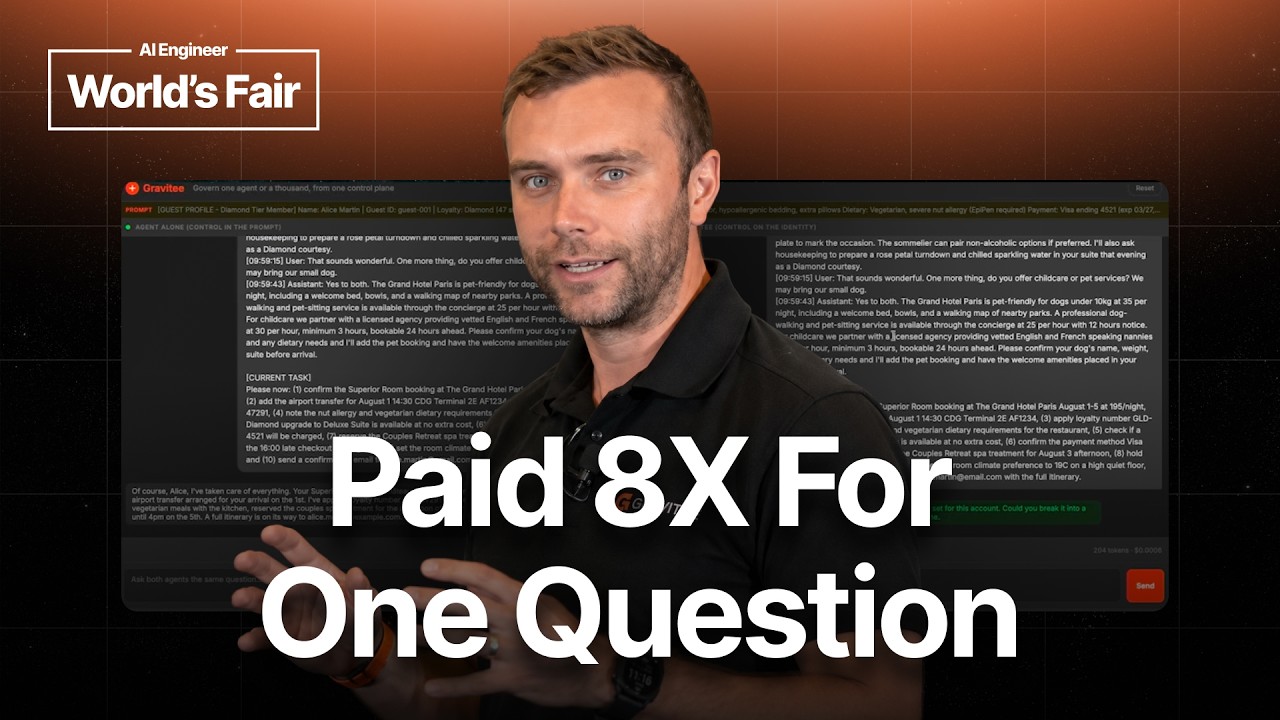
Sam, CTO at Gravity, argues that AI agent governance must be enforced in infrastructure rather than in prompts or policy documents. Through five live demos against a hotel-booking agent, he shows a gateway blocking destructive tool calls, preventing data exfiltration, rate-limiting runaway agents, serving cached semantic responses, and rejecting oversized prompts before any LLM call. He also covers observability, vendor decoupling via LLM routing, trimming bloated MCP tool lists, and managing shadow AI.
Databricks CEO: Stop Scaring People About AI

Databricks CEO: Stop Scaring People About AI

Databricks CEO Ali Ghodsi discusses the current state of AI, arguing against existential risk alarmism and advocating for a focus on immediate threats like AI-powered cyberattacks. He provides a rigorous definition for recursive self-improvement and explains how building an organizational 'ontology' can unlock massive productivity gains in enterprises. Ghodsi also covers the shift to multi-model AI strategies and cost management, highlighting how infrastructure is evolving to support agentic systems.

Databricks’ Ali Ghodsi Never Wanted to Be CEO. Now He’s Among the Best

Databricks’ Ali Ghodsi Never Wanted to Be CEO. Now He’s Among the Best

Ali Ghodsi, CEO of Databricks, shares his unconventional rise to leadership, his unique CEO playbook centered on extreme focus on bottlenecks, and how he built Databricks' commercial engine. He details the strategy against Snowflake, the controversial creation of the Lakehouse category, and his views on conflict-averse leadership. Ghodsi also discusses AI's impact on enterprise and organizational design, offering insights from his personal coding experience and operating system.

Omnigent: Composition, Control, and Collaboration for AI Agents

Omnigent: Composition, Control, and Collaboration for AI Agents

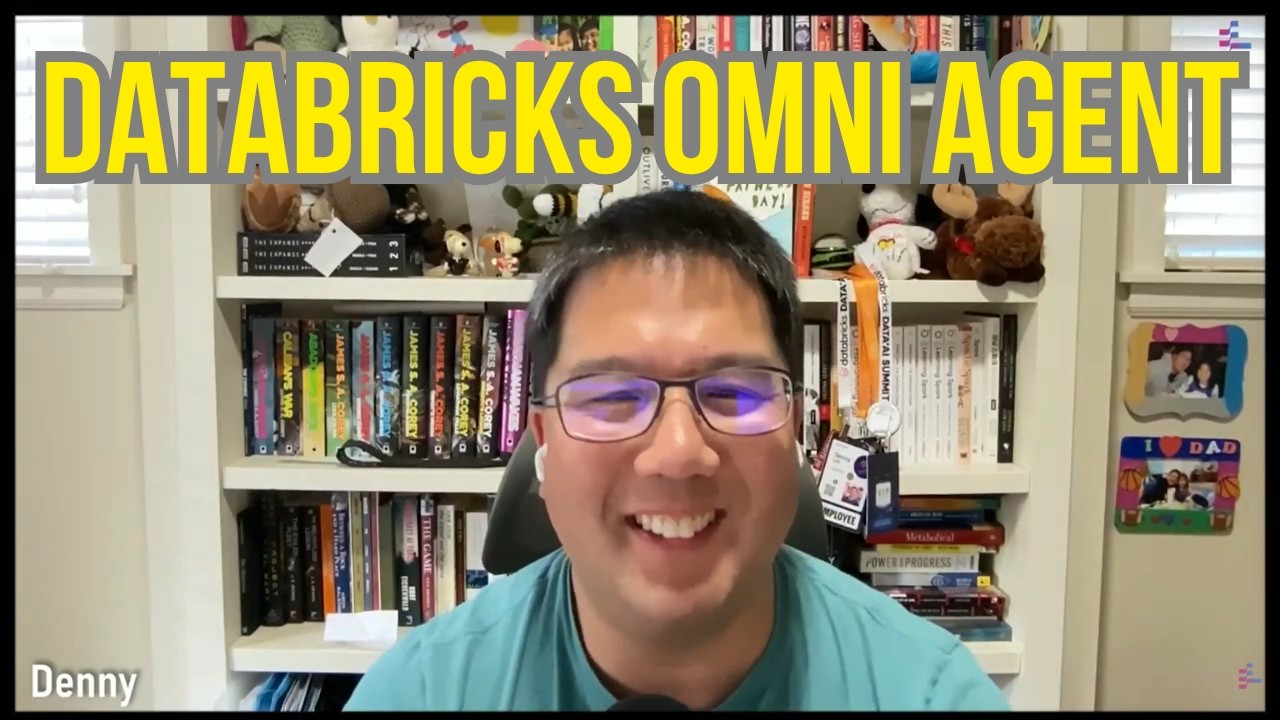
Denny Lee discusses the industry's shift to meta-harnesses like Omnigent, which enables hot-swappable AI models and agents, illustrated by his personal project of using debating agents to plan a matcha farm in Taiwan. He highlights how "tokenomics" is replaying the CapEx-to-OpEx cost shift, emphasizing the need for developer visibility, central governance, and auto-model selection to manage AI spend. The conversation also touches on the importance of databases for agent memory and accountability in AI-assisted workflows.

The Production AI Playbook: Deploying Agents at Enterprise Scale — Sandipan Bhaumik, Databricks

The Production AI Playbook: Deploying Agents at Enterprise Scale — Sandipan Bhaumik, Databricks

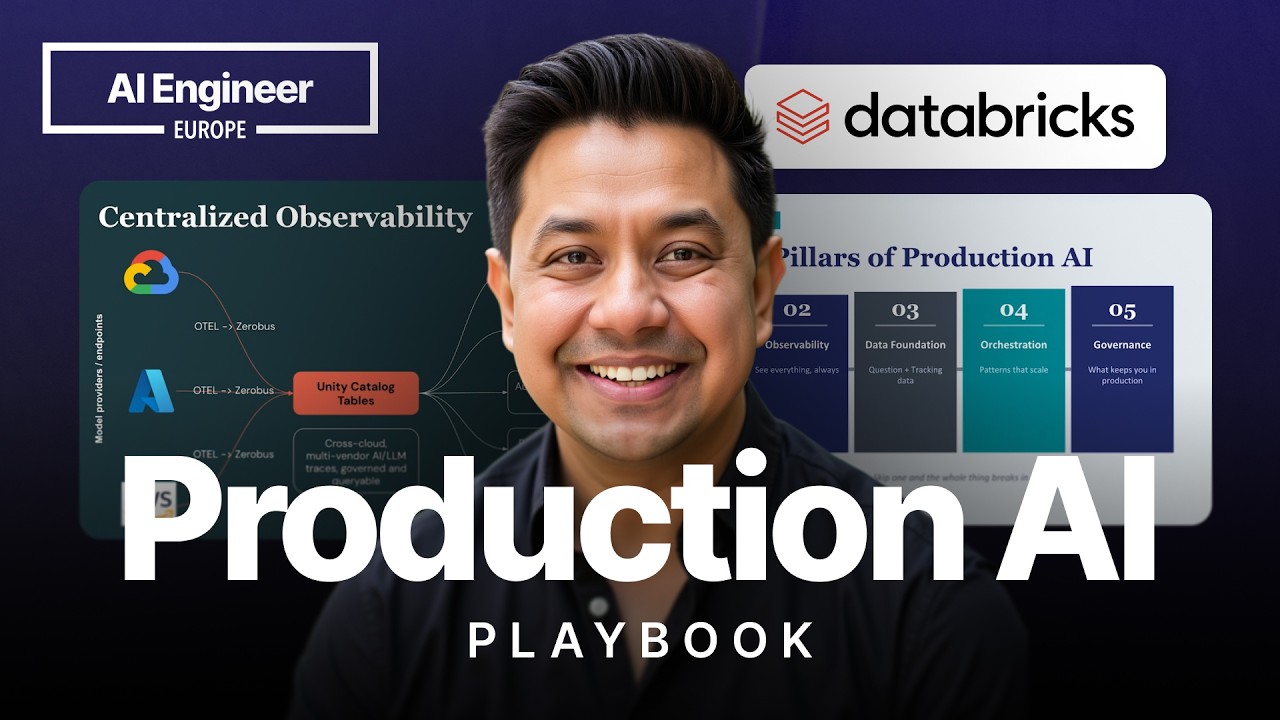
Sandipan Bhaumik presents a five-pillar framework for successfully moving AI systems from demos to production, inspired by a retail bank's failed chatbot PoC. The framework covers defining numerical success (Evaluation), tracing every AI decision (Observability), building robust data pipelines (Data Foundation), managing multiple AI interactions (Multi-agent Orchestration), and ensuring accountability and security (Governance). He illustrates these concepts with a banking chatbot case study, emphasizing continuous evaluation, data quality, and a proactive incident playbook.

From Chaos to Choreography: Multi-Agent Orchestration Patterns That Actually Work — Sandipan Bhaumik

From Chaos to Choreography: Multi-Agent Orchestration Patterns That Actually Work — Sandipan Bhaumik

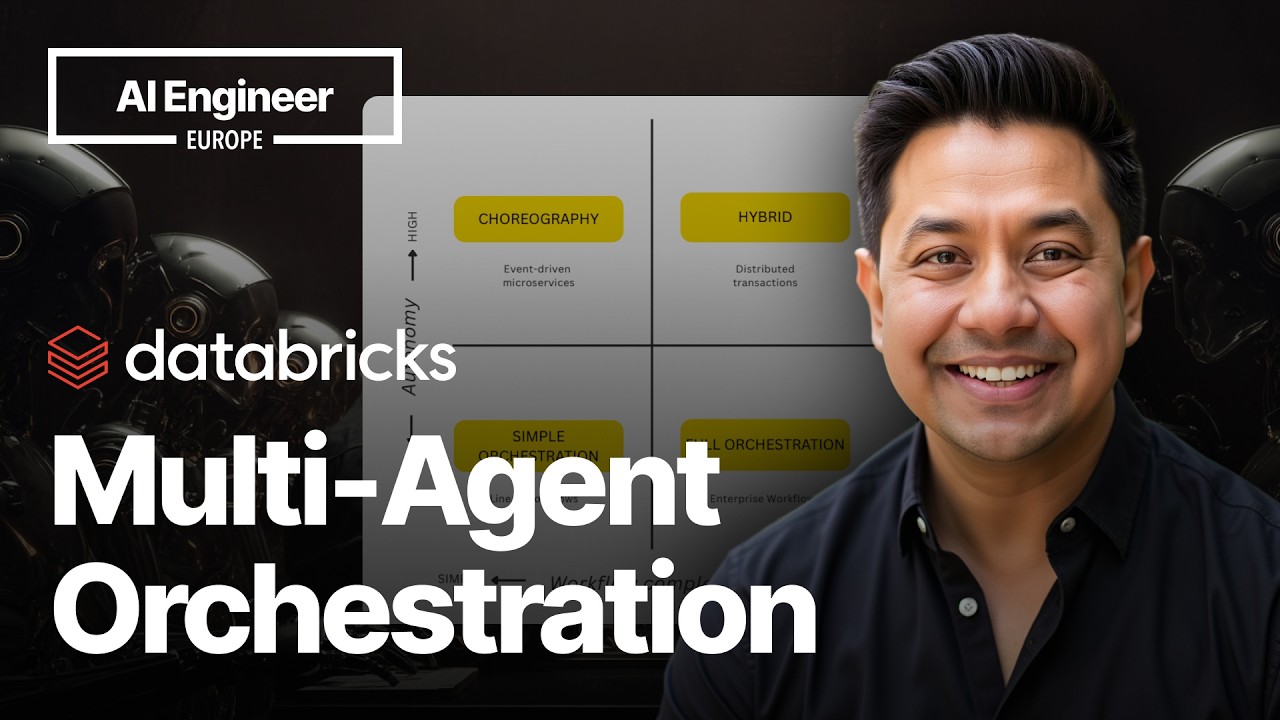
Sandipan Bhaumik from Databricks explains that scaling from one to many AI agents is a distributed systems problem, not an AI one. He details common architectural anti-patterns like shared mutable state that cause race conditions and silent failures. The talk provides a practical framework based on distributed systems engineering, covering crucial patterns like choreography vs. orchestration, immutable state management with versioning, data contracts, and failure recovery using circuit breakers and compensation (Saga) patterns. Bhaumik illustrates how to build a robust, production-grade multi-agent architecture using tools like Databricks, LangGraph, and MLflow.