Tokenless

Interactive discovery

Explore the topic map

Follow the connections between themes, people, and ideas across the Tokenless archive in an interactive topic modeling map.

Machine Learning

View All
Uncertainty-Guided Data Augmentation for Engineers | Deep Dive - Yongmin Kwon

Uncertainty-Guided Data Augmentation for Engineers | Deep Dive - Yongmin Kwon

This session details a data-efficient method for training engineering surrogate models by using uncertainty quantification (UQ) to guide geometric data augmentation. Instead of random deformations, the approach lets the deep ensemble model identify its own knowledge gaps (epistemic uncertainty), then uses Free-Form Deformation (FFD) to generate new shapes specifically in those uncertain regions. This ensures every expensive simulation run yields maximally informative data, significantly improving model accuracy for a fixed computational budget across domains like structural mechanics and aerodynamics.

Q-learning with Flow-Matching Policies

Q-learning with Flow-Matching Policies

This talk explores methods for optimizing expressive, multi-modal policies, such as those based on flow-matching, with off-policy reinforcement learning. The speaker presents two novel algorithms, FQ-RL and CAM, designed to overcome the instability of backpropagation through multi-step generative models, enabling effective online self-improvement and adaptation for robotic manipulation tasks.

Graph Neural Networks Explained: A Clear Guide to GNN Basics & Models

Graph Neural Networks Explained: A Clear Guide to GNN Basics & Models

An introduction to Graph Neural Networks (GNNs), covering fundamental concepts like nodes, edges, and embeddings. This post delves into the core message-passing mechanism and provides a detailed overview of key architectures including GCN, GraphSAGE, GAT, GIN, and Graph Transformers, explaining their unique approaches and mathematical formulations.

Artificial Intelligence

View All
India Can Create The Largest AI Companies

India Can Create The Largest AI Companies

This panel from Startup School India explores why India's technical talent is poised to lead the global AI wave, challenging traditional career advice. It highlights Y Combinator's focus on young, high-agency founders who leverage AI for rapid prototyping and embrace 'second mover advantage' to build global companies, emphasizing customer obsession and relentless resourcefulness.

Builders Unscripted: Ep. 4 - Pietro Schirano

Builders Unscripted: Ep. 4 - Pietro Schirano

Pietro Schirano, Founder & CEO of MagicPath, discusses his pioneering work with GPT-5.5 and Codex, transforming creative ideas into software and hardware solutions. He details using advanced AI for image-to-sound conversion, multi-agent workflows, resurrecting obsolete tech with new functionalities, and building his company, MagicPath, on the principle of humans directing AI agents. This interview provides deep insights into the creative potential and practical applications of cutting-edge AI for developers and entrepreneurs.

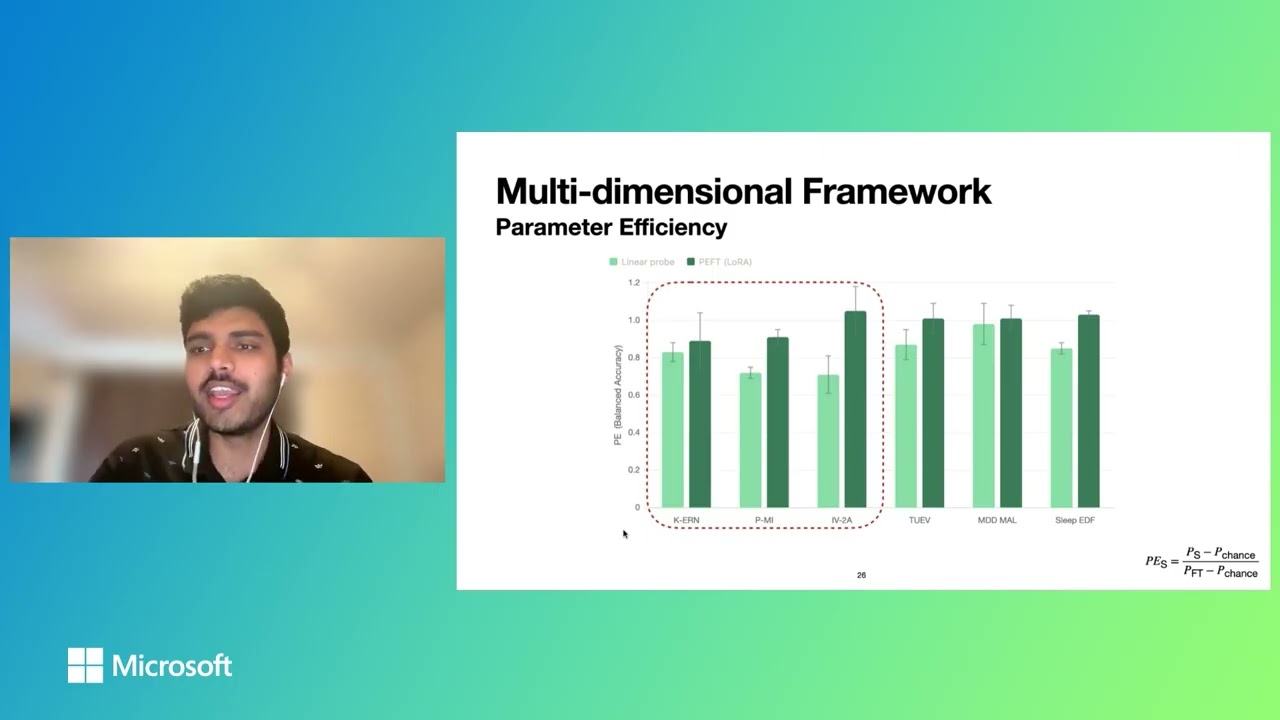
Welcome Session - Microsoft Research India Academic Summit 2026

Welcome Session - Microsoft Research India Academic Summit 2026

The Microsoft Research India Academic Summit 2026 opens with MSR India Lab Director Venkat Padmanabhan outlining the lab's collaborative research philosophy and Microsoft's evolution into an AI infrastructure powerhouse. He details MSR India's four core research pillars: fundamental AI advancements, specialized domain solutions, efficiency across the AI stack (including small language models), and the crucial diffusion of AI technologies for societal impact in India and the Global South, exemplified by diverse projects and collaborations.

Technology

View All
Full Stack Greenfield Projects : Are they still relevant?

Full Stack Greenfield Projects : Are they still relevant?

Bharat Goenka, co-founder of Tally, discusses the company's unconventional approach to software development through "Full Stack Greenfield" projects. He explains why building every component from scratch, despite being a high-risk strategy, has been crucial for Tally's success in serving the SMB market, fostering extreme customer loyalty, and aspiring to connect 200 million businesses. The talk delves into the historical context, the philosophy of questioning and choosing constraints, and the distinction between product and custom engineering.

3‑2‑1 Backup Rule Explained: Protect Your Data from Disaster

3‑2‑1 Backup Rule Explained: Protect Your Data from Disaster

Jeff Crume outlines essential data resiliency strategies, starting with the 3-2-1 backup rule—three copies, two media types, one offsite—and expanding to include immutable or air-gapped backups, rigorous testing, and encryption. He emphasizes these principles for robust disaster recovery, ransomware protection, and minimizing costly downtime, highlighting the trade-offs in achieving high availability.

The Media Game Has Changed

The Media Game Has Changed

The conversation explores the shift from legacy media to creator-led platforms, why authenticity has become a competitive advantage, and how founders can build audiences by communicating directly with customers, employees, and the public. They discuss podcasts, social media, storytelling, corporate communications, and the changing relationship between companies, journalists, and audiences. Along the way, they examine how founders can develop a public voice, why some leaders become influential communicators, and what it means to build a brand in a world where distribution is increasingly decentralized.


Recent Post

OpenAI's Greg Brockman: Why Human Attention Is the New BottleneckOpenAI's

OpenAI's Greg Brockman: Why Human Attention Is the New BottleneckOpenAI's

Greg Brockman, co-founder and president of OpenAI, discusses the company's insatiable need for compute, the state of scaling laws, and the belief that we are 80% of the way to AGI. He explores how agentic coding tools are transforming software development, the emerging role of human attention as the ultimate bottleneck, and the future of AI in pushing scientific frontiers.

100 Years of Progress in 100 Days: Sequoia AI Ascent 2026 Keynote

100 Years of Progress in 100 Days: Sequoia AI Ascent 2026 Keynote

Sequoia Capital partners argue that AI is a revolution in computation, not just communication. They explain how long-horizon agents are reshaping every layer of work, comparing the current shift to the Industrial Revolution's impact on manual labor and suggesting that innovations that once took a century are now possible in a hundred days.

Robotics' End Game: Nvidia's Jim Fan

Robotics' End Game: Nvidia's Jim Fan

Jim Fan of Nvidia outlines the endgame for robotics, arguing it will mirror the successful playbook of Large Language Models. He introduces "The Great Parallel," a roadmap where World Models replace Language Models, and data collection shifts from limited teleoperation to scalable egocentric video, culminating in a future of physical APIs and automated research.

LLM codegen fails and how to stop 'em — Danilo Campos, PostHog

LLM codegen fails and how to stop 'em — Danilo Campos, PostHog

Danilo Campos of PostHog details the common failure modes of LLM-based code generation—from model rot to security risks—and shares the practical, prose-driven strategies his team uses to make their autonomous coding agent reliable for thousands of users.

The 3 Words That Secretly Drive Developer Productivity & Motivation • Yanina Ledovaya • GOTO 2025

The 3 Words That Secretly Drive Developer Productivity & Motivation • Yanina Ledovaya • GOTO 2025

Cognitive psychologist Yanina Ledovaya explains how to boost developer productivity and satisfaction by focusing on three universal human needs from Self-Determination Theory: Autonomy, Competence, and Relatedness. This talk delves into how these psychological drivers underpin developer motivation, influence the adoption of AI tools, and provide a practical framework for managers to create more effective and engaging work environments.

Replacing 12K LoC with a 200 LoC Skill — David Gomes, Cursor

Replacing 12K LoC with a 200 LoC Skill — David Gomes, Cursor

David Gomes from Cursor explains their transition from a complex, 15,000-line Git WorkTrees feature to a lightweight, flexible solution built on Markdown prompts. He details how 'Skills' and 'Sub-agents' recreated parallel coding workflows, and discusses the trade-offs, failure modes, and lessons learned from shifting product logic from hard code to natural language instructions.

Stay In The Loop! Subscribe to Our Newsletter.

Get updates straight to your inbox. No spam, just useful content.