Ml

Why LLM Recommenders Will Be AI's Biggest Consumer App — Devansh Tandon, Meta

Why LLM Recommenders Will Be AI's Biggest Consumer App — Devansh Tandon, Meta

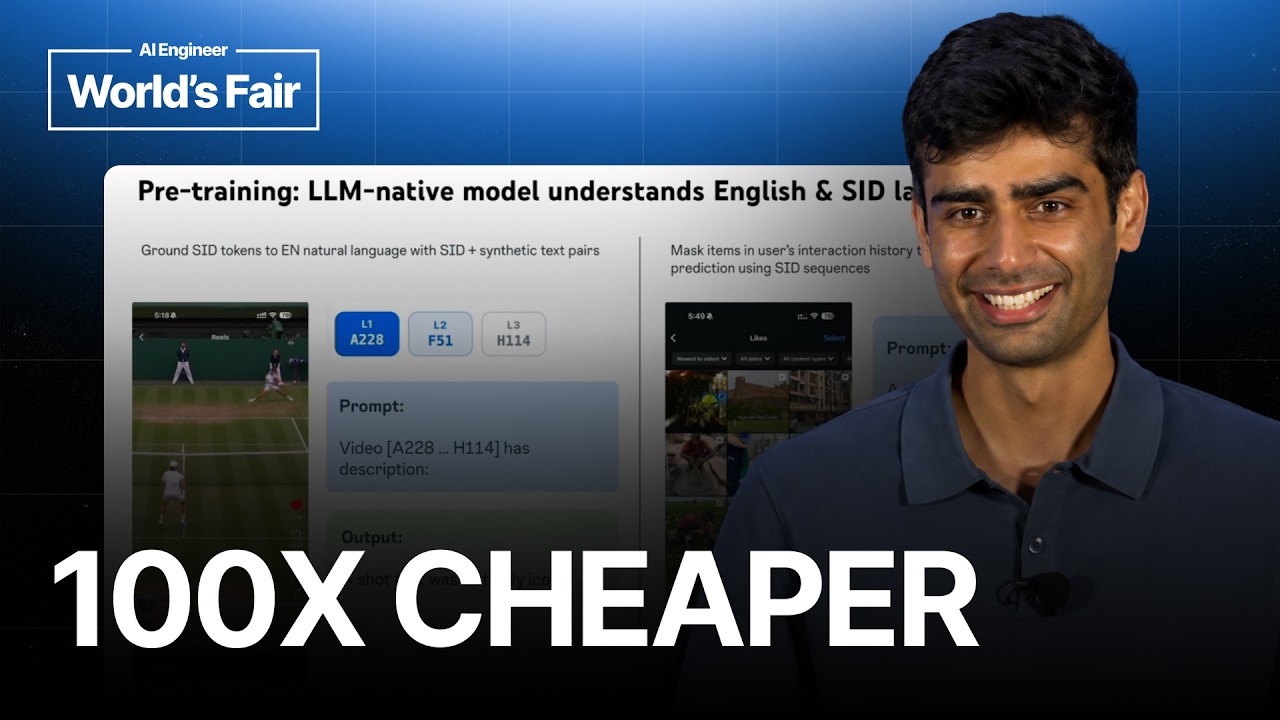
Devansh Tandon, who leads Meta Recommendations Research, argues that recommendation systems scale like LLMs, that the field is early on that curve, and that LLM recommenders will become one of AI's biggest consumer applications. He walks through four S-curves of recommendation, a three-step recipe built on semantic IDs, and why content feeds can be up to 100x cheaper per hour of engagement than AI chat apps.
Distill the LLM, Don't Serve It: Search & Personalization at DoorDash — Raghav Saboo, DoorDash

Distill the LLM, Don't Serve It: Search & Personalization at DoorDash — Raghav Saboo, DoorDash

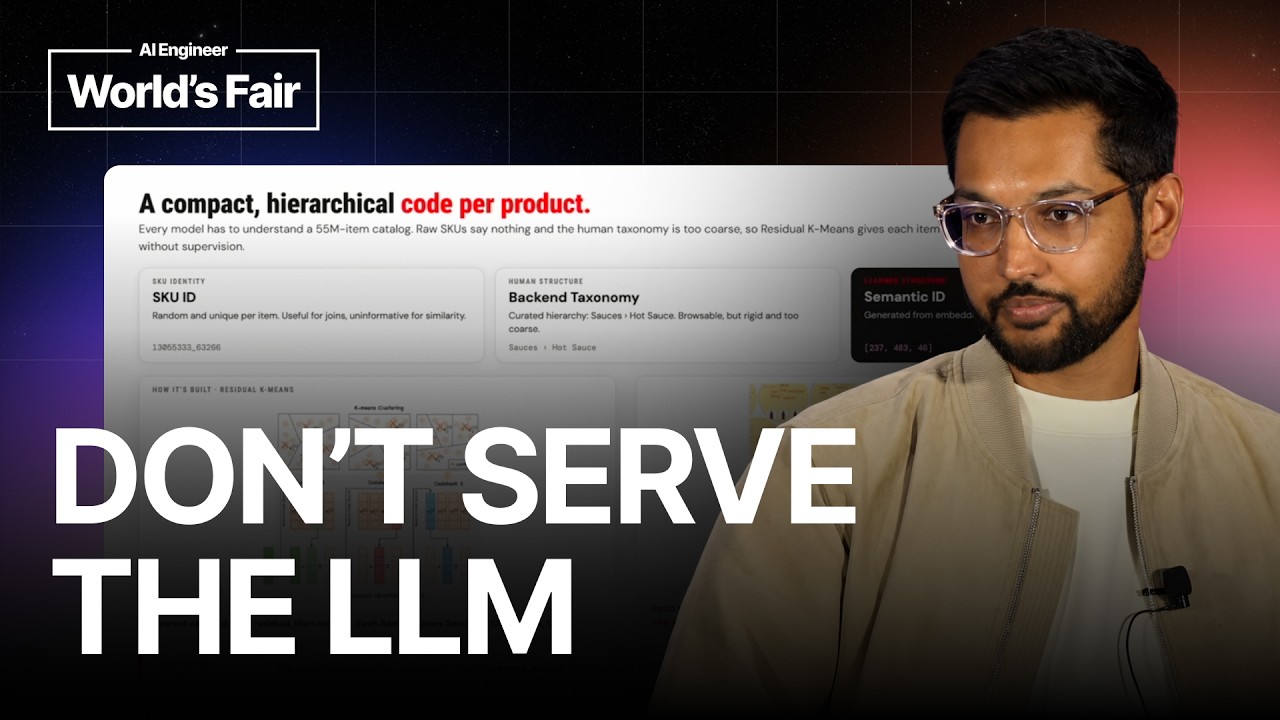
Raghav Saboo, Staff ML Engineer at DoorDash, argues that semantic understanding, not engagement, is the real bottleneck in marketplace discovery. He walks through four LLM-driven primitives (graded relevance supervision, semantic IDs, multi-timescale consumer memory, and steerable personalized collections) and explains the core pattern of reasoning offline with LLMs and distilling that into fast serving models.

Weight Folding, CUDA Streams, and the Bug That Made My Model Speak Backwards — Filip Makraduli

Weight Folding, CUDA Streams, and the Bug That Made My Model Speak Backwards — Filip Makraduli

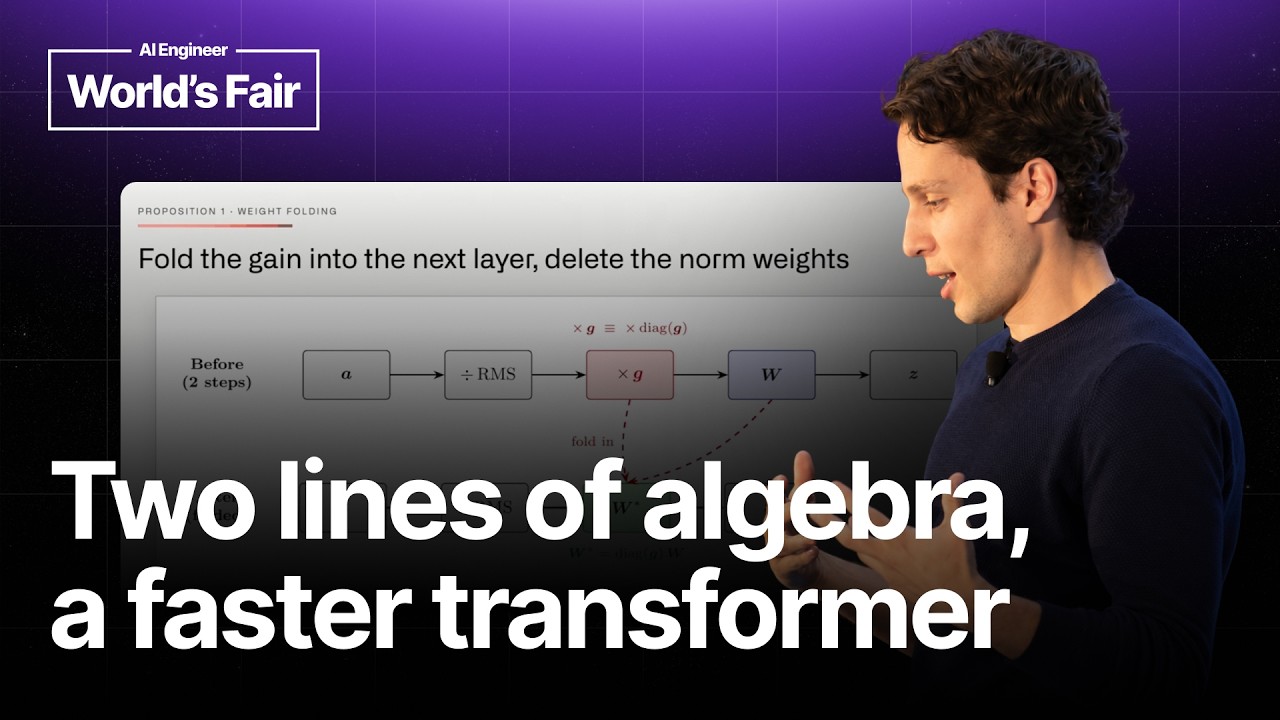
This talk introduces FlashNorm, an optimization for transformer RMS norm layers. It details how algebraic tricks like weight folding, deferred division, and dropped pre-normalization can significantly speed up inference by mitigating GPU inefficiencies. The speaker also shares critical insights from implementing parallel CUDA streams, including debugging a subtle race condition caused by implicit stream joins, and advocates for open inference engines for deploying kernel-level research.

Large clusters for small models — Daniel Svonava, Superlinked

Large clusters for small models — Daniel Svonava, Superlinked

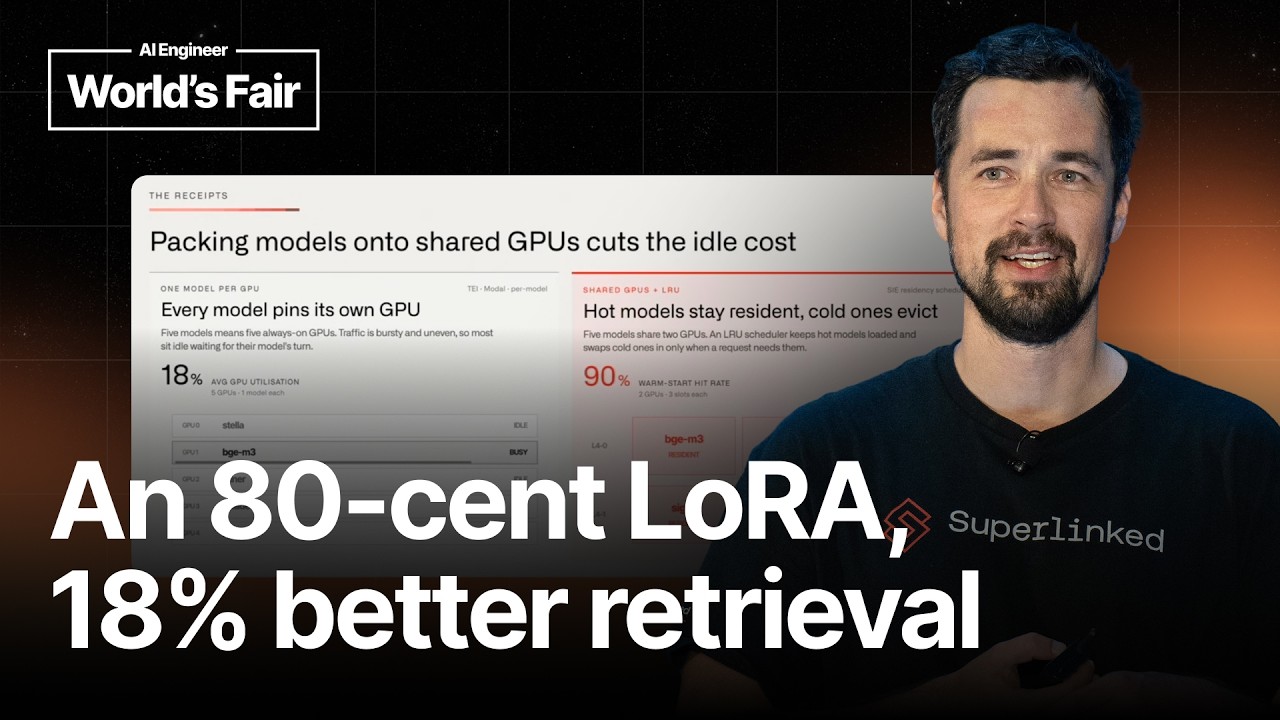
Daniel Svonava argues that small open-source models, when specialized and properly served, can achieve frontier performance for specific tasks, offering significant cost savings and latency improvements over large, generalized models or managed endpoints. He highlights challenges with existing serving infrastructure for a fleet of diverse small models and introduces Superlinked's open-source solution, which leverages a pull-based, centralized queuing system, a Rust sidecar for runtime abstraction, and an autoresearch loop for automated model tuning, enabling high throughput (e.g., half a million embedding tokens/sec on one GPU) and efficient deployment of specialized models and LoRAs.

What's New in Inference Engineering — Philip Kiely, Baseten

What's New in Inference Engineering — Philip Kiely, Baseten

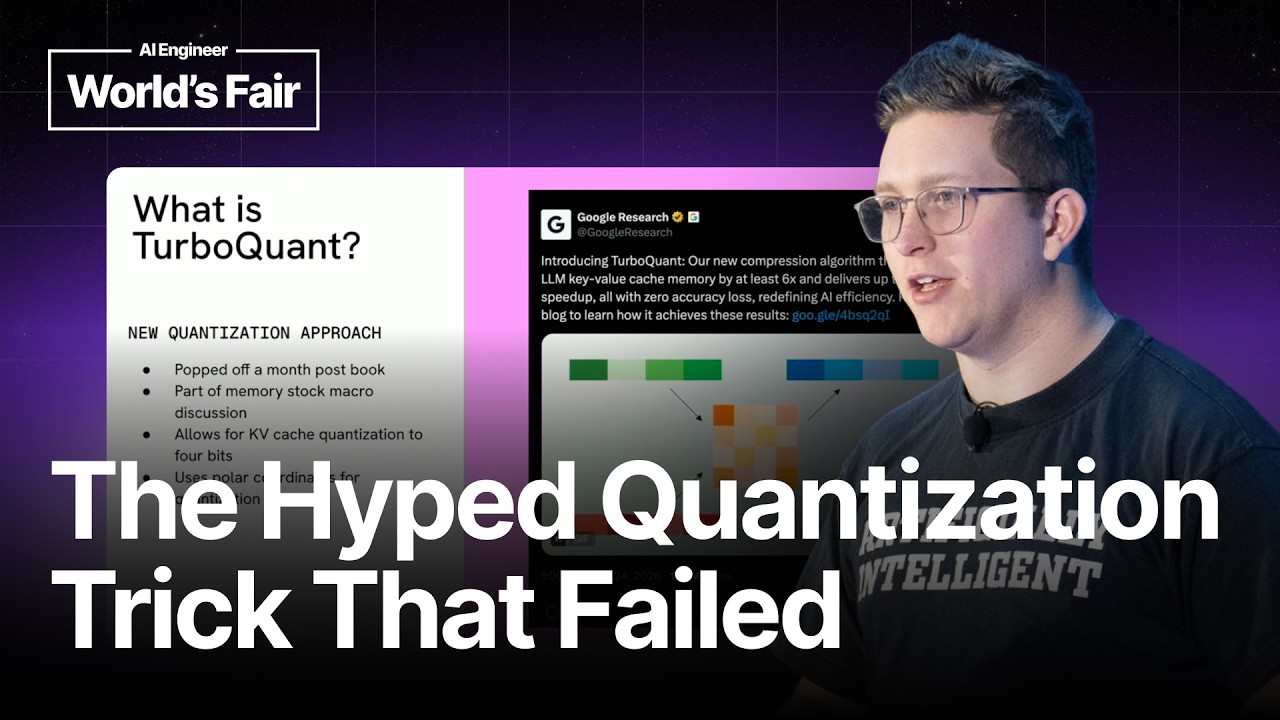
Philip Kiely provides an update on recent advancements in inference engineering, covering new techniques in quantization (TurboQuant's specific application), KV cache compaction (introducing 'Still' for learned, compressed memory), and speculative decoding (from Eagle 3 to Dlash and DSpark, including continuous retraining). He emphasizes the blurring lines between training and inference and differentiates between local and data center optimization strategies.

Stop Chunking Like It's 2022 — Yuval Belfer, AI21 Labs

Stop Chunking Like It's 2022 — Yuval Belfer, AI21 Labs

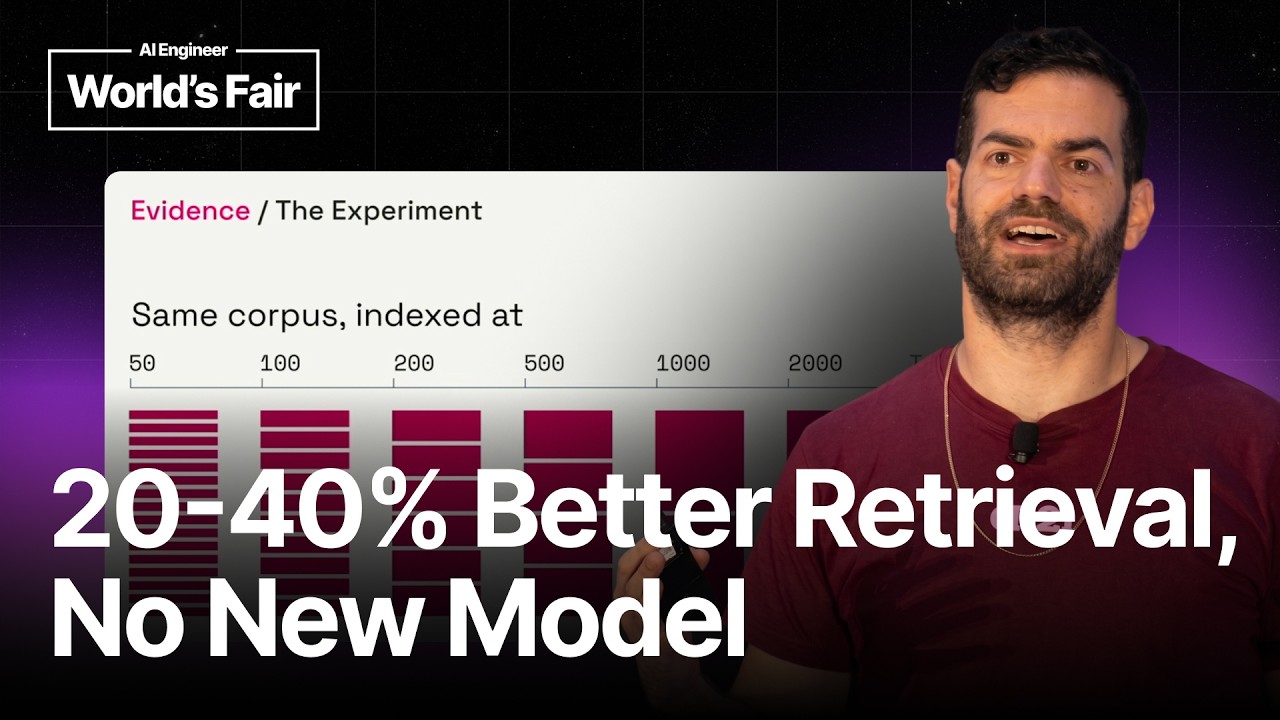
Yuval Belfer addresses the fundamental challenge in Retrieval Augmented Generation (RAG): the optimal chunk size is query-dependent, but chunking decisions are fixed during indexing. This "information problem" leads to significant recall loss, as shown by experiments demonstrating a 20-40% gap between fixed chunking and an oracle. His proposed solution, multiscale indexing, involves creating multiple document copies with different chunk sizes, querying all of them, retrieving whole documents, and merging results using Reciprocal Rank Fusion, yielding substantial recall improvements with minimal latency increase.