Ml

Your Agreements Are a Database You Can't Query — Hiral Shah, Docusign & Sean Sodha, NVIDIA

Your Agreements Are a Database You Can't Query — Hiral Shah, Docusign & Sean Sodha, NVIDIA

The talk by Hiral Shah (DocuSign) and Sean Sodha (NVIDIA) addresses the critical challenge of extracting valuable, negotiated data from unstructured agreements, highlighting how generic AI models fail at complex tables. They introduce DocuSign's Intelligent Agreement Manager powered by NVIDIA's purpose-built, small-parameter NeMo Parse VLM, designed specifically for efficient and accurate table extraction, demonstrating 20x faster processing, lower cost, and its impact on unlocking billions in trapped enterprise data.
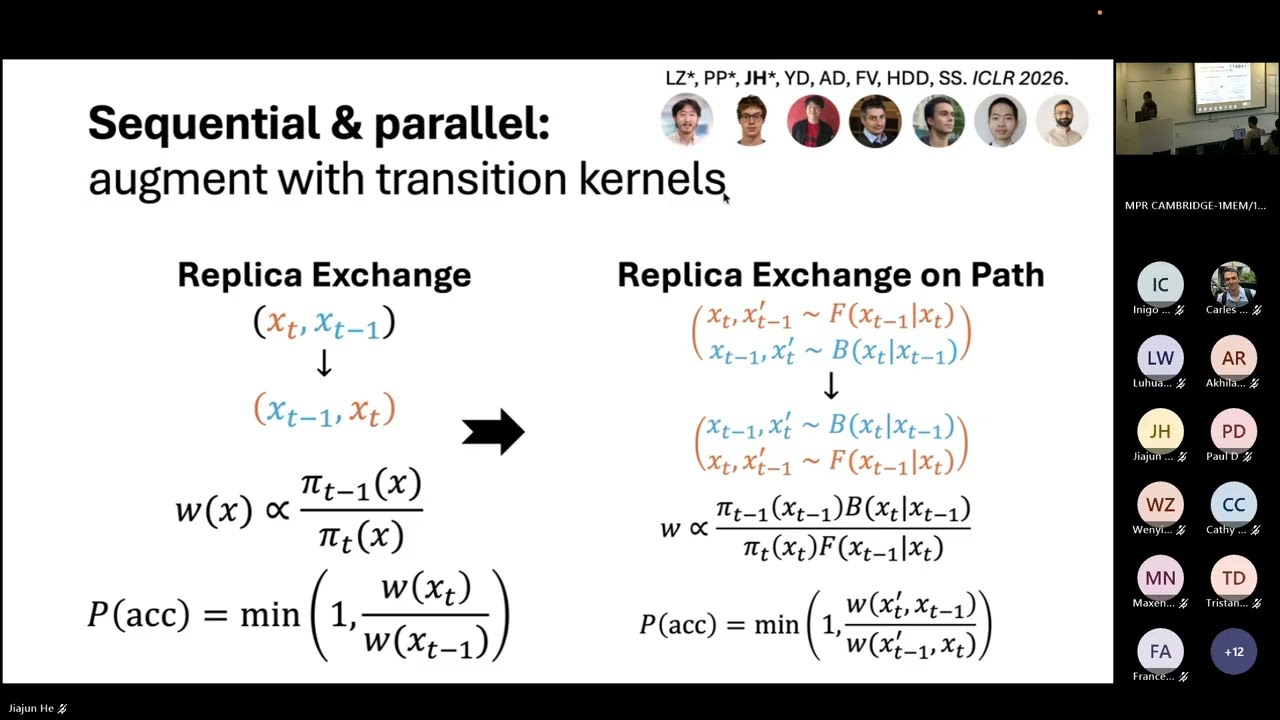
Probabilistic Inference for Controlling Diffusion Models

Probabilistic Inference for Controlling Diffusion Models

An in-depth presentation on controlling diffusion models during inference, categorizing techniques into sequential and parallel families. The talk explores both approximate and exact probabilistic inference methods, highlighting their underlying principles, computational trade-offs, and applications in areas like rare event sampling and protein design. A practical roadmap is provided for selecting the most suitable control strategy based on objective and computational resources.

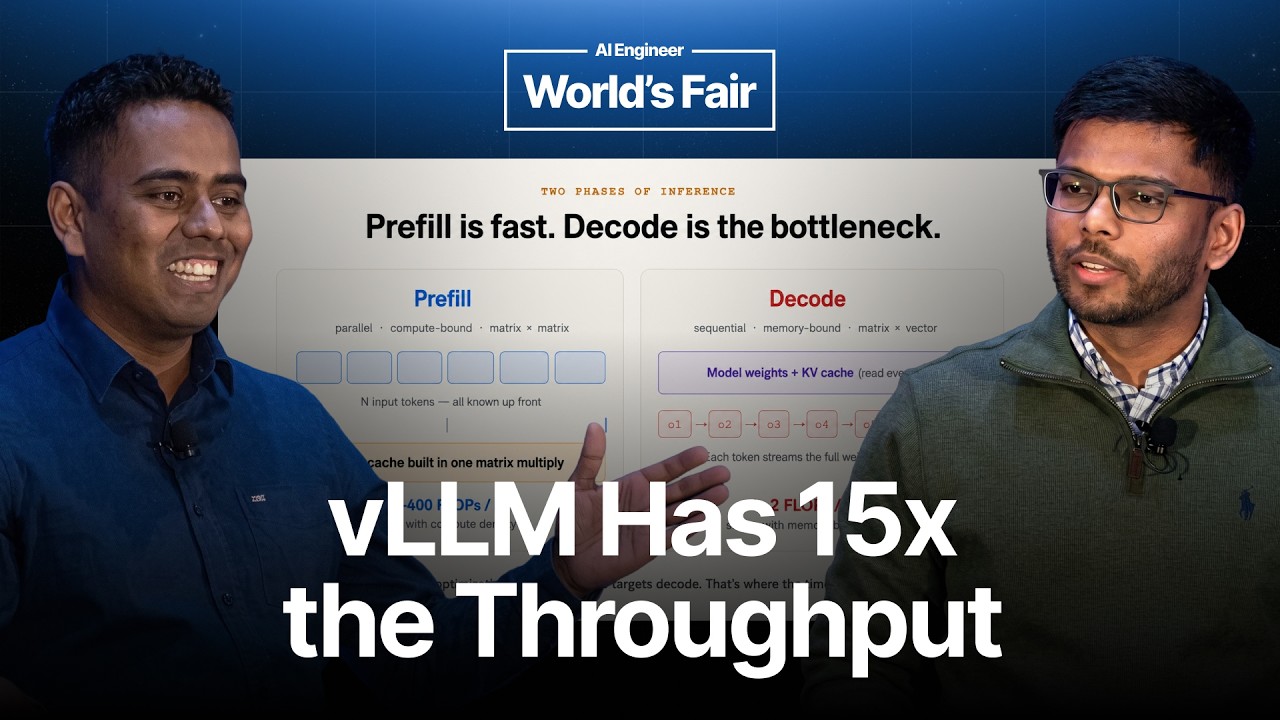
Deep dive on LLM Inference at Scale — Harshul Jain, Audible & Tanmay Sah, Independent AI Researcher

Deep dive on LLM Inference at Scale — Harshul Jain, Audible & Tanmay Sah, Independent AI Researcher

A workshop by Harshul Jain and Tanmay Sah breaks down LLM inference optimization from first principles, addressing memory, TTFT, and throughput issues. It covers foundational concepts like KV cache mathematics and the prefill/decode phases, then dives into model-side optimizations (quantization, attention variants like GQA, FlashAttention) and serving-side techniques (Paged Attention, continuous batching, prefix caching, KV quantization). The session concludes with benchmarks of popular inference engines like vLLM and SGLang, highlighting their strengths for different workloads, and outlines future research directions.

Guardians of the State: An Air-Gapped AI Fortress for Consumer Data — Rachna Srivastava, DFPI

Guardians of the State: An Air-Gapped AI Fortress for Consumer Data — Rachna Srivastava, DFPI

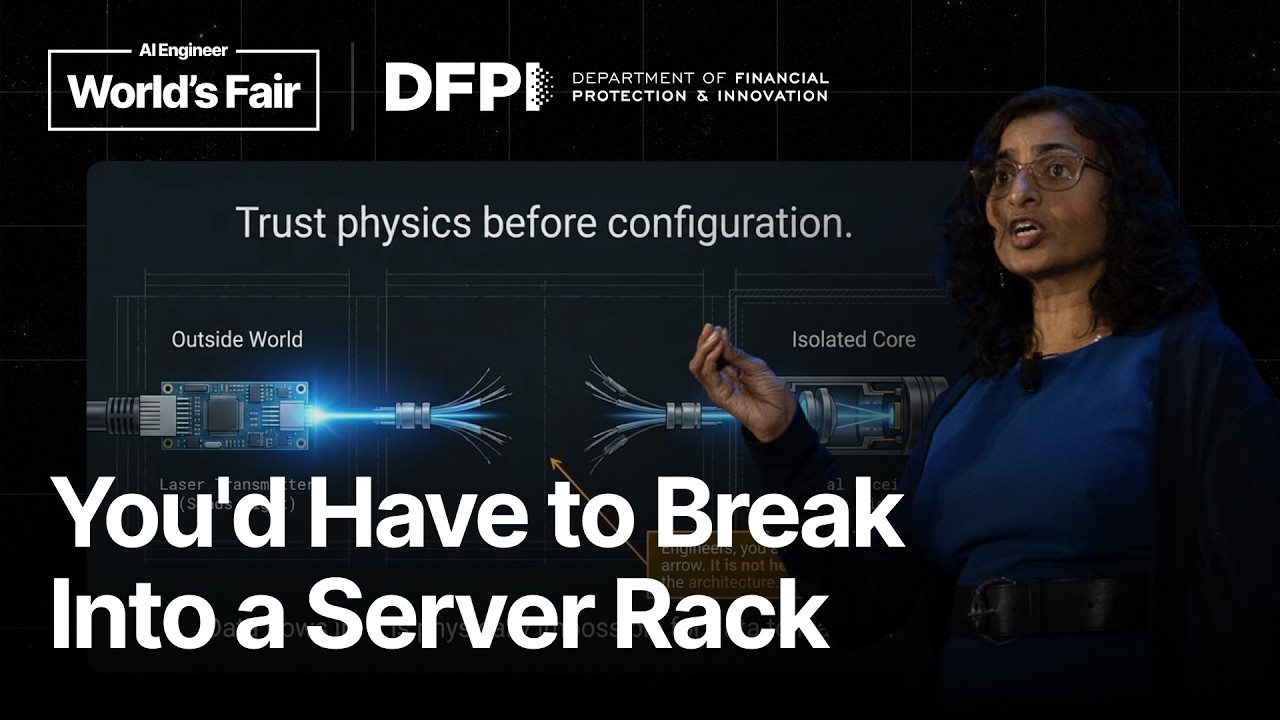
Rachna Srivastava discusses building a legally defensible AI system for financial fraud detection, emphasizing that generative AI has eroded traditional trust. Her team at DFPI engineered an offline, hardware-secured data pipeline using Kafka, Spark, and semantic routing to ensure explainability, reproducibility, and auditability. They implemented a one-way data diode for secure learning and Apache Iceberg for time-travel queries, asserting that "trust is a physical property" built into the system's core.

Invited Research Talk: Measuring Generalization in EEG Foundation Models

Invited Research Talk: Measuring Generalization in EEG Foundation Models

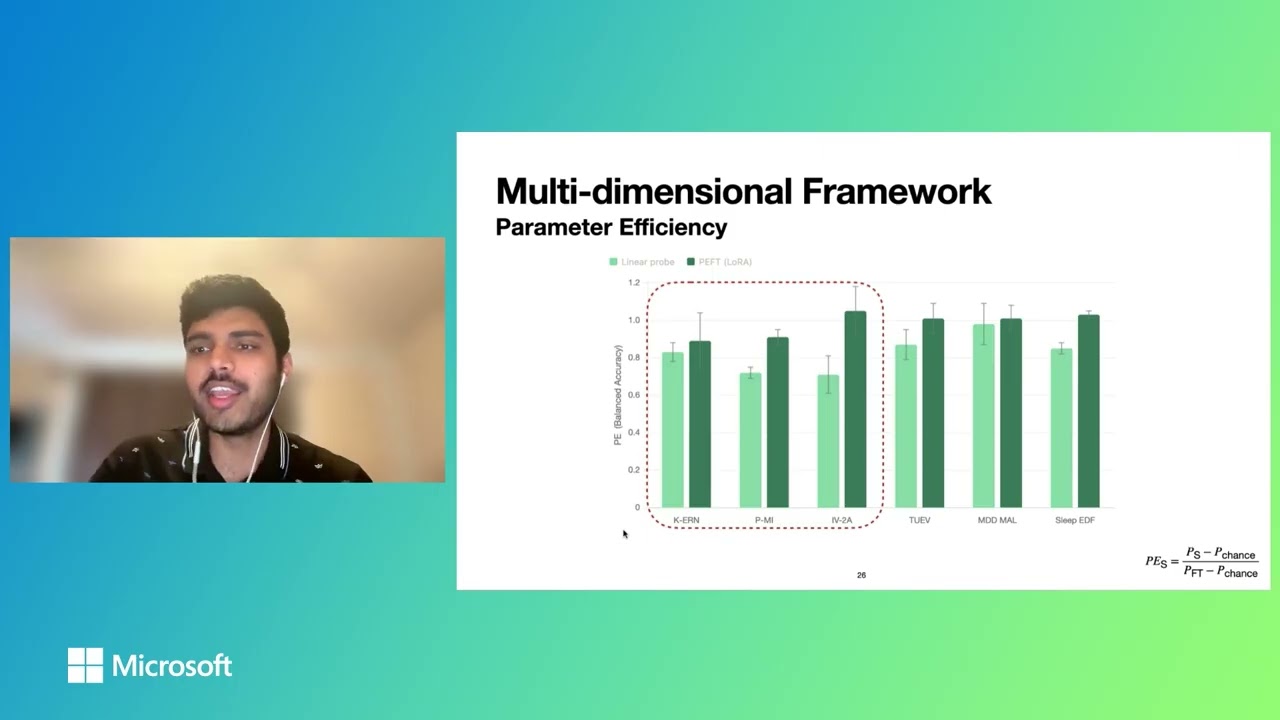
This talk presents a multi-dimensional evaluation and interpretability framework for EEG foundation models. It reveals that current models often fail to outperform supervised baselines for BCI tasks, lack robustness to sparse channels, and exhibit an aperiodic low-frequency bias, making them better at capturing subject-specific rather than task-specific information. The analysis highlights critical deficiencies and suggests future directions for pre-training objectives and data collection to improve generalization.

Can LLMs Write Fast Multi-GPU Kernels? — Simran Arora, Together AI

Can LLMs Write Fast Multi-GPU Kernels? — Simran Arora, Together AI

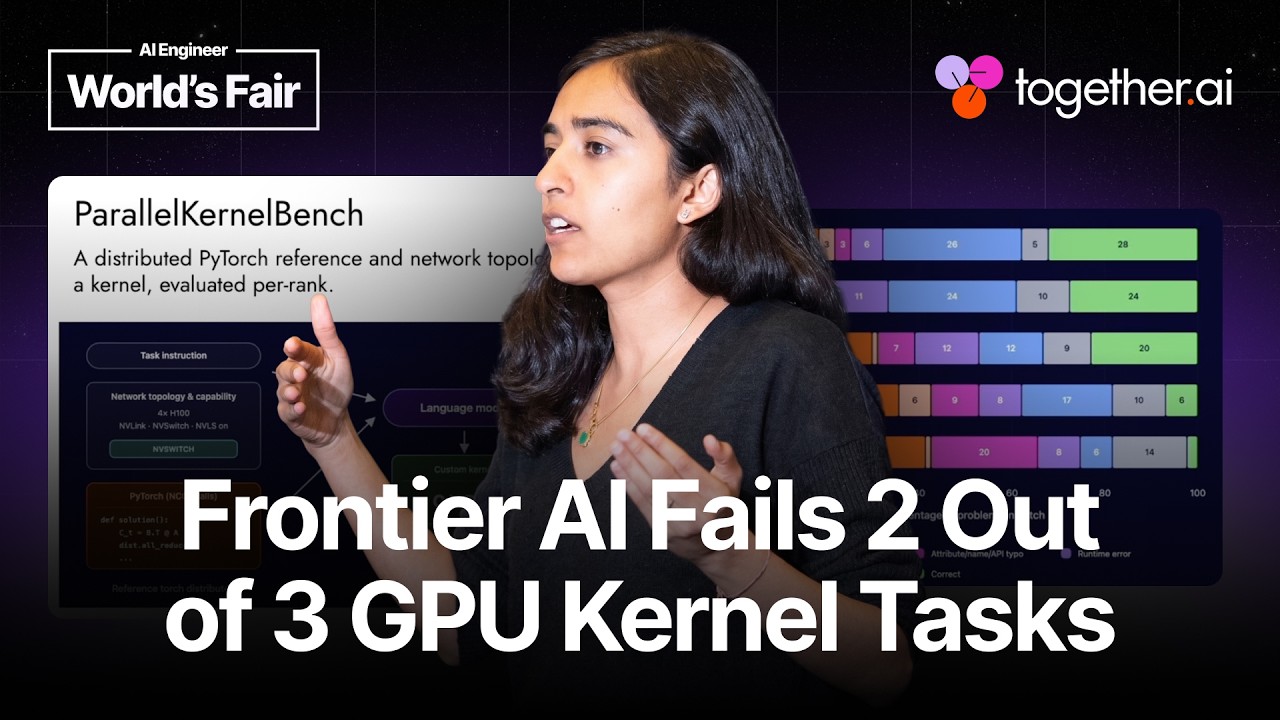
Simran Arora discusses the critical bottleneck shift in large AI workloads from GPU compute to inter-GPU communication. Her team's solution, ParallelKittens, offers a set of primitives to optimize multi-GPU kernels by leveraging fundamental transfer mechanisms and compute-communication overlapping. They introduce ParallelKernelBench, a benchmark to evaluate AI models' ability to generate such kernels, revealing that while models can handle syntax, they struggle with deeper reasoning about communication patterns and hardware trade-offs.