Open source

How Supabase Became One Of The Fastest Growing DevTool Companies In The World

How Supabase Became One Of The Fastest Growing DevTool Companies In The World

Supabase CEO Paul Copplestone details how a frustrating Firebase migration sparked an open-source side project that grew into a decacorn. He explains the strategic choice of PostgreSQL and open source, the evolution of developer experience to achieve 5-second time-to-value, and the transformative impact of AI agents, which now launch millions of Supabase databases monthly. The conversation also covers the challenges and advantages of a fully distributed workforce and the future bet on 'self-driving databases' to address the complex 'operate' stage of AI-driven development.

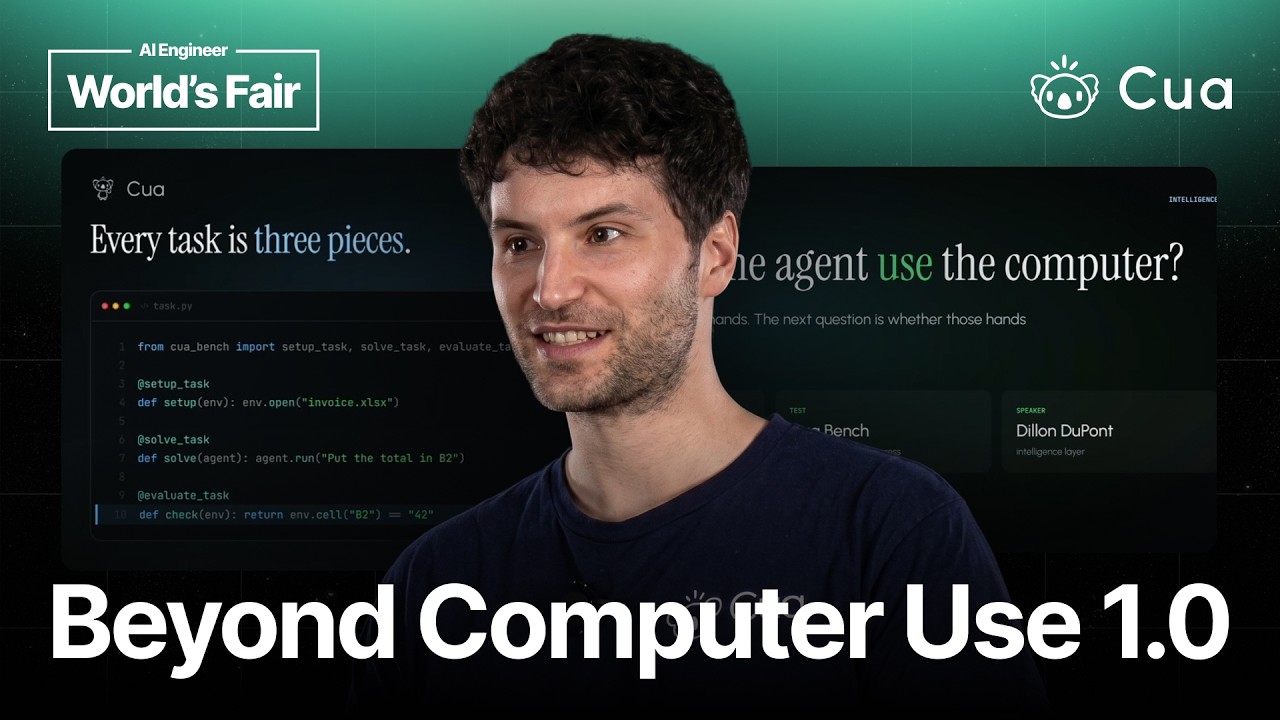
Computer-Use 2.0: Agents Just Got Multi-Cursor — Francesco Bonacci, Cua

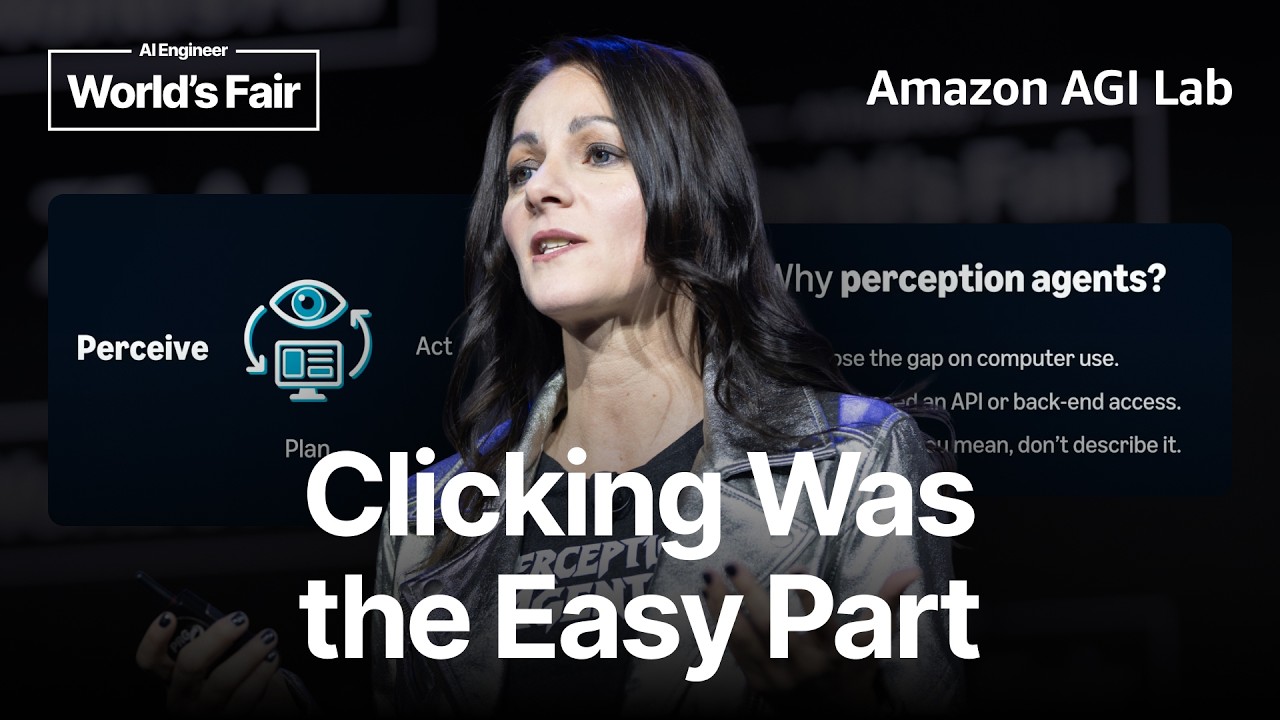
Computer-Use 2.0: Agents Just Got Multi-Cursor — Francesco Bonacci, Cua

This talk introduces cua driver, an open-source tool enabling AI agents to interact with computer GUIs in the background across macOS, Windows, and Linux by leveraging accessibility APIs. It details CUABench, a robust evaluation framework with over 130 verifiable tasks designed to benchmark and ensure the trustworthiness of computer-using agents, revealing current limitations in complex tasks like circuit design. Finally, it presents cua fleet, an infrastructure solution that optimizes GPU utilization and reduces costs for RL training of these agents by dynamically managing sandbox environments.

Omnigent: Composition, Control, and Collaboration for AI Agents

Omnigent: Composition, Control, and Collaboration for AI Agents

Denny Lee discusses the industry's shift to meta-harnesses like Omnigent, which enables hot-swappable AI models and agents, illustrated by his personal project of using debating agents to plan a matcha farm in Taiwan. He highlights how "tokenomics" is replaying the CapEx-to-OpEx cost shift, emphasizing the need for developer visibility, central governance, and auto-model selection to manage AI spend. The conversation also touches on the importance of databases for agent memory and accountability in AI-assisted workflows.

The Golden Age of AI Engineering — Alexander Embiricos & Romain Huet & Peter Steinberger, OpenAI

The Golden Age of AI Engineering — Alexander Embiricos & Romain Huet & Peter Steinberger, OpenAI

OpenAI's Romain Huet and Alexander Embiricos, joined by Peter Steinberger, outline the explosive progress of Codex at Dev Day 2024. They highlight the shift from manual coding to managing autonomous agents, enabled by rapid model iteration (every 6 weeks), open-source developer tools, and optimizations for cost-effectiveness ($1/M input tokens) and blazing inference speed (750 tokens/sec). The discussion centers on empowering AI engineers, not replacing them, by evolving agent capabilities, fostering an open ecosystem, and addressing future challenges like seamless local/cloud task execution and human attention as the new bottleneck in agent orchestration.

The Platform Engineer’s Handbook • Ajay Chankramath & Kaspar von Grünberg • GOTO 2026

The Platform Engineer’s Handbook • Ajay Chankramath & Kaspar von Grünberg • GOTO 2026

This conversation with Ajay Chankramath, author of 'The Platform Engineer’s Handbook,' delves into why practical, code-first guidance is essential for building Internal Developer Platforms. He argues that developer adoption failures stem from a "product discipline gap," not a technology one, emphasizing developer experience as a first-class outcome. The discussion covers the book's arc from foundations to enterprise-grade features and its focus on 100% open-source, vendor-agnostic tooling. Crucially, it highlights how agentic AI raises the stakes for platform engineering, requiring new IDP layers for agent context, memory, and guardrails, asserting that these must be built, owned, and operated internally for safe and productive AI adoption.

GitHub’s Agent Era: 14x Commits, 200M Developers, Copilot’s Next Act — Kyle Daigle

GitHub’s Agent Era: 14x Commits, 200M Developers, Copilot’s Next Act — Kyle Daigle

GitHub COO Kyle Daigle discusses the new era of AI agents from the inside. He covers how he uses AI for leadership, the shift from "mega-skills" to "micro-skills," and how GitHub is navigating a 14x growth in commits. The conversation goes deep on the evolution of Copilot, the future of PRs in an agent-driven world, the challenges of scaling, and Microsoft's vision for an ambient AI operating system.