Opencode CEO: Blocked, 20X Growth in 6 Months, Building the Coding Agent for the World
Jay V, founder and CEO of Opencode, shares insights into the explosive growth of his platform, an open-source alternative to proprietary coding agents. He details Opencode's journey to 13 million monthly active users and 7 trillion tokens processed daily, attributing its rapid rise partly to an unexpected controversy with Anthropic and the maturing open-source model ecosystem. The discussion delves into global user adoption, the economic shift in AI token consumption, and how Opencode's strategic product design, rooted in 16 years of entrepreneurial persistence, positions it as a critical marketplace for diverse AI models, serving both individual developers and Fortune 500 companies.
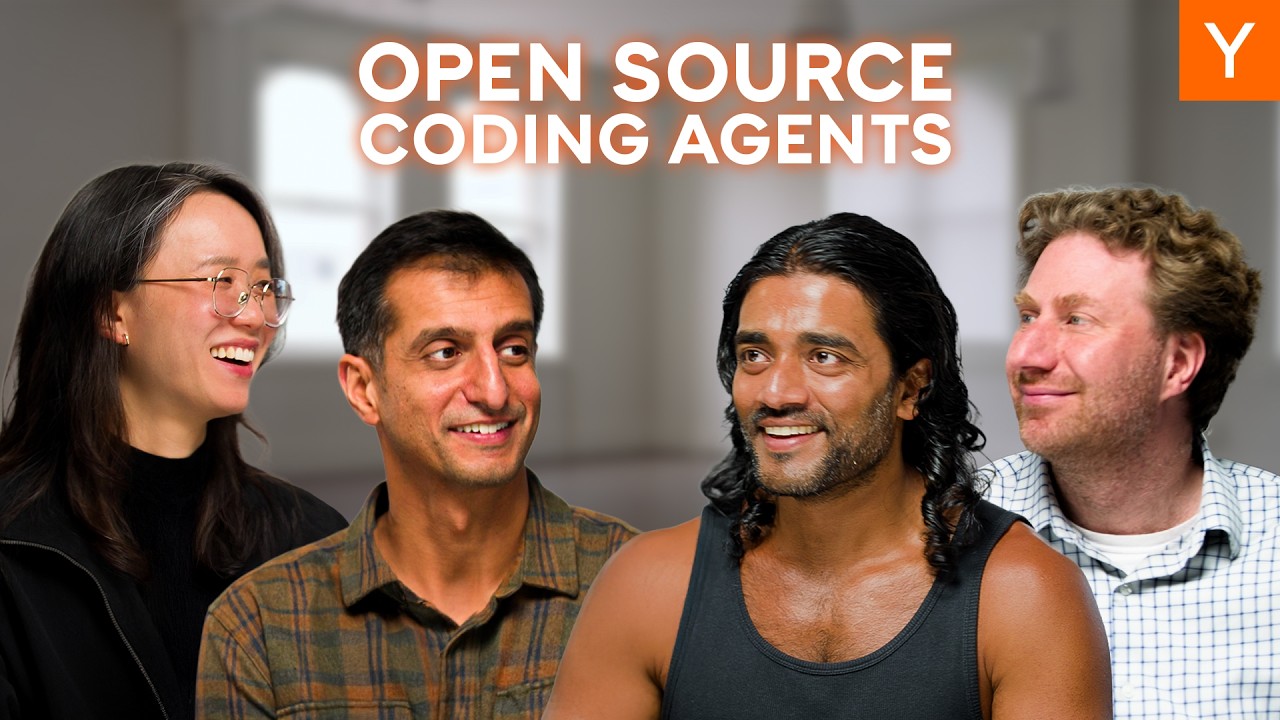
Jay V, founder and CEO of Opencode, discusses the remarkable growth of his platform, an open-source alternative to proprietary coding agents like Claude Code. Opencode has achieved 13 million monthly active users, a 20x increase this year, and processes 7 trillion tokens daily—surpassing the entire OpenRouter platform. This “overnight success” was 16 years in the making.
The Anthropic Controversy as a Catalyst
Opencode’s exponential growth, starting from 650,000 MAU at the beginning of the year, was significantly fueled by an unexpected pushback from Anthropic. Early in the year, Anthropic attempted to block users from leveraging their Claude Code subscriptions within Opencode by rejecting requests that mentioned “Opencode” in the system prompt. This action inadvertently placed Opencode on the same “pedestal” as Claude Code, drawing considerable attention and a wave of new users who perceived Opencode as a noteworthy alternative.
Global Reach and the Rise of Open-Source Models
Opencode’s core mission is to bring the “magic” of coding agents to a global audience, recognizing that the high cost of frontier models makes them inaccessible for many. Initially, Opencode facilitated the use of existing Claude Code subscriptions. However, a significant inflection point occurred around August-September of the previous year with the emergence of powerful open-source models like GLM, Kimis, and MiniMaxes. While initially trailing frontier models by about six months, these open-source alternatives rapidly became “good enough for real work,” making Opencode a viable platform for accessing multiple models. The launch of Opencode Go, a $10/month subscription, was a direct response to this shift, particularly after Gemini 2.5 briefly outpaced Anthropic models in usage on the platform, signaling the maturity of alternative models.
Developer Usage Patterns and Economic Drivers
Opencode provides unique insights into global model usage, sharing data on its opencode.ai/data page. Among its subscription users, DeepSeek Flash dominates by token volume, followed by DeepSeek Pro and GLM. This indicates a strong preference for cost-effective models, especially outside Western markets. DeepSeek Flash’s affordability allows users to extend their daily coding agent usage without exceeding budgets. Certain models also show specialization; for instance, GLM 5.2 is favored for front-end design tasks. The platform’s global user base is diverse, with China accounting for 17% of users and significant adoption in developing countries like Indonesia (4%) and Brazil (5%), where high-cost subscriptions are prohibitive. Even in the US, a “vibe shift” towards token consciousness is observed.
Enterprise Adoption and Evolving Unit Economics
Fortune 500 companies are increasingly using Opencode, not just for cost savings, but for model choice and to avoid vendor lock-in. Enterprises often discover widespread internal usage of Opencode and then proactively seek security agreements, indicating strong product-market fit. While the primary use is for developers, enterprises are exploring broader applications, including non-technical roles and embedding Opencode’s agent loop into their products. Requests often revolve around managing token spend, granular usage visibility, and limiting access to expensive frontier models. Opencode’s unit economics are distinct from traditional AI labs that heavily subsidize usage. While Opencode offers a free tier for the initial “aha moment,” its subscription model leverages volume discounts on open-source model tokens, turning them into margins. This strategy attracts “whales”—large organizations that eventually pay significant amounts for token consumption.
Deliberate Product Design and a Long Road to Success
Opencode’s product philosophy is deeply rooted in deliberate choices. The name itself, inspired by the “OpenNext” concept, aimed to position the platform as the default open alternative. At launch, Opencode supported over 70 models and providers, necessitating the creation of models.dev, a comprehensive public database of AI models. The platform was inspired by the utility of Claude Code but aimed to offer a superior “modern terminal experience” for core developers, drawing on the founders’ past experience building sophisticated terminal UIs (including a peculiar terminal UI for ordering coffee). This focus on serving a discerning developer audience, combined with a commitment to the open-source community, proved crucial. Jay V’s journey to this success was a 16-year marathon, beginning in 2006 with his college roommate, Frank. The same legal entity endured nine YC applications and four interviews across different ideas before gaining acceptance in 2021 for a serverless platform, which became their first major open-source project. Jay attributes his persistence to a combination of stubbornness, continuous learning, and a sense of positive progress, allowing him to capitalize on the current AI wave.