Nvidia

Jensen Huang: The Mindset That Built NVIDIA

Jensen Huang: The Mindset That Built NVIDIA

Jensen Huang, CEO of NVIDIA, shares critical lessons from NVIDIA's journey, emphasizing how early failures and a commitment to learning new technologies, like purchasing textbooks from Fry's to pivot the company, laid the groundwork for their success. He discusses NVIDIA's strategic vision, driven by accelerating algorithm domains and seeing AlexNet as a universal function approximator, which led to a reinvention of the computing stack. Huang also explores the future of AI with agents, the importance of fine-grained control, and the "Linux moment" of open-source AI, while also forecasting the rise of physical AI and job creation. He concludes with profound advice on resilience, systems thinking, and the "how hard can it be?" mindset for aspiring entrepreneurs in this unprecedented era of technological reset.

Podcast Crossover: AIE, AGI, frontier lab strategy with ​ ⁨@matthew_berman⁩  and @swyxtv

Podcast Crossover: AIE, AGI, frontier lab strategy with ​ ⁨@matthew_berman⁩ and @swyxtv

Matt, the organizer of the AI.engineer conference, shares insights into its origin, the challenges of early adoption, and its current value as a neutral ground for AI labs. He delves into AI hardware trends, discussing specialized chips like Etched, and gives a nuanced take on Anthropic's Fable, addressing performance concerns and compute limitations. The conversation then explores OpenAI's rumored equity offer to the US government, discussing implications for regulation and societal involvement. Matt shares his perspective on AI existential risk and alignment, emphasizing the need for pragmatic engineering solutions. Finally, he outlines the limitations of current LLMs, the critical need for data efficiency, and offers strategic advice for "Agent Labs" navigating the "model capability overhang" versus multi-model agnosticism.

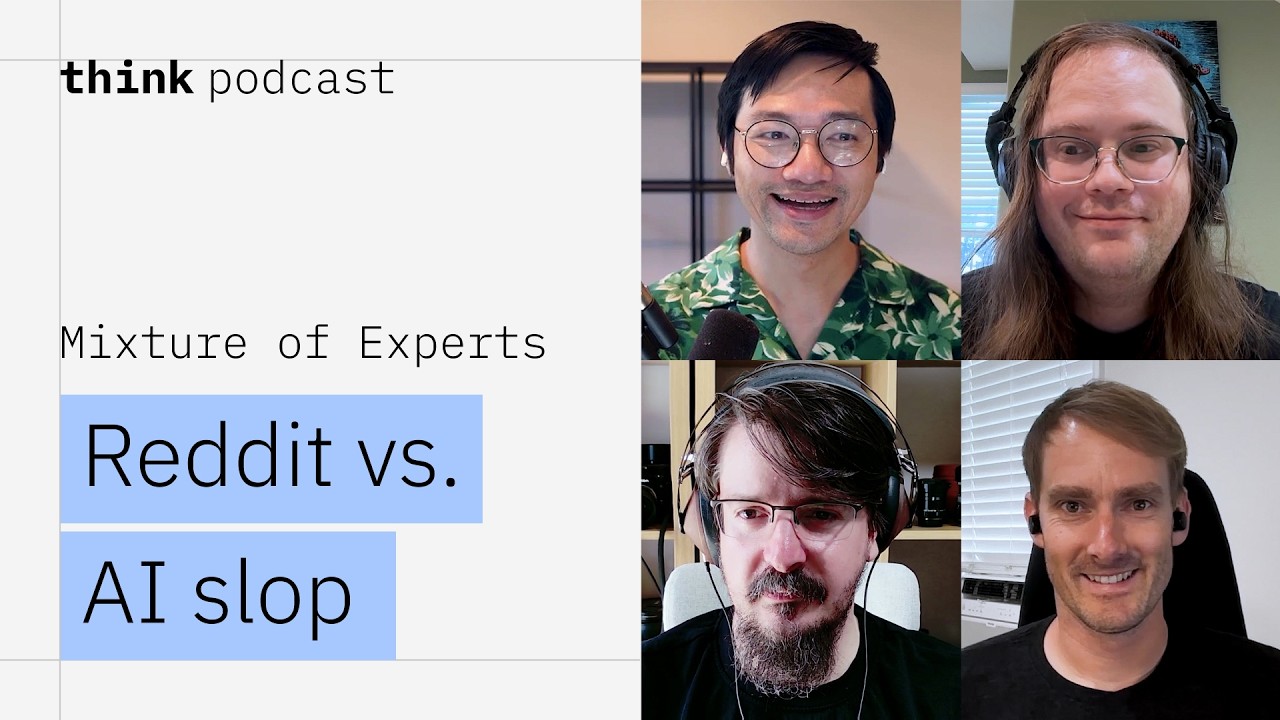
Reddit cracks down on AI slop & the future of AI compute

Reddit cracks down on AI slop & the future of AI compute

This episode explores Reddit's aggressive AI spam combat strategy, revealing AI's dual role in fighting malicious AI. It then dissects Anthropic's Economic Index, highlighting how Claude integrates into daily life despite significant user selection bias. The discussion also covers Orin's $33M raise for a GPU compute marketplace, debating the fungibility of compute and the technical hurdles. Finally, Anthropic's chip ambitions are analyzed as an economic strategy to optimize models, reduce NVIDIA dependency, and manage rising token costs, with comparisons to existing hardware ecosystems and NVIDIA's market position.

The Future of AI – Key Trends Shaping What’s Next • Ekaterina Sirazitdinova • YOW! 2025

The Future of AI – Key Trends Shaping What’s Next • Ekaterina Sirazitdinova • YOW! 2025

Ekaterina Sirazitdinova from NVIDIA provides a high-level overview of the latest trends shaping the future of AI, covering the evolution from early deep learning to the rise of agentic and physical AI, and diving deep into the critical optimization techniques required to deploy these powerful models efficiently.

Tokenmaxxing vs AI Hardware Bottlenecks — with Jon Krohn (@JonKrohnLearns)

Tokenmaxxing vs AI Hardware Bottlenecks — with Jon Krohn (@JonKrohnLearns)

While the 'tokenmaxxing' trend grows, the AI industry faces severe physical infrastructure bottlenecks. This summary explores the four key constraints choking AI compute: GPU packaging (CoWoS), high-bandwidth memory (HBM), the surprising surge in CPU demand from agentic AI, and critical electricity shortages, revealing how these challenges are shaping the future of AI development.

Robotics' End Game: Nvidia's Jim Fan

Robotics' End Game: Nvidia's Jim Fan

Jim Fan of Nvidia outlines the endgame for robotics, arguing it will mirror the successful playbook of Large Language Models. He introduces "The Great Parallel," a roadmap where World Models replace Language Models, and data collection shifts from limited teleoperation to scalable egocentric video, culminating in a future of physical APIs and automated research.