Deep mind

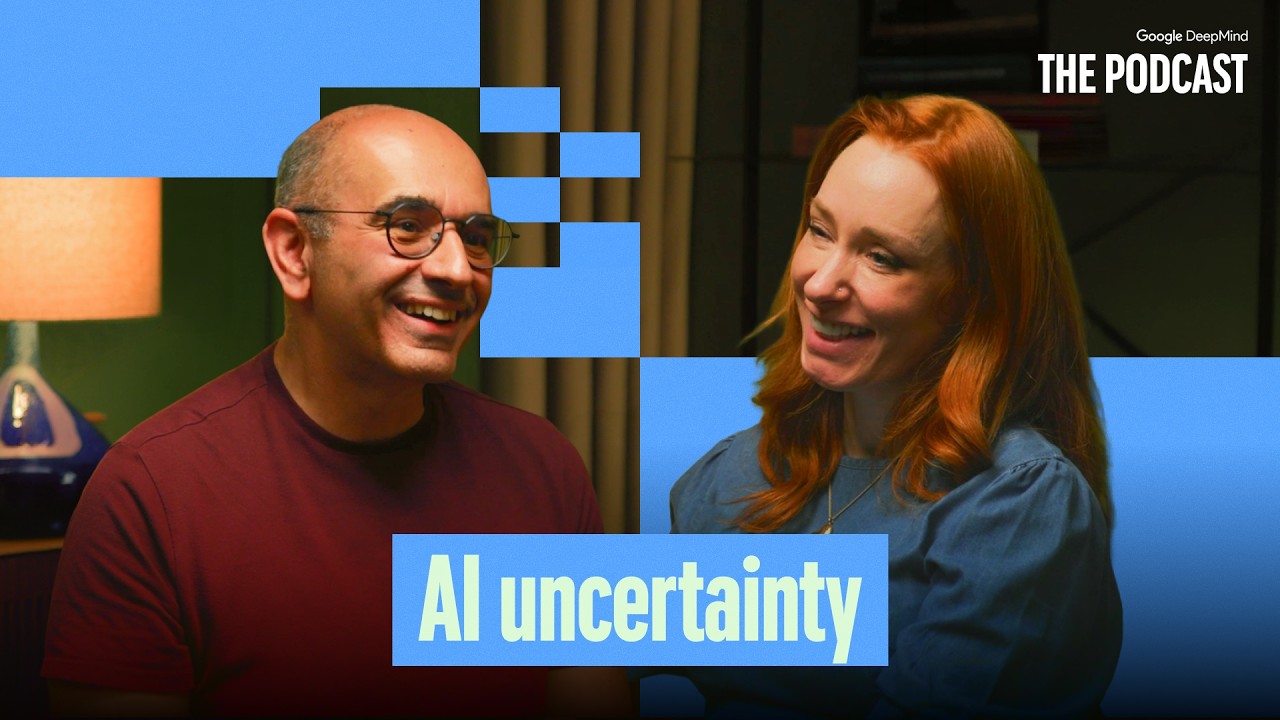
The mathematics of AI uncertainty

The mathematics of AI uncertainty

Zoubin Ghahramani, a leading researcher at Google DeepMind and professor at Cambridge, argues that incorporating uncertainty is a missing piece for ever-improving AI. He discusses the critical difference between correctness and confidence in AI, tracing the historical evolution of probabilistic models from early neural networks to modern Bayesian approaches. Ghahramani highlights how current large language models often 'fake' uncertainty and explores successful implementations in areas like weather forecasting and AlphaFold, ultimately advocating for architectural innovations over pure scale to build more robust, trustworthy, and human-aligned intelligent systems that understand their own limitations.
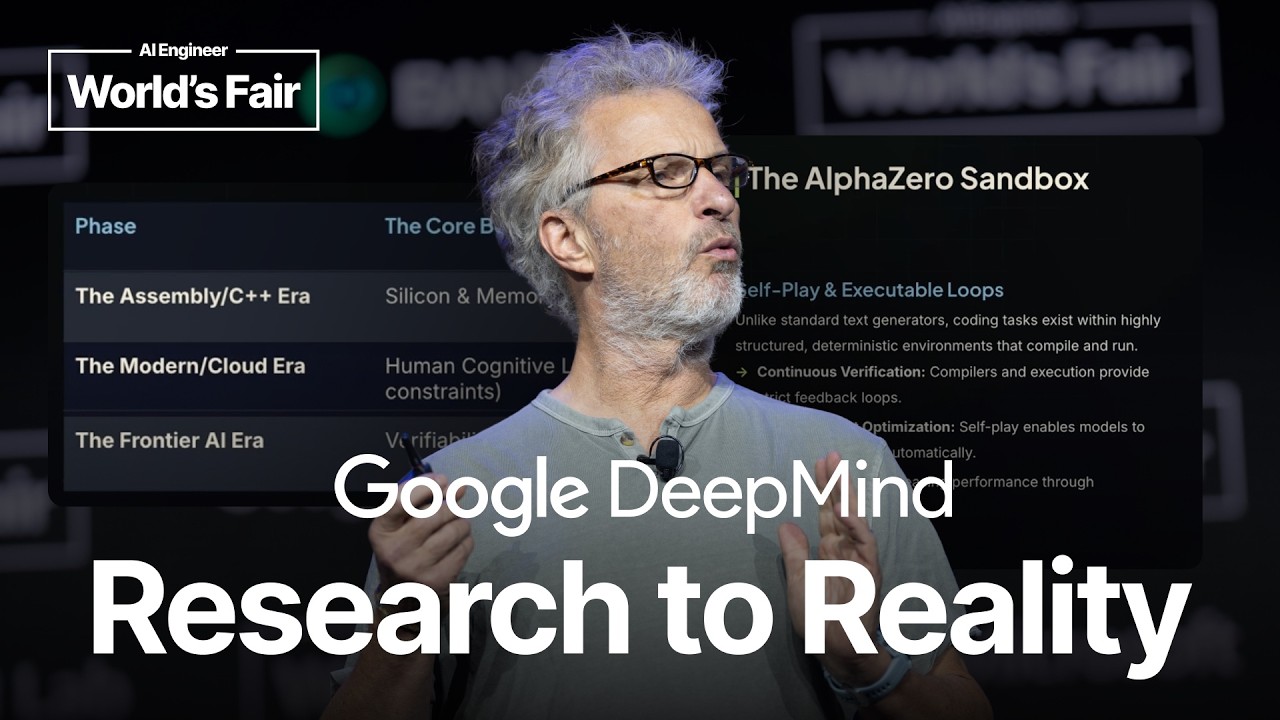
Research to Reality with Google DeepMind — Benoit Schillings, Google DeepMind, VP of Technology

Research to Reality with Google DeepMind — Benoit Schillings, Google DeepMind, VP of Technology

Benoit Schillings, VP of Technology at Google DeepMind, explores the evolution of AI's role in software development, highlighting the transition from human-limited coding to an AI frontier where syntax generation is solved. He delves into the power of self-play for model training, the shifting economics of software engineering, and the imperative for active guardrails. Schillings also discusses the need for inductive architecture, advanced model planning, multimodal reasoning (as seen in Gemini), and the potential for AI to drive scientific breakthroughs in fields like chemistry and biology by uncovering patterns imperceptible to human bias.

⚡️Every product of the future will be a living system  — Ronak Malde, Trajectory.ai

⚡️Every product of the future will be a living system — Ronak Malde, Trajectory.ai

Ronuk Malde, CEO of Trajectory.ai, discusses his journey from building AI coding agents at Windsurf to his current focus on continual learning for enterprise AI. He shares insights on leveraging real-world user data, the unique challenges of model acquisition, and how Trajectory.ai's platform, powered by innovations like scaled SDPO and a novel training stack, enables dynamic, always-learning AI models for diverse industries from legal to finance.

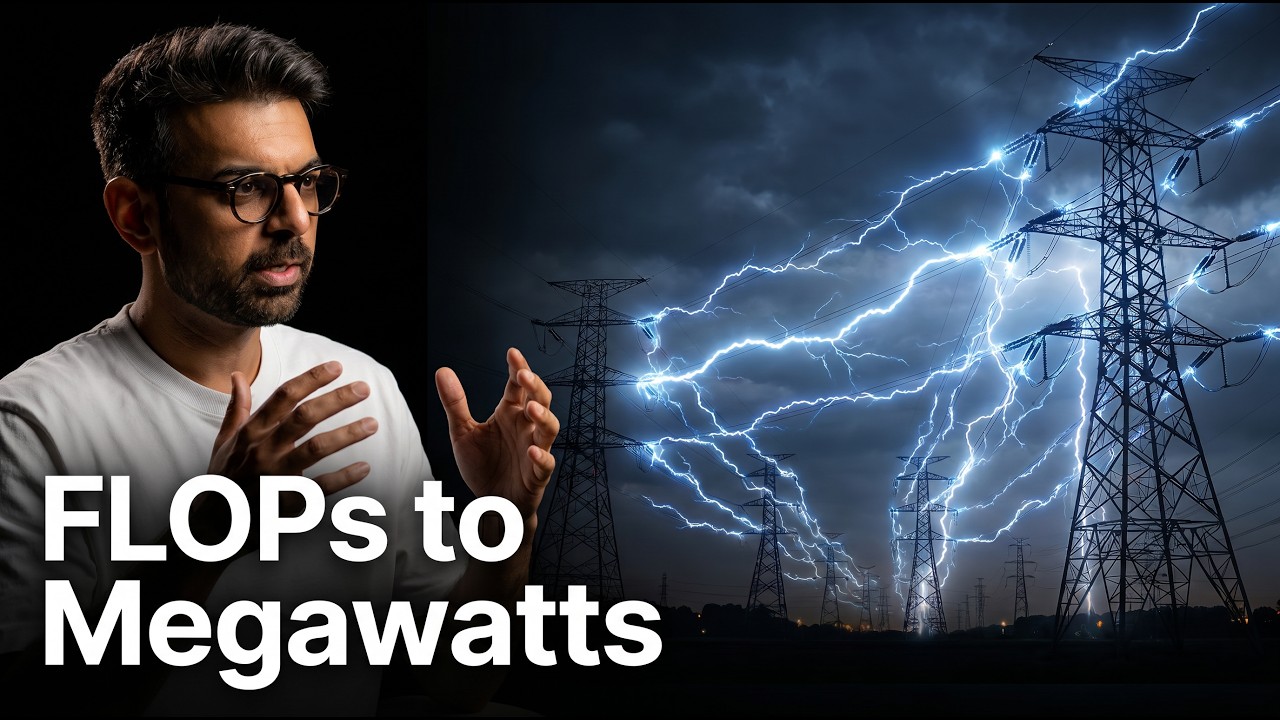
The AI Frontier: from FLOPs to Megawatts — Anjney Midha, AMP

The AI Frontier: from FLOPs to Megawatts — Anjney Midha, AMP

Anjney Midha unpacks the critical bottlenecks in AI scaling beyond just GPU acquisition, advocating for responsible infrastructure, community-aligned data centers, and an independent system operator model for compute. He discusses the perils of research hoarding, the rise of researcher CEOs, and how Anthropic's culture of "preparedness" and "output maxing" led to its success, while also highlighting his personal mission to use AI for precise end-of-life prediction.

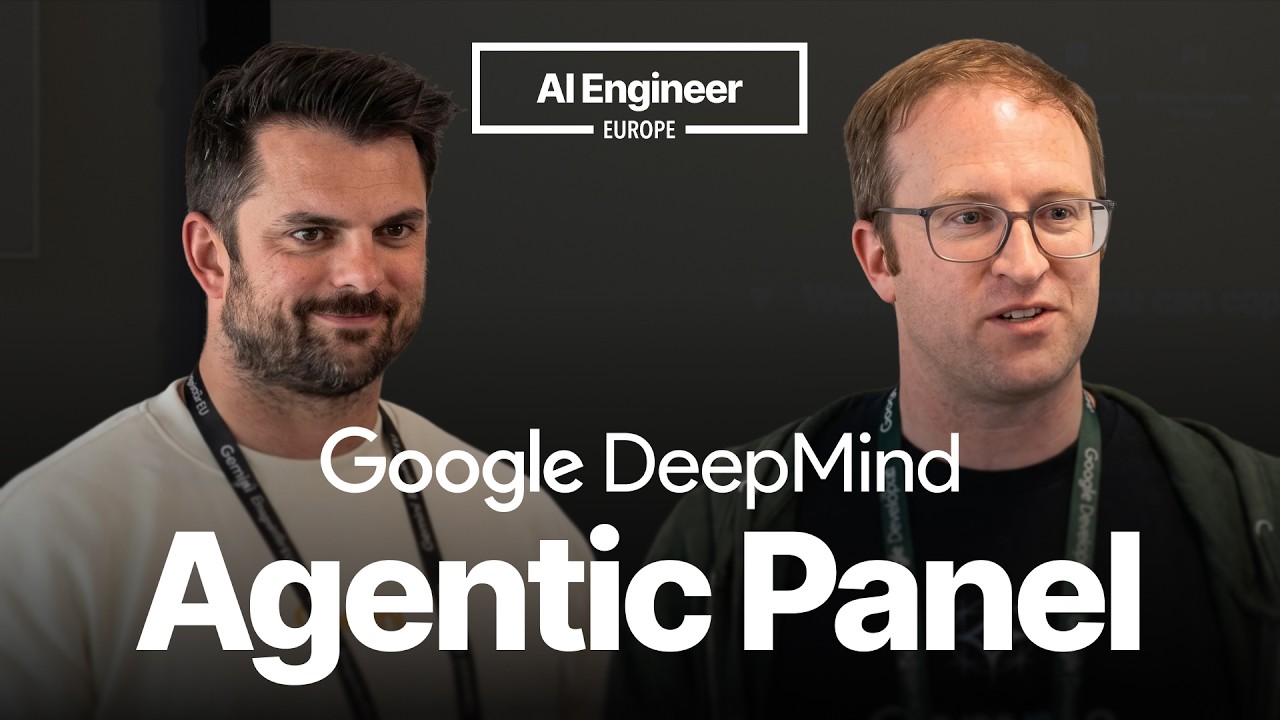
How Google DeepMind Runs Agents at Scale — KP Sawhney & Ian Ballantyne, Google DeepMind

How Google DeepMind Runs Agents at Scale — KP Sawhney & Ian Ballantyne, Google DeepMind

KP Sawhney from Google DeepMind discusses the internal strategies for scaling agentic AI, including managing token-hungry workflows, curating a 'Darwinian' skills library, and evolving the Deep Research pipeline from large context blobs to a collaborative file system.

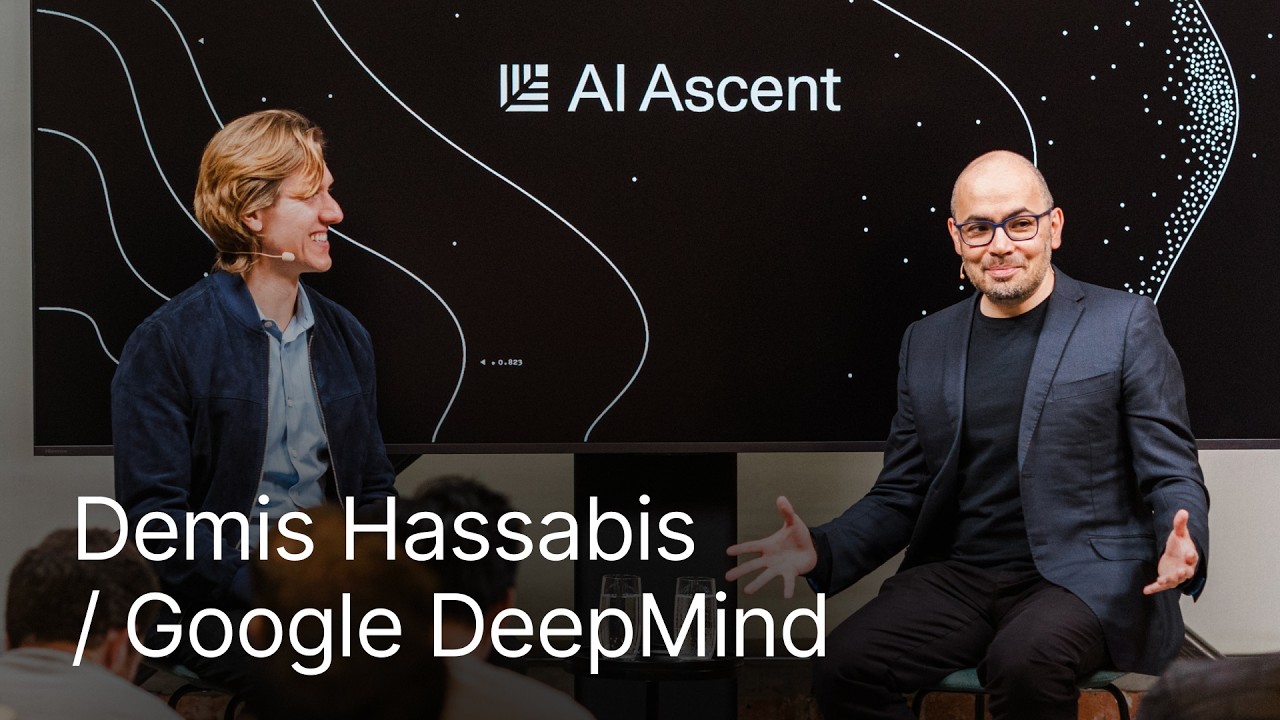
Demis Hassabis on Building DeepMind, AlphaFold, and the Final Stretch to AGI

Demis Hassabis on Building DeepMind, AlphaFold, and the Final Stretch to AGI

Demis Hassabis, CEO of Google DeepMind, outlines the path to AGI, which he predicts by 2030. He discusses the profound impact of AI on science, particularly in revolutionizing drug discovery with systems like AlphaFold, and posits that AI will enable new forms of simulation-based science. Hassabis also delves into the philosophical underpinnings of his work, viewing information as the universe's most fundamental quantity and advocating for developing AGI as a powerful tool before tackling the deeper questions of consciousness.