Ai for science

Demis Hassabis on Building DeepMind, AlphaFold, and the Final Stretch to AGI

Demis Hassabis on Building DeepMind, AlphaFold, and the Final Stretch to AGI

Demis Hassabis, CEO of Google DeepMind, outlines the path to AGI, which he predicts by 2030. He discusses the profound impact of AI on science, particularly in revolutionizing drug discovery with systems like AlphaFold, and posits that AI will enable new forms of simulation-based science. Hassabis also delves into the philosophical underpinnings of his work, viewing information as the universe's most fundamental quantity and advocating for developing AGI as a powerful tool before tackling the deeper questions of consciousness.
How to Build the Future: Demis Hassabis

How to Build the Future: Demis Hassabis

Demis Hassabis, CEO of Google DeepMind, outlines the remaining challenges on the path to AGI, including memory, continual learning, and true reasoning. He discusses how learnings from AlphaGo are shaping agent development, the strategic importance of powerful small models like Gemma, and his vision for AI as the ultimate tool for scientific discovery, offering a framework for identifying breakthrough opportunities and advice for founders building in the age of AI.

Mistral: Voxtral TTS, Forge, Leanstral, & Mistral 4 — w/ Pavan Kumar Reddy & Guillaume Lample

Mistral: Voxtral TTS, Forge, Leanstral, & Mistral 4 — w/ Pavan Kumar Reddy & Guillaume Lample

Mistral's Pavan (Voxtral lead) and Guillaume (Chief Scientist) discuss the new Voxtral TTS model, its novel architecture using flow matching for efficient, high-quality speech generation. They elaborate on Mistral's strategy of delivering specialized, open-weight models and the Mistral Forge platform, which empowers enterprises to leverage their proprietary data through fine-tuning for privacy, cost-effectiveness, and superior performance. The conversation also covers Mistral Small, the future of AI for science, and the company's commitment to open-source and foundational research, including formal proving as a proxy for long-horizon reasoning.

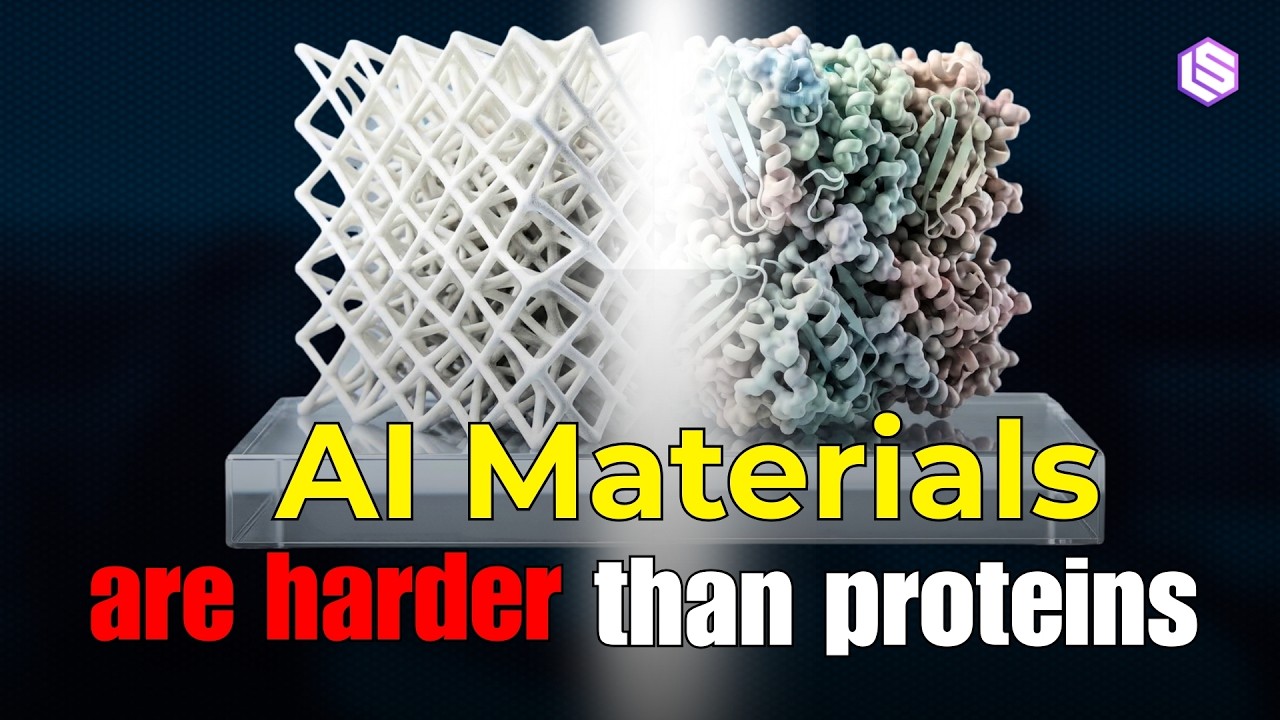
🔬There Is No AlphaFold for Materials — AI for Materials Discovery with Heather Kulik

🔬There Is No AlphaFold for Materials — AI for Materials Discovery with Heather Kulik

Professor Heather Kulik shares her hard-won perspective on applying AI to materials science, from discovering novel polymers with surprising quantum properties to the practical limitations of LLMs and the critical need for integrating deep domain expertise with data-driven methods.

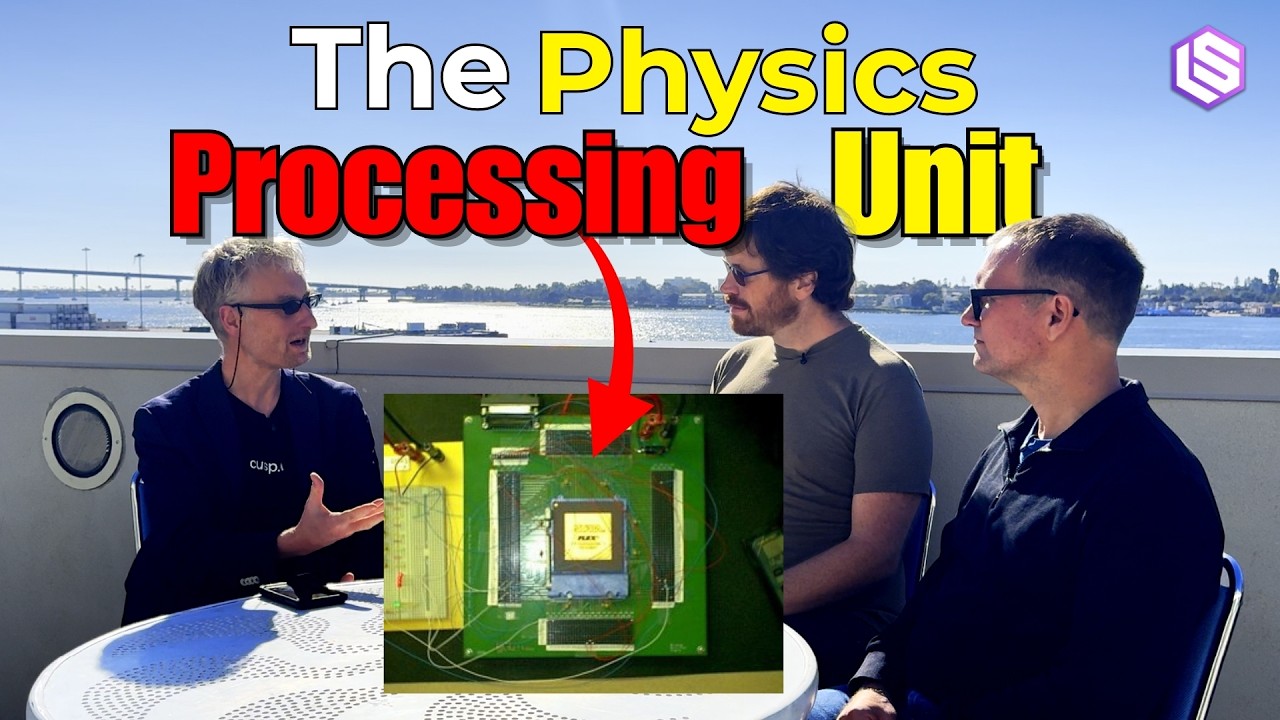
🔬Max Welling: Materials Underlie Everything

🔬Max Welling: Materials Underlie Everything

Max Welling connects the dots between quantum gravity, equivariant neural networks, and diffusion models, explaining how these concepts from theoretical physics are now powering a new generation of AI for materials discovery to tackle climate change. He introduces the concept of a "Physics Processing Unit" and details the architecture of his startup, CuspAI.

AI is Revolutionizing Scientific Discovery Featuring Nobel Laureate John Jumper

AI is Revolutionizing Scientific Discovery Featuring Nobel Laureate John Jumper

John Jumper, one of the creators of AlphaFold, discusses the journey of developing an AI system to solve the protein folding problem. He emphasizes that the breakthrough was driven more by novel research and a combination of "mid-scale ideas" than by raw data or compute scale alone. The talk covers the importance of blind-assessment benchmarks like CASP, the strategy of releasing a massive, accessible database to drive adoption and trust, and the unexpected ways the scientific community used the tool. He concludes by framing AI for science as a powerful amplifier for experimentalists, accelerating discovery by generating high-quality, testable hypotheses.