Posts

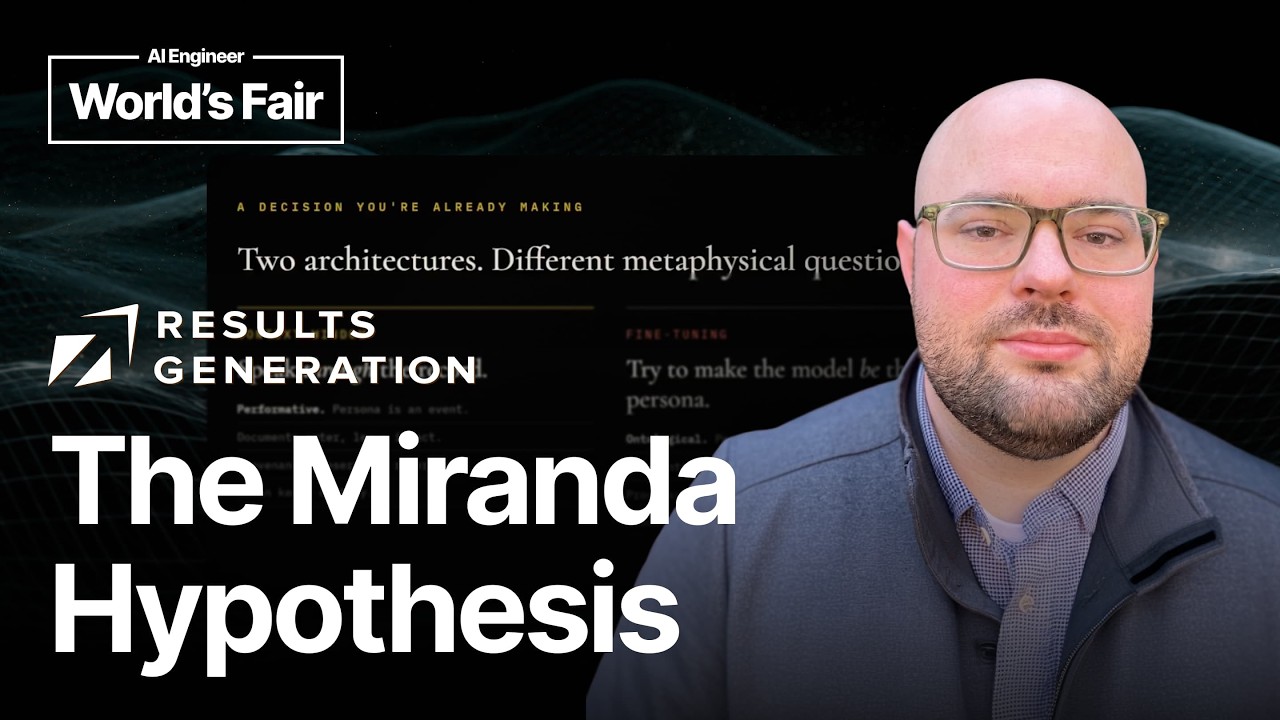
The Miranda Hypothesis: How Hamilton Poisoned Persona Evals - Jacob E. Thomas, Results Gen

The Miranda Hypothesis: How Hamilton Poisoned Persona Evals - Jacob E. Thomas, Results Gen

This talk exposes "Miranda distortion," a critical flaw in AI personas where models, influenced by modern cultural narratives, produce convincing but anachronistic outputs. Current evaluations fail to detect this, prioritizing fluency over fidelity. The speaker proposes "epistemic simulation"—a new paradigm grounded in corpus-bounded, temporally-anchored, and expert-evaluated reasoning—and introduces the "Prism Experiment." This rigorous, pre-registered protocol uses Abraham Lincoln to demonstrate how a weighted rubric, created by historians and de-emphasizing rhetorical fluency, can detect anachronism. It advocates for the "humanist in the loop" as a technical requirement to ensure AI personas are true to their documentary records, not just convincing.
Zynga Founder: Consumer Is Not Investible Right Now - Thats Why You Should Build It

Zynga Founder: Consumer Is Not Investible Right Now - Thats Why You Should Build It

Mark Pincus, founder of Zynga, discusses the product philosophy behind "Life at the Speed of Play," focusing on consumer innovation in the AI age. He introduces the "Proven, Better, New" framework, shares insights on founder mode, and predicts a future where "intelligence on tap" driven by free AI compute will unlock unprecedented opportunities for new "internet treasures," despite current investor skepticism in the consumer space.

Memory and Continual Learning: Engram's Dan Biderman and Jessy Lin

Memory and Continual Learning: Engram's Dan Biderman and Jessy Lin

Dan Biderman and Jessy Lin of Engram introduce their "always training" paradigm, focusing on baking a team's knowledge directly into a model's weights to achieve true memory and continual learning. This contrarian approach, which they call a "RAG killer" for specific use cases, promises up to 100x token savings and superior performance by internalizing context rather than relying on ever-larger context windows or external retrieval, envisioning a future where everyone has their own continually learning, personalized AI model.

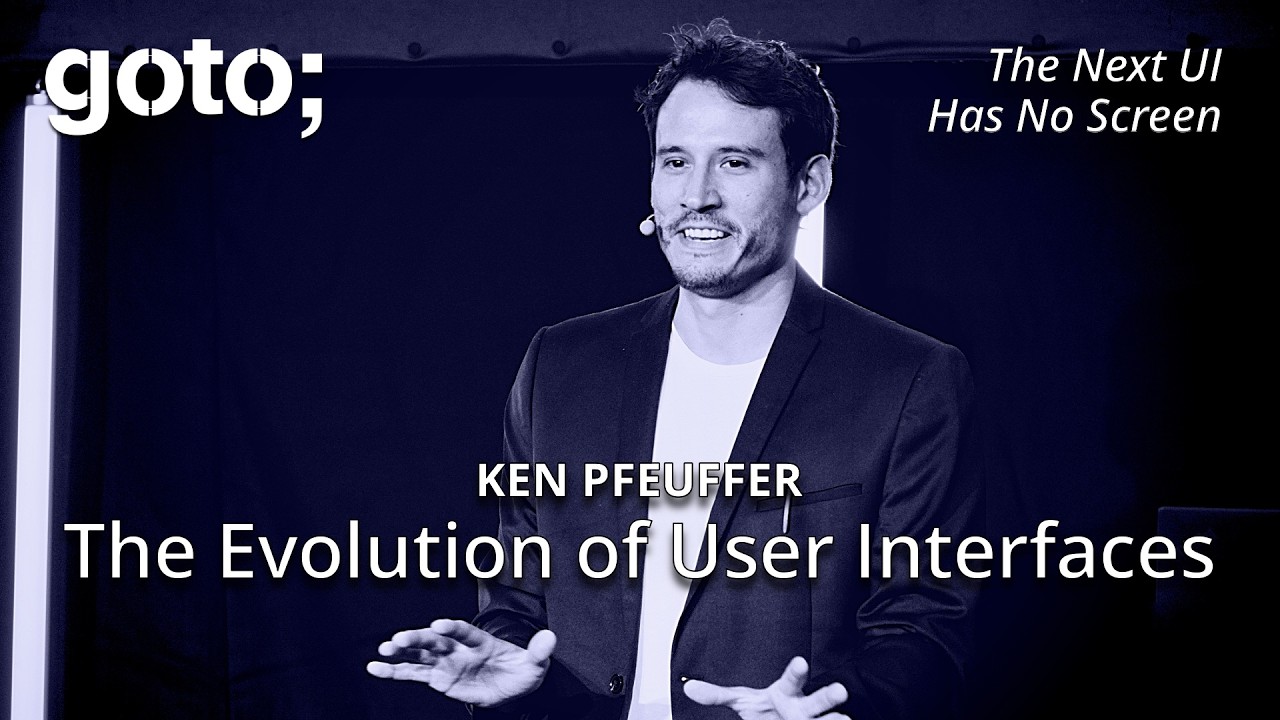
The Evolution of User Interfaces • Ken Pfeuffer • GOTO 2025

The Evolution of User Interfaces • Ken Pfeuffer • GOTO 2025

Ken Pfeuffer discusses the evolution of user interfaces, from traditional hand-centric inputs to the emerging paradigm of eye-hand symbiosis. He traces the history of gaze interaction research, explains his decade-long work on "gaze and pinch," and shares how these concepts are now becoming reality with devices like Apple Vision Pro, outlining future directions for intuitive spatial computing.

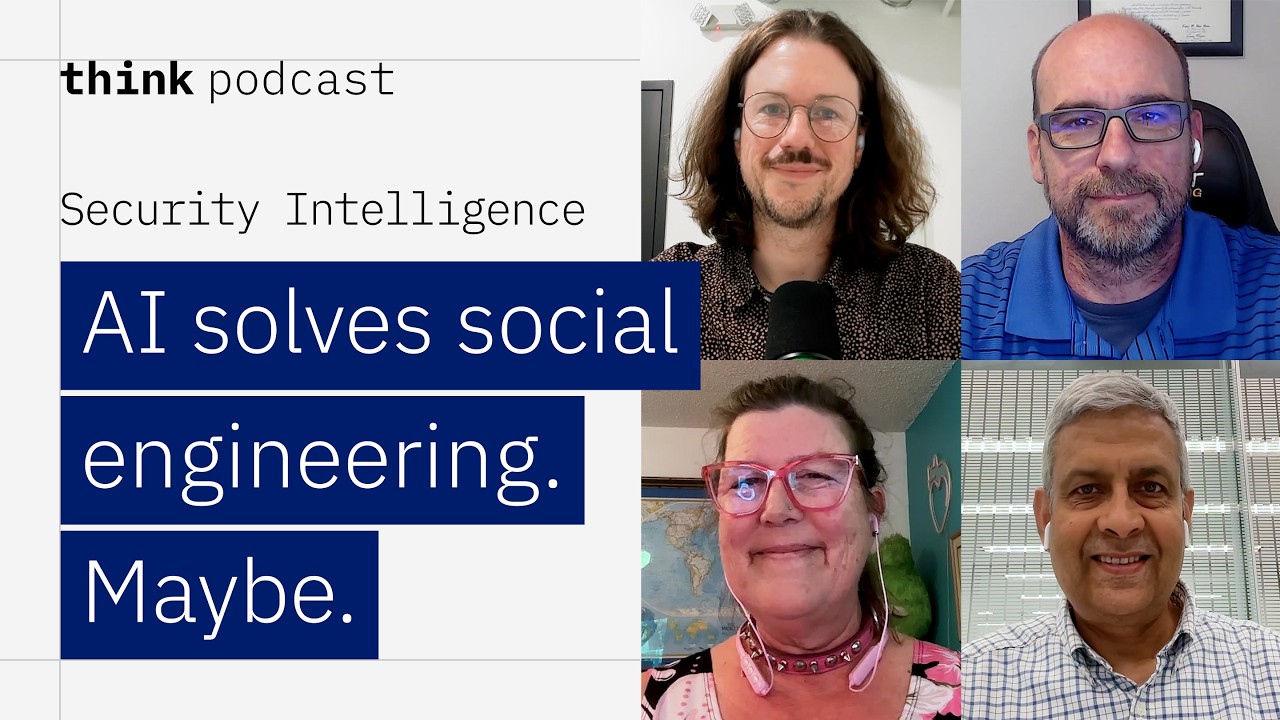
Have we finally solved social engineering? Plus: World Cup fraud, AI IDs and an IBM/OpenAI collab

Have we finally solved social engineering? Plus: World Cup fraud, AI IDs and an IBM/OpenAI collab

This podcast episode explores the intersection of AI and cybersecurity, discussing whether AI-native operating systems can curb social engineering, the impact of AI agents on identity and security, and the ongoing threat of cybercrime exploiting major events. It also highlights IBM's new partnership with OpenAI to enhance application security using advanced AI models.

⚡️Every product of the future will be a living system  — Ronak Malde, Trajectory.ai

⚡️Every product of the future will be a living system — Ronak Malde, Trajectory.ai

Ronuk Malde, CEO of Trajectory.ai, discusses his journey from building AI coding agents at Windsurf to his current focus on continual learning for enterprise AI. He shares insights on leveraging real-world user data, the unique challenges of model acquisition, and how Trajectory.ai's platform, powered by innovations like scaled SDPO and a novel training stack, enables dynamic, always-learning AI models for diverse industries from legal to finance.