Posts

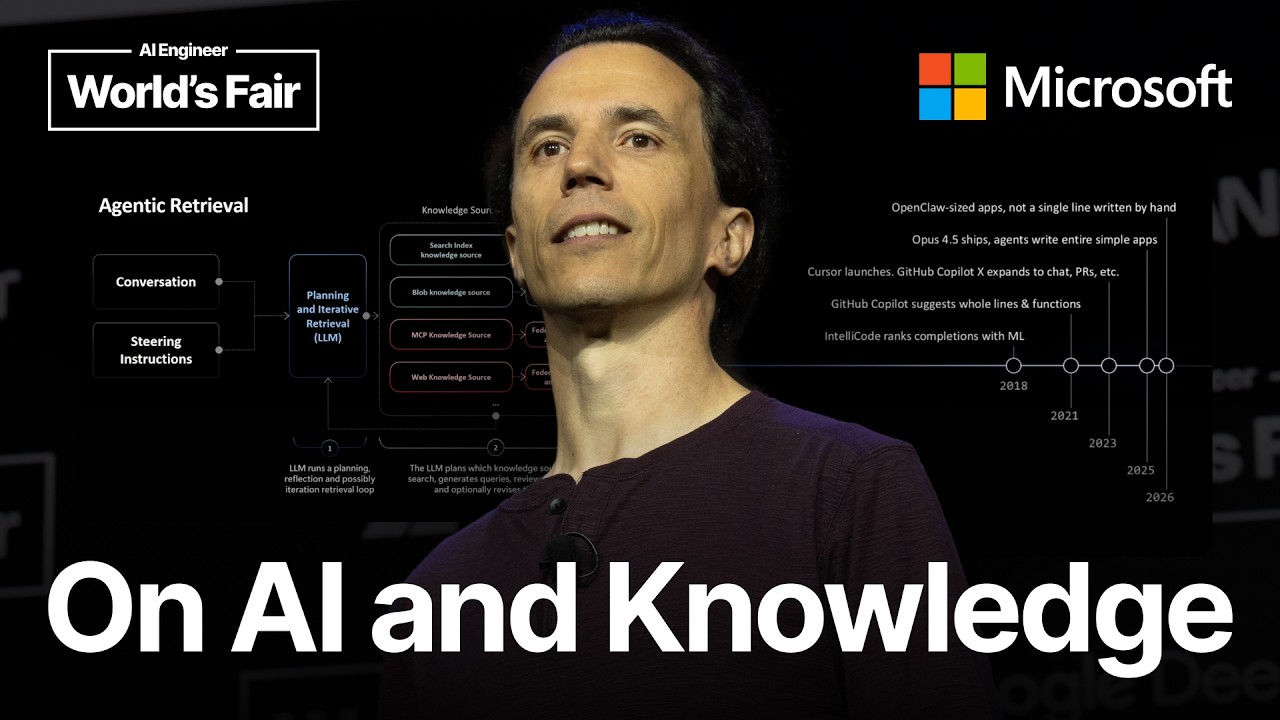
On AI and Knowledge — Pablo Castro, Distinguished Engineer & CVP for AI Knowledge, Microsoft

On AI and Knowledge — Pablo Castro, Distinguished Engineer & CVP for AI Knowledge, Microsoft

Pablo Castro explores the three pillars of AI knowledge—intrinsic, extrinsic, and learned—explaining how models leverage parametric memory, agents integrate with enterprise data through sophisticated RAG systems like Foundry IQ, and how continuous learning loops, facilitated by tools like the Agent Optimizer, enable self-improving agents, driving the next wave of AI applications.
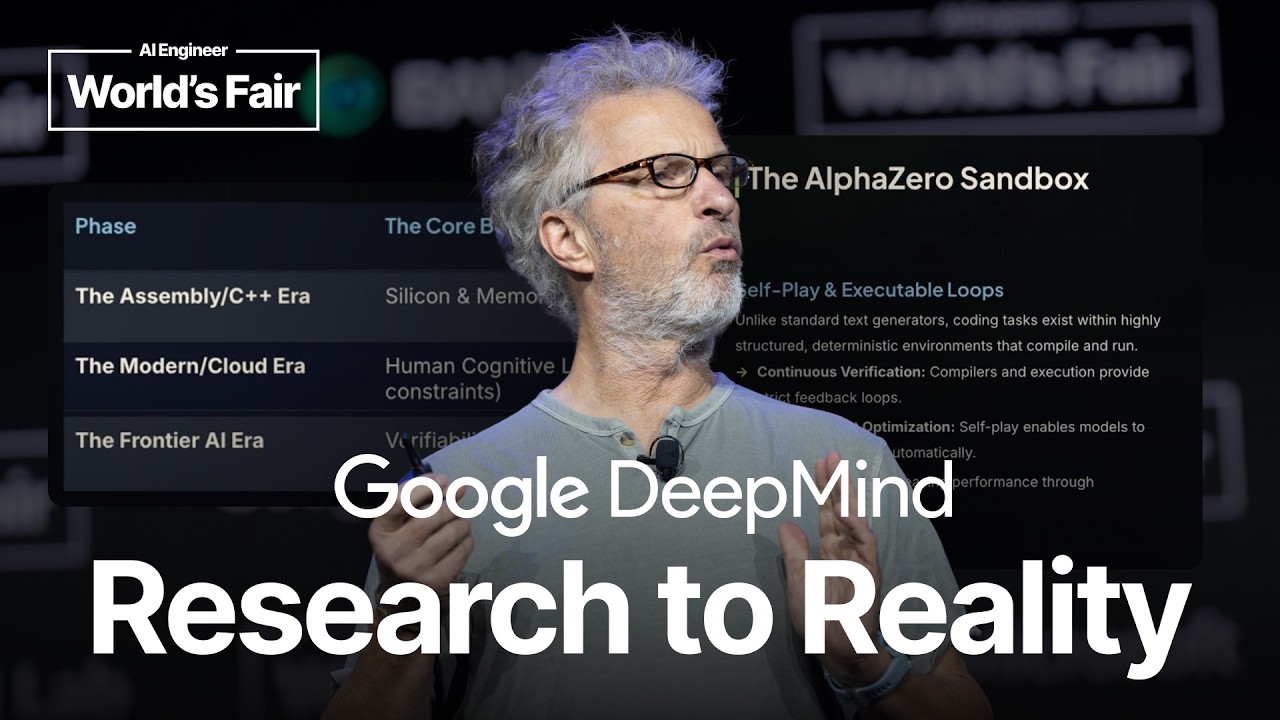
Research to Reality with Google DeepMind — Benoit Schillings, Google DeepMind, VP of Technology

Research to Reality with Google DeepMind — Benoit Schillings, Google DeepMind, VP of Technology

Benoit Schillings, VP of Technology at Google DeepMind, explores the evolution of AI's role in software development, highlighting the transition from human-limited coding to an AI frontier where syntax generation is solved. He delves into the power of self-play for model training, the shifting economics of software engineering, and the imperative for active guardrails. Schillings also discusses the need for inductive architecture, advanced model planning, multimodal reasoning (as seen in Gemini), and the potential for AI to drive scientific breakthroughs in fields like chemistry and biology by uncovering patterns imperceptible to human bias.

AI Can't Learn The Way Humans Do - This Could Fix That

AI Can't Learn The Way Humans Do - This Could Fix That

This discussion explores world models as a promising path to solving sample efficiency in AI and achieving AGI. It contrasts deterministic control (Newtonian physics) with stochastic environments (RL), explaining the challenges posed by large action spaces in Go, self-driving, and robotics. The episode delves into how synthetic data, video diffusion models, and latent space architectures like JEPA are making world models practical, while also highlighting remaining open problems in physics modeling, real-time adaptation, and rich sensory integration.

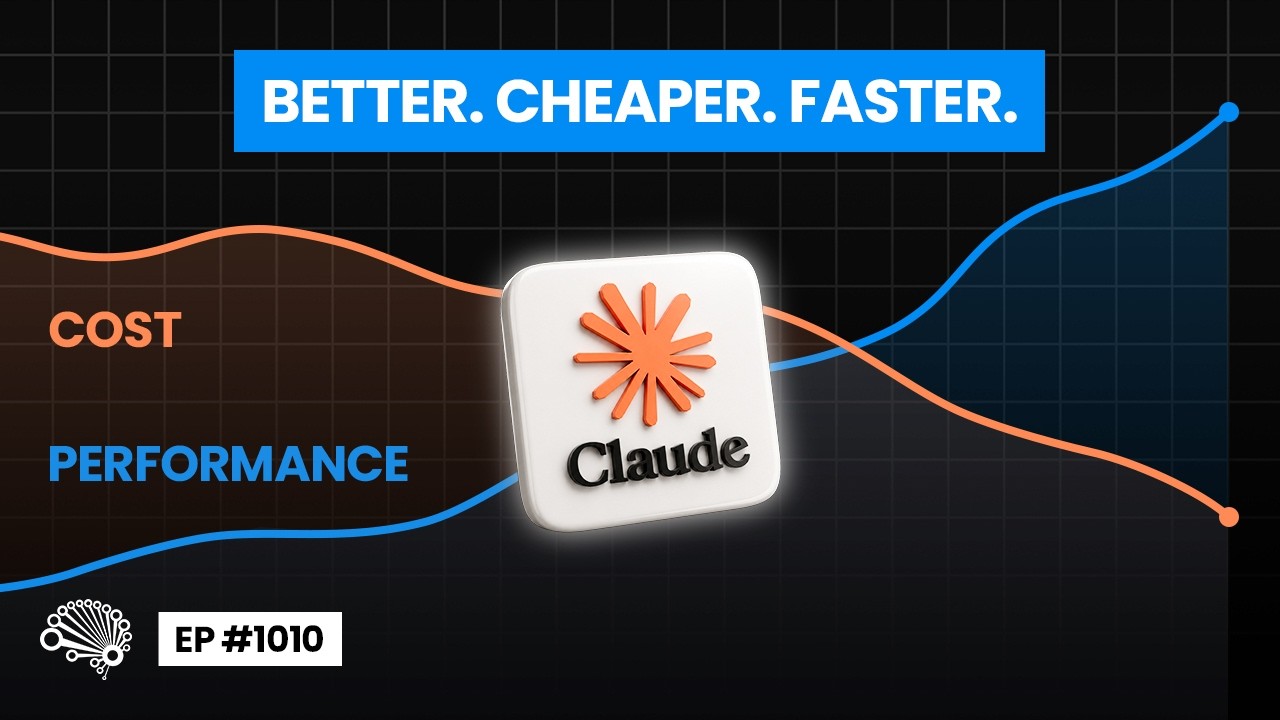
Fable 5 as Advisor: Anthropic's Two-Model Pattern for Smarter, Cheaper Agents (Ep. 1010)

Fable 5 as Advisor: Anthropic's Two-Model Pattern for Smarter, Cheaper Agents (Ep. 1010)

The episode explores Anthropic's "advisor strategy," a novel AI agent pattern that combines a fast, cheap "executor" model with a frontier-class "advisor" model. This allows for mid-task consultation within a single API call, resolving the tension between cost and capability. Benchmarks show simultaneous improvements in quality and cost reduction, demonstrating that AI progress is shifting towards intelligent model composition rather than just larger models.

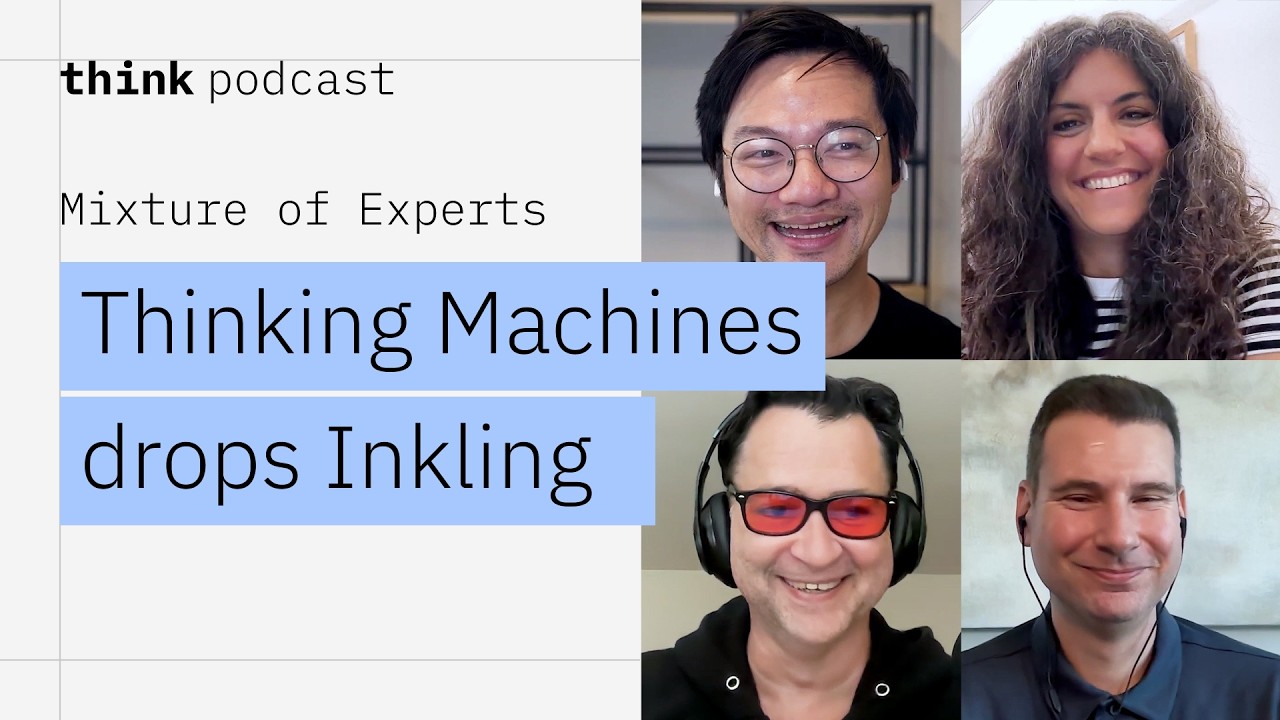
Thinking Machines Lab drops Inkling & Meta’s Muse Spark 1.1

Thinking Machines Lab drops Inkling & Meta’s Muse Spark 1.1

This episode covers Thinking Machines' Inkling, an open-source, customizable model prioritizing architecture over benchmarks; Meta's Muse Spark 1.1, positioned for agent orchestration and enterprise use; OpenAI's GPT-5.6 Sol's 8% score on ARC-AGI-3, reigniting AGI debates; and Anthropic's "J-space" paper, exploring internal model reasoning and its implications for AI safety and interpretability.

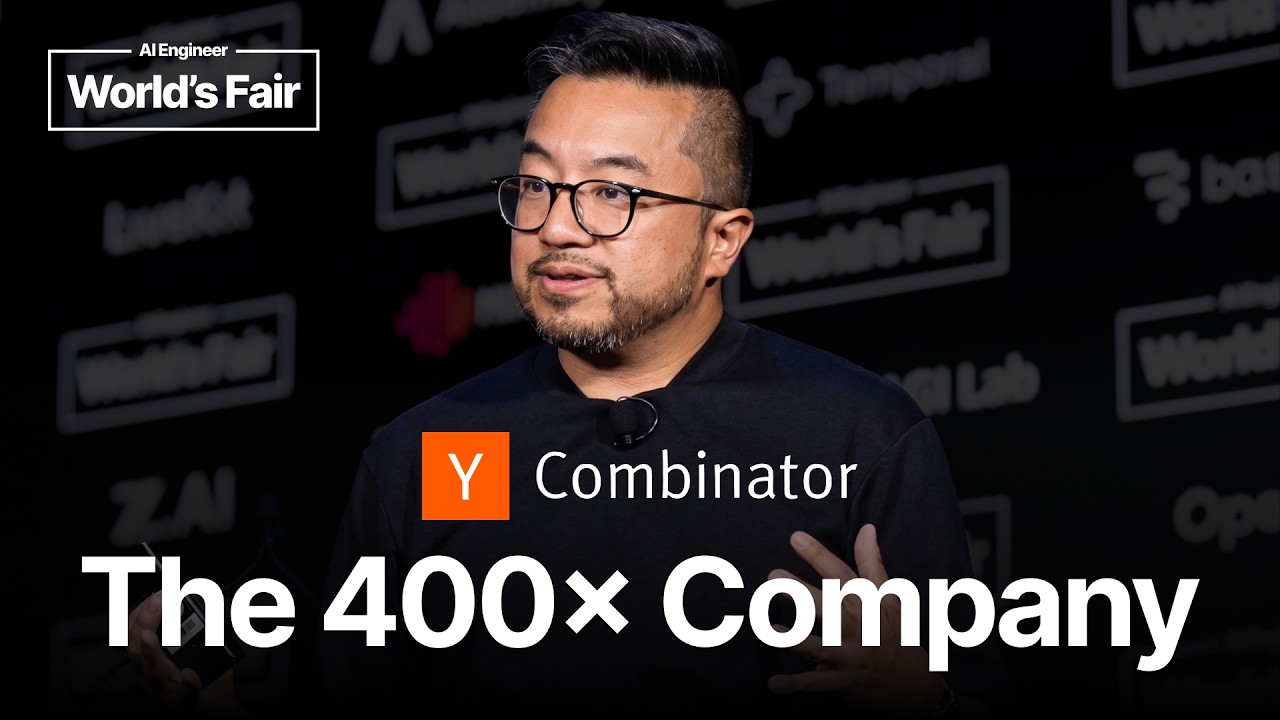
Closing Keynote: Garry Tan, Y Combinator

Closing Keynote: Garry Tan, Y Combinator

Garry Tan, President of Y Combinator, details how AI-native companies are achieving unprecedented productivity and scale with lean teams. He introduces the concept of "wiring the work" by treating AI as a workforce where organizational components are encoded into markdown "skill files." Tan explains how "company brains" act as a library and librarian, managing institutional knowledge to overcome human memory limits. He emphasizes the discipline of "skillifying" every task to ensure continuous learning and calls on founders to build these new AI-native infrastructures to "boil the ocean"—tackling previously insurmountable problems.