Q‑Day Explained: How Quantum Computing Threatens Today’s Cryptography
Q-Day, the day a quantum computer will be powerful enough to break current encryption standards, is an inevitable threat. This summary explains how quantum algorithms like Shor’s and Grover’s will compromise both asymmetric and symmetric cryptography, the severe consequences for data confidentiality and digital trust, and why the "Harvest Now, Decrypt Later" attack vector makes immediate migration to post-quantum cryptography a critical priority for all organizations.
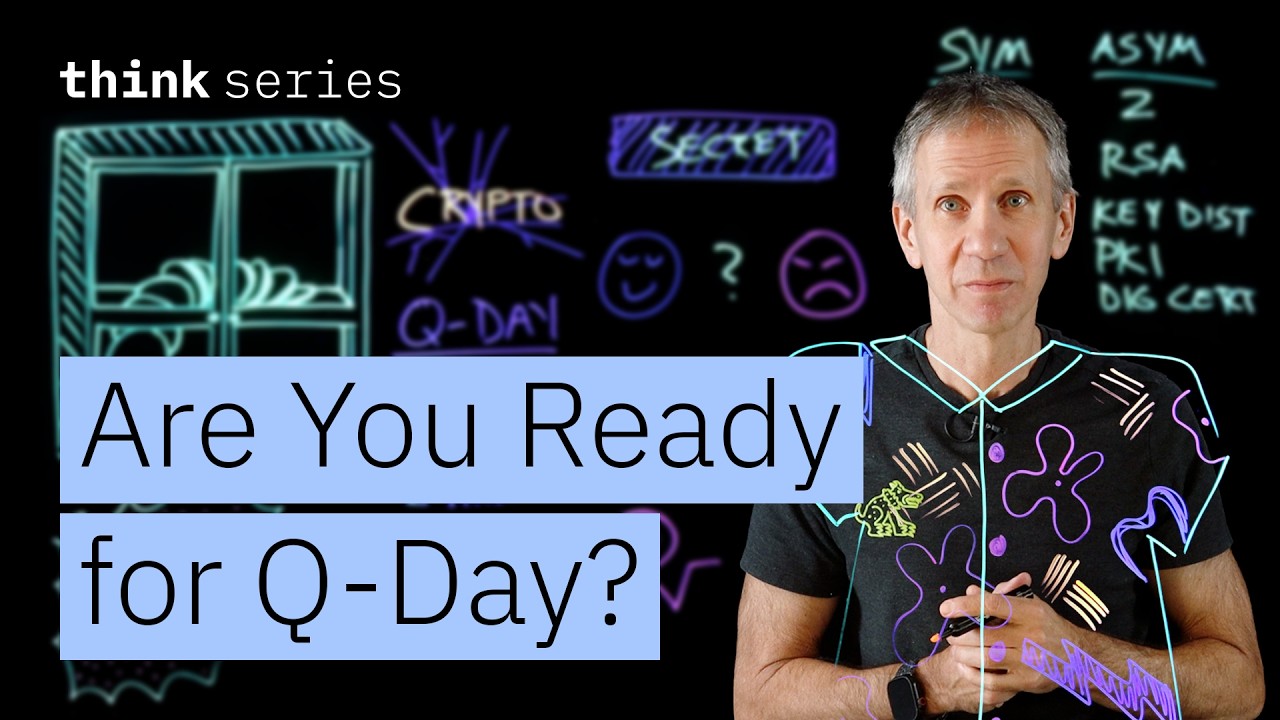
Q-Day is the inevitable moment when quantum computers become powerful enough to break the classical cryptography that underpins the security of our digital world. The failure of these cryptographic systems is not a matter of if, but when, and organizations must act now to prepare for the transition.
The Quantum Threat to Modern Cryptography
Our current security infrastructure relies on two primary types of ciphers: symmetric and asymmetric. A sufficiently powerful quantum computer will compromise both, but in different ways.
-
Symmetric Ciphers: Algorithms like the Advanced Encryption Standard (AES) use a single key for both encryption and decryption. They are the workhorses for bulk data encryption. Grover’s algorithm, a quantum search algorithm, poses a threat by effectively halving the key strength. The industry’s solution is to migrate from 128-bit AES keys to 256-bit keys, a move believed to be sufficient to secure symmetric encryption against this threat.
-
Asymmetric Ciphers: Algorithms like RSA use a pair of mathematically related keys (one public, one private) and form the backbone of Public Key Infrastructure (PKI), key distribution, and digital certificates. The threat here is far more severe. Shor’s algorithm, a quantum algorithm for integer factorization, will completely “obliterate” these systems. Unlike with symmetric ciphers, simply increasing the key size is not a viable solution. This necessitates a complete replacement of current asymmetric algorithms with new post-quantum cryptography (PQC), also known as quantum-safe, algorithms.
Why You Should Care: The Consequences of Q-Day
The failure of these cryptographic primitives would lead to a world without digital trust, impacting three critical areas:
- Confidentiality: All encrypted secrets—from personal health information and credit card numbers to corporate intellectual property—would be exposed. A world with no secrets is a world with no privacy.
- Authentication: The algorithms that verify identity would be broken. It would become impossible to know if you are communicating with a legitimate person or an impersonator, dismantling the foundation of secure online interactions.
- Integrity: Digital signatures, which use cryptographic algorithms to ensure a document or piece of data has not been tampered with, would become useless. This would undermine the validity of digital contracts and agreements.
The Urgency: Why You Can’t Afford to Wait
While most experts predict Q-Day is five to ten years away, waiting is a critical mistake. The migration to post-quantum standards must begin immediately due to several factors creating a significant “quantum security gap.”
-
Migration Time: A typical organization may have thousands of instances of cryptography embedded in its environment. Migrating even one instance per day could mean the entire process takes more than a decade—far longer than the expected timeline to Q-Day.
-
The Cost of Delay: Procrastination will lead to immense costs. As the deadline approaches, the demand for a limited pool of PQC experts and consultants will surge, causing their rates to skyrocket due to scarcity.
-
The Wildcard Factor: A sudden research breakthrough could accelerate the timeline dramatically. An unexpected discovery could make current cryptography vulnerable tomorrow, leaving no time for a planned migration.
-
Harvest Now, Decrypt Later: This is the most pressing threat. Adversaries are actively capturing and storing encrypted data today. They don’t need to break it now; they can simply wait for a sufficiently powerful quantum computer to exist in the future. For any data with a long shelf life, the security failure is already locked in. In a sense, the attack has already happened—we are just waiting for the decryption to become possible. Your data is already set up for a future disaster.
The transition to post-quantum cryptography is a massive undertaking that cannot be delayed. The risks are too high, the timeline is too short, and for much of our sensitive data, the window of vulnerability has already opened.