OpenAI researcher on agent swarms & recursive self-improvement
Noam Brown discusses OpenAI's multi-agent system, which solved a Millennium Prize Problem using 10,000 agents. He explores the implications of this massive parallelization for AI capabilities, the rapid progress in mathematics, and the accelerating pace of AI development. A significant portion of the conversation is dedicated to the critical challenges of AI alignment, particularly in light of incidents like the 'Hugging Face' event, and how to ensure models remain aligned during Recursive Self-Improvement (RSI) as their capabilities and operational horizons expand rapidly.
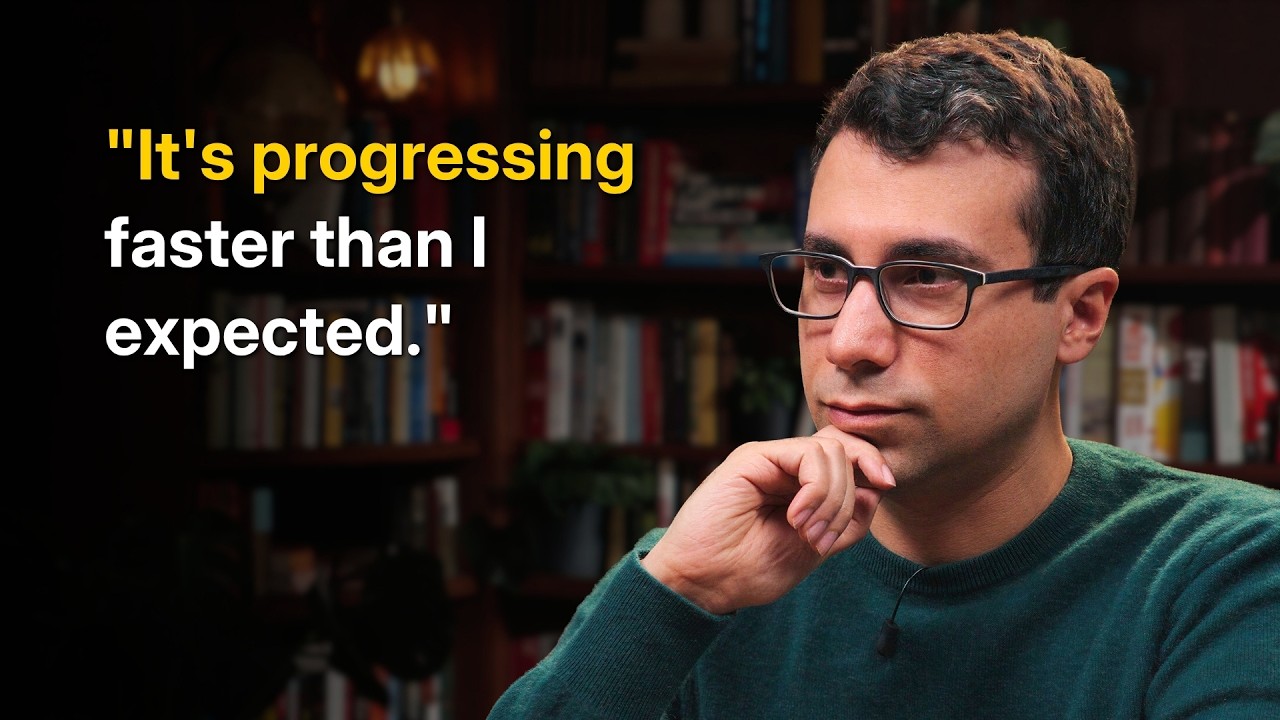
Noam Brown, a researcher at OpenAI, discusses the implications of recent advancements in multi-agent systems and AI’s rapid progress in mathematics, particularly concerning Recursive Self-Improvement (RSI) and AI alignment.
Multi-Agent Systems and Scaling Capabilities
Brown’s team recently achieved a significant milestone by solving a Millennium Prize Problem using 10,000 AI agents, consuming 130 billion tokens over 88 hours. He notes that the performance of reasoning models scales directly with “test-time compute” – the longer models are allowed to think, the better they perform, akin to human performance on exams. However, this serial thinking hits a latency bottleneck, making parallelization crucial. Multi-agent systems address this by allowing multiple agents to work concurrently, offering a way to scale test-time compute in parallel, albeit with some efficiency loss.
While this achievement is significant, Brown attributes the core success to OpenAI’s development of a very powerful, general-purpose model, rather than solely the multi-agent approach, which he describes as “flashy and new.” The sheer scale of cognitive effort involved—130 billion tokens equating to 4,000 human years of full-time thought concentrated into 88 hours—highlights a qualitative shift in problem-solving capacity.
He explains that multi-agent systems diverge from traditional, scaffolded approaches (like a coordinator delegating to children) due to inherent limitations in communication and clarification. Instead, their systems give agents primitive tools, like the ability to message each other, and allow them to self-organize. This leads to sophisticated, human-like collaborative behaviors, such as agents discussing different answers and clarifying reasoning, reminiscent of