Why Education Has to Change
Ben Horowitz, Erik Torenberg, and Gagan Biyani introduce the Horowitz Andreessen Academy, a new educational model designed for the AI era. They argue that traditional education is ill-suited for a rapidly changing world, advocating for a project-based, "learn by doing" approach. The academy aims to cultivate "main character" builders through immersion in Silicon Valley's culture, strong peer networks, and direct engagement with real-world problems and companies, emphasizing the critical role of people skills and the value of learning from failure in an age where AI empowers unprecedented creation.
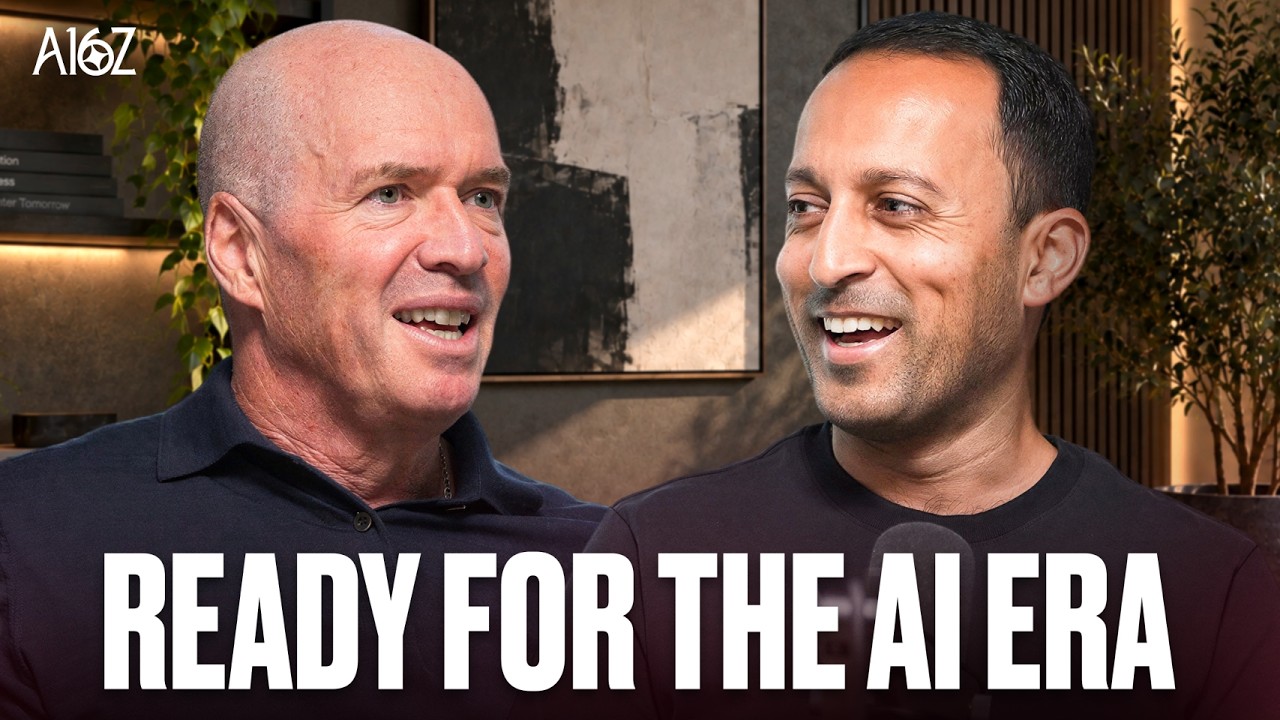
Ben Horowitz, Erik Torenberg, and Gagan Biyani introduce the Horowitz Andreessen Academy (HAA), a new educational institution designed to address the inadequacies of traditional college education in the rapidly evolving AI era.
The Problem with Traditional Education and the Vision for HAA
Horowitz notes that traditional college primarily serves those aiming for scholarly or academic careers, proving less effective for individuals seeking to enter the job market or launch companies. It represents a significant financial and time investment, often without directly equipping students with relevant skills. From a hiring perspective, the skill sets demanded by the technology industry evolve too quickly for large, established educational systems to adapt. HAA is conceived for young individuals who inherently want to “build something,” particularly in technology. Leveraging a16z’s extensive network of 1,600 portfolio companies, the Academy aims to provide direct access to jobs and train students in the exact skills required by the industry. Gagan Biyani, co-founder of Udemy and Maven, was brought in as CEO due to his deep entrepreneurial experience in education. Past educational reform efforts are critiqued for being too narrow, failing to offer the comprehensive “bundle” of education, status, brand, social experience, and fun that makes traditional college appealing. HAA’s core philosophy is to emphasize learning by doing—building real systems and creating music, rather than just studying about them.
The AI Revolution and the Need for a New Paradigm
The hosts argue that the AI revolution is as transformational as the Industrial Revolution, which reshaped education from religious to corporate training. The current educational models, largely products of the Industrial Revolution, are ill-suited for the AI era. HAA seeks to be a pioneer in this new world, moving away from lecture-heavy instruction towards more time with advanced tools, personalized learning supported by AI, and structured social engagement. This approach aims to provide a “college comparable” experience—residential, located in San Francisco, and deeply connected to leading employers—without being degree-granting. The Academy’s target demographic comprises “young builders” with an intense drive to create, forming an elite demand.
The “Learn by Doing” Philosophy and Project-Based Learning
Ben Horowitz expresses optimism for young people today, viewing the AI era as an unprecedented opportunity where new tools enable them to be more capable than those with decades of experience. He likens it to the times of Thomas Edison or Henry Ford, where young innovators can tackle significant problems directly. While not everyone will have a “billion-dollar idea” immediately, gaining experience at innovative companies like Databricks, NVIDIA, or Stripe can provide invaluable foundational knowledge and connections within the a16z ecosystem, fostering a Silicon Valley spirit. The Academy promotes an “output-oriented” curriculum, prioritizing what students can build over their ability to memorize information, especially given AI’s capacity to answer rote questions. The goal is to make problems so challenging that AI becomes an indispensable tool for students to achieve breakthroughs, turning them into “main characters” rather than passive participants. This “builder mentality” is applied broadly, encouraging students to transform any interest, from calligraphy to horticulture, into a tangible project.
The Critical Role of People Skills and Silicon Valley Immersion
People skills are highlighted as an underrated advantage in the AI era. AI’s ability to handle computer-centric tasks frees humans to focus on complex interpersonal interactions—motivating peers, collaborating, and working towards collective goals. These skills are best learned through experience and immersion, not classrooms. HAA will foster strong peer networks and integrate students into the “adult world” through co-located projects and internships with companies. This environment, combined with the necessity to accomplish project goals (e.g., cold emailing for a specific robot chip), compels students to develop crucial communication and negotiation abilities. The cultural values of Silicon Valley, such as embracing failure as a learning opportunity and a high-trust, positive-sum environment, are seen as critical for students’ personal and professional growth. This mindset helps students “earn a secret” from failure, understanding why difficult problems are hard to solve.
Why California and a For-Profit, Independent Model
California, and San Francisco specifically, is deemed the ideal location due to its concentration of innovative companies, entrepreneurs, and its cultural and intellectual role as a “bastion” for building the future. The firm’s connections to 80% of its portfolio companies in the area make it a natural hub for career development. San Francisco itself acts as the campus, embodying a culture that values ambition, innovation, and resilience. The decision to establish HAA as a separate, for-profit company (rather than a department within a16z) ensures its independence and scalability. This structure allows it to pursue a broader ambition beyond just technology, potentially expanding into fields like music or medicine, and ensures that the student is the primary customer. The for-profit model creates strong incentive alignment, forcing the Academy to deliver tangible value to its students for its own continued success, and encourages others to replicate its innovative model.
The Core Value of Curiosity and Building “Main Characters”
The Academy aims to transition students from a “push” model of education (cramming for grades) to a “pull” model driven by natural curiosity, emphasizing that seemingly unrelated interests, like Steve Jobs’s calligraphy or Ben Horowitz’s passion for rap music, can profoundly shape one’s authentic and impactful career path. This approach encourages students to pursue diverse interests and manifest their ideas, leveraging AI to overcome traditional creative limitations across various mediums, from filmmaking to music production. The focus is on cultivating individuals who can actively shape the future and solve complex problems, becoming “main characters” in their respective fields.
Navigating the Opportunities and Challenges of Being Young Today
Horowitz highlights that navigating the AI era requires developing judgment and decision-making skills that can only be honed through practical experience. The Academy will provide a controlled environment for students to practice leadership, team-building, and conflict resolution, learning the consequences of their actions in a lower-stakes setting before entering the professional world. Students are encouraged to identify and tackle real-world problems they are passionate about, understanding that entrepreneurial breakthroughs often arise from accidental discoveries made while trying to solve other hard problems. HAA aims to expose young people to a wider range of possibilities beyond their immediate experiences, fostering resilience and a deep understanding that learning from failure is invaluable.
Measuring Success: The Academy’s Vision for the Future
Five years from now, success for HAA will be measured by its graduates having fulfilling careers they love, and some having launched successful, impactful companies. The Academy itself aims to continually learn and refine its model, expanding its reach to different types of students and interests beyond technology—including creative fields and global problem-solving—thereby facilitating the manifestation of ideas across all mediums in the AI-powered world.