AI & Education: Generative AI & the Future of Critical Thinking
The author argues for embracing generative AI in education, shifting the focus from outdated skills like memorization to future-ready competencies such as critical thinking, adaptability, and creativity. The summary explores the pros and cons, practical applications like personalized tutoring and enhanced accessibility, and the necessity of teaching AI literacy and ethics to prepare students for the modern workplace.
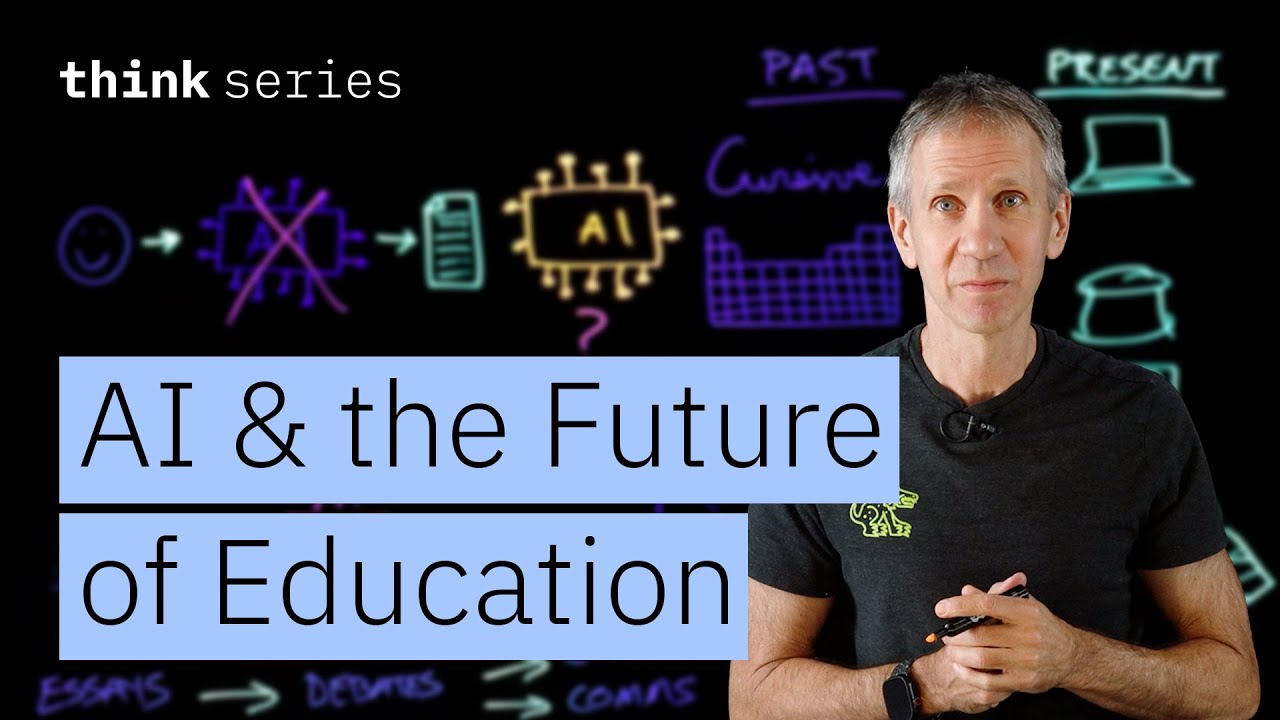
The author argues that educators should not prohibit the use of Artificial Intelligence in the classroom but instead embrace it to elevate learning. The initial reaction to ban AI tools out of fear that students wouldn’t learn is compared to standing in front of a moving train and yelling “stop.” Instead of trying to detect AI-generated content—a losing battle as the technology improves—the focus should be on integrating it responsibly.
The Evolution of Essential Skills
To frame the discussion, the author draws a historical parallel between the rise of AI and previous technological shifts that made certain skills obsolete while elevating others.
- Past Skills: Skills like cursive, penmanship, rote memorization (e.g., the periodic table), and complex manual arithmetic were once cornerstones of education.
- Present Tools: Today, these have been largely replaced by typing, database lookups, calculators, and GPS. No one would suggest a student is unprepared for the modern world if they can’t do long division by hand, because we expect them to use a calculator.
The central point is that education must prepare students for the future they will inhabit, not the past. The tools of the present and future are powered by AI, and we must teach students how to use them effectively.
Future-Ready Skills in the Age of AI
As AI handles more routine tasks, the emphasis in education must shift to higher-order thinking skills that AI cannot replicate.
- Flexibility and Adaptability: Students need a mindset that is open to new possibilities and ways of thinking.
- Creativity: The ability to think outside the box is crucial for leveraging AI in innovative ways.
- Critical Thinking: This is presented as the most vital skill. Students must learn to evaluate AI-generated output for accuracy, utility, and potential unintended consequences. Just because an AI can do something doesn’t mean it should.
Practical Advantages of AI in the Classroom
When leveraged correctly, AI can serve as a powerful tool to augment the educational experience.
- Personalized Tutoring: AI can act as an infinitely patient, one-on-one tutor that adapts to each student’s unique learning pace and style, explaining concepts in different ways until they are understood.
- Teaching Assistant: AI can assist educators with lesson planning, grading, and administrative tasks, freeing them up to focus on high-impact, one-on-one instructional time.
- Enhanced Accessibility: It can help students with disabilities by translating text to speech or describing images, making learning more inclusive.
- Skill Practice: Students can use AI as a debate partner to find holes in their arguments or as a research assistant to gather ideas, thereby honing their reasoning and critical thinking skills.
- Educational Equity: Cloud-based AI provides access to high-quality educational resources to students anywhere in the world, as long as they have an internet connection, helping to close the resource gap.
Shifting Educational Focus: Practical Examples
The author suggests concrete ways to adapt curricula to this new reality.
- From Essays to Debates: Rather than focusing solely on essays that an AI can write, educators can emphasize debates, which test communication, quick thinking, and the ability to reason on one’s feet.
- From Memorization to Principles: Instead of memorizing the periodic table, students should learn the principles behind its structure to facilitate higher-order thinking and applied knowledge.
- From Arithmetic to Higher Math: By offloading complex calculations to tools, students can spend more time on algebra and calculus, developing advanced analytical and logical reasoning skills.
Conclusion: Preparing Students for the Modern Workplace
AI is not a passing fad; it is a permanent and transformative force in the professional world. Employers will expect their workforce to use the best available tools to stay competitive. If students are not taught how to use AI in the classroom, they will be ill-equipped for the jobs of the future. The goal of education should be to prepare the next generation to thrive in the modern era, and that requires teaching them to leverage AI responsibly and effectively.