Critical thinking

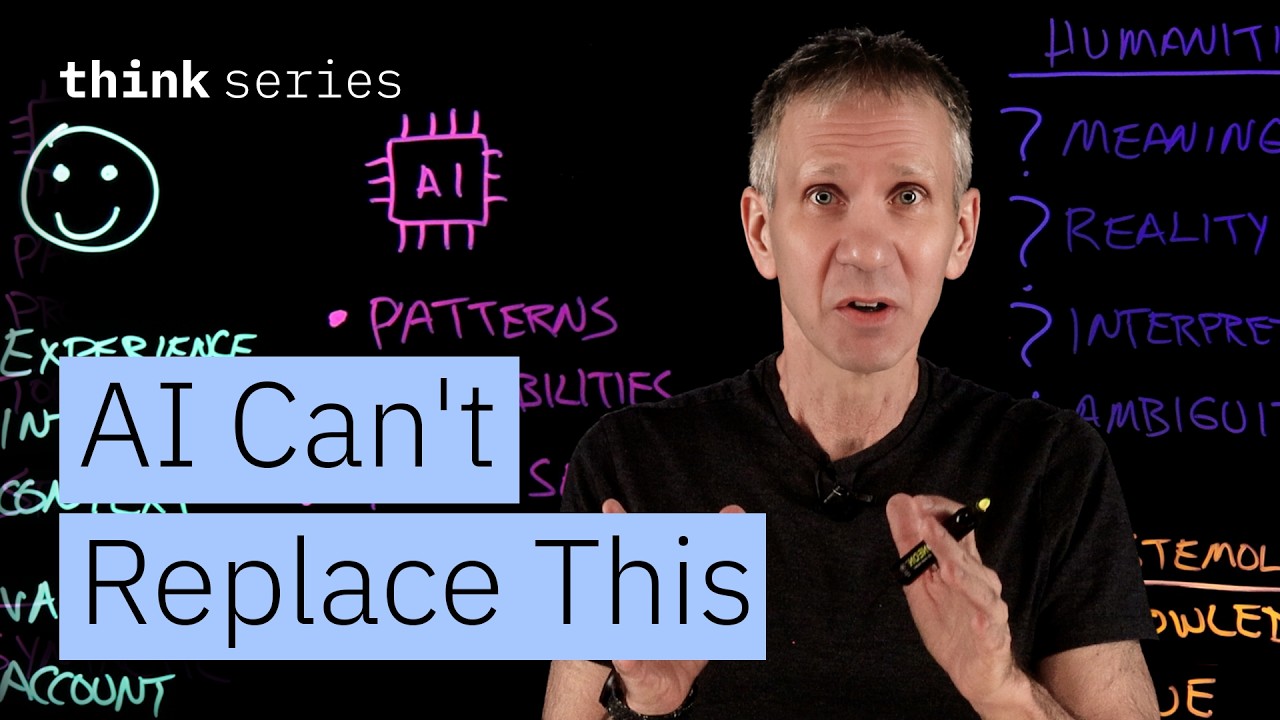
Why AI Makes the Humanities More Important Than Ever

Why AI Makes the Humanities More Important Than Ever

Jeff Crume explores why humanities are crucial in an AI-driven world. While AI generates sophisticated answers, it lacks human understanding, purpose, and judgment. He argues that STEM fields explain 'how' but not 'why,' making humanities essential for ethical decision-making, interpreting AI outputs, understanding bias, and effective prompt engineering. Ultimately, AI amplifies the need for human critical thinking and judgment.
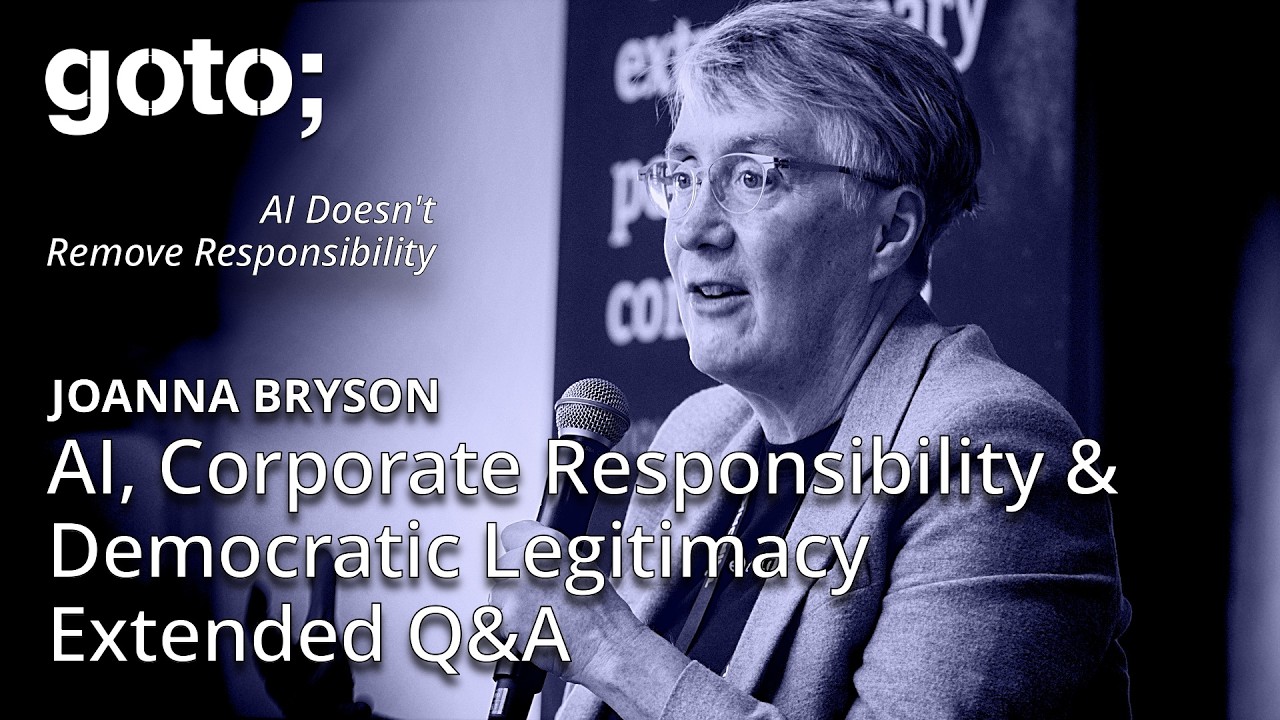
AI, Corporate Responsibility & Democratic Legitimacy: Extended Q&A • Joanna Bryson • GOTO 2025

AI, Corporate Responsibility & Democratic Legitimacy: Extended Q&A • Joanna Bryson • GOTO 2025

Joanna Bryson challenges popular AI assumptions, positing current generative AI as powerful tools for cultural knowledge compression, not autonomous intelligences. She emphasizes that AI's capabilities are nearing the human knowledge frontier, requiring focus on human coordination and governance. Bryson critically examines AI's impact on mental health and law, advocating for data-driven regulation and comprehensible systems. She calls for engineering activism, asserting human agency over technological determinism and stressing the importance of transparency and critical thinking in shaping AI's future.

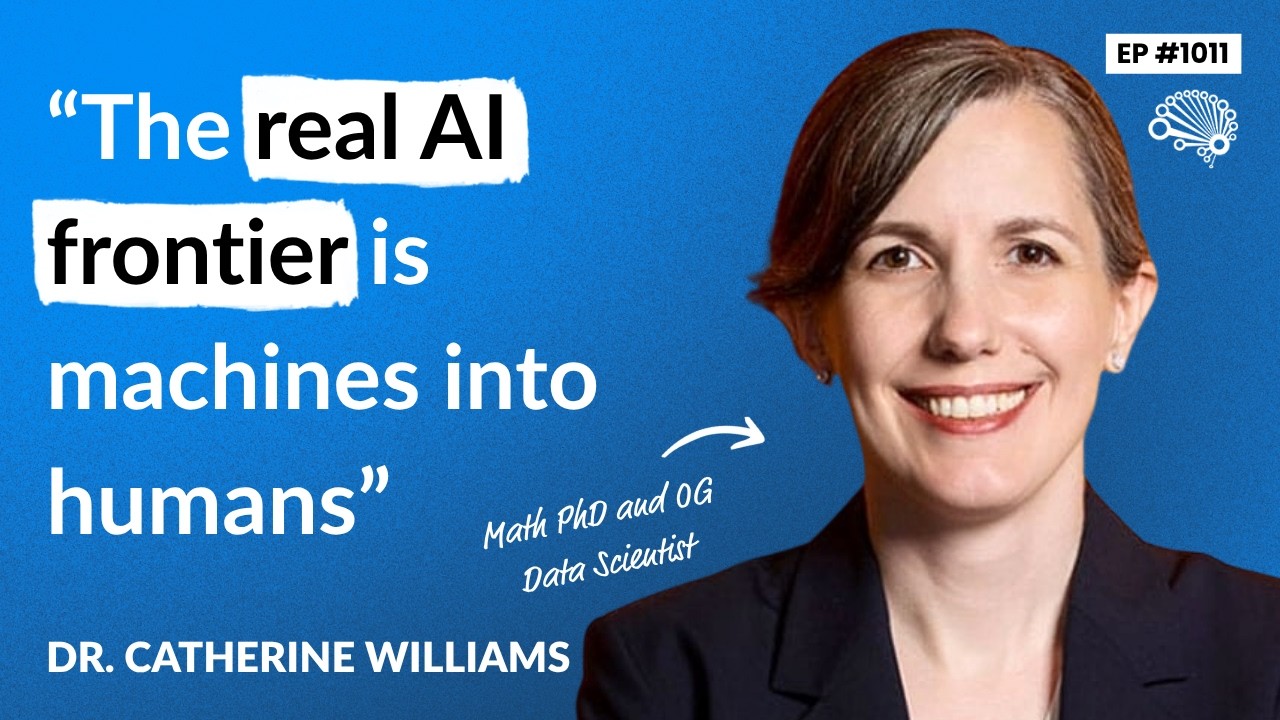
The Real AI Frontier Isn't Smarter Machines (with Catherine Williams)

The Real AI Frontier Isn't Smarter Machines (with Catherine Williams)

Dr. Catherine Williams, a former black-hole physicist and early data science leader, explores the field's evolution from Bayesian models to LLMs. She passionately argues that deep mathematical understanding and the ability to build robust mental models are more crucial than ever, even as AI automates technical tasks. Williams also discusses the impact of embeddings, the changing economics of frontier AI, and her work at the nonprofit Candid, advocating for a human-centric approach to intelligence in the age of AI.

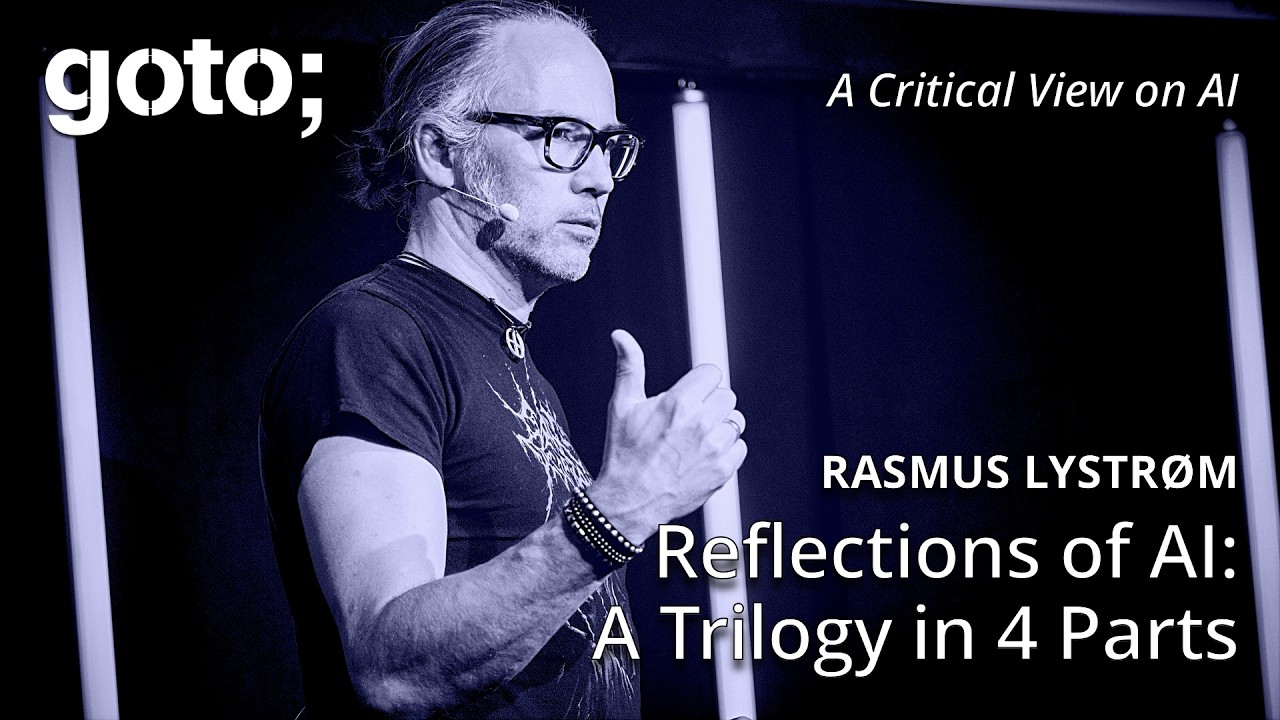
Reflections of AI: A Trilogy in 4 Parts • Rasmus Lystrøm • GOTO 2025

Reflections of AI: A Trilogy in 4 Parts • Rasmus Lystrøm • GOTO 2025

In a talk styled as "A Trilogy in Four Parts", Rasmus Lystrøm critically examines the real-world impact of Generative AI, debunking productivity myths and highlighting hidden costs like degraded code quality and environmental strain, while advocating for a return to solving real user problems with valuable, often simpler, technology.

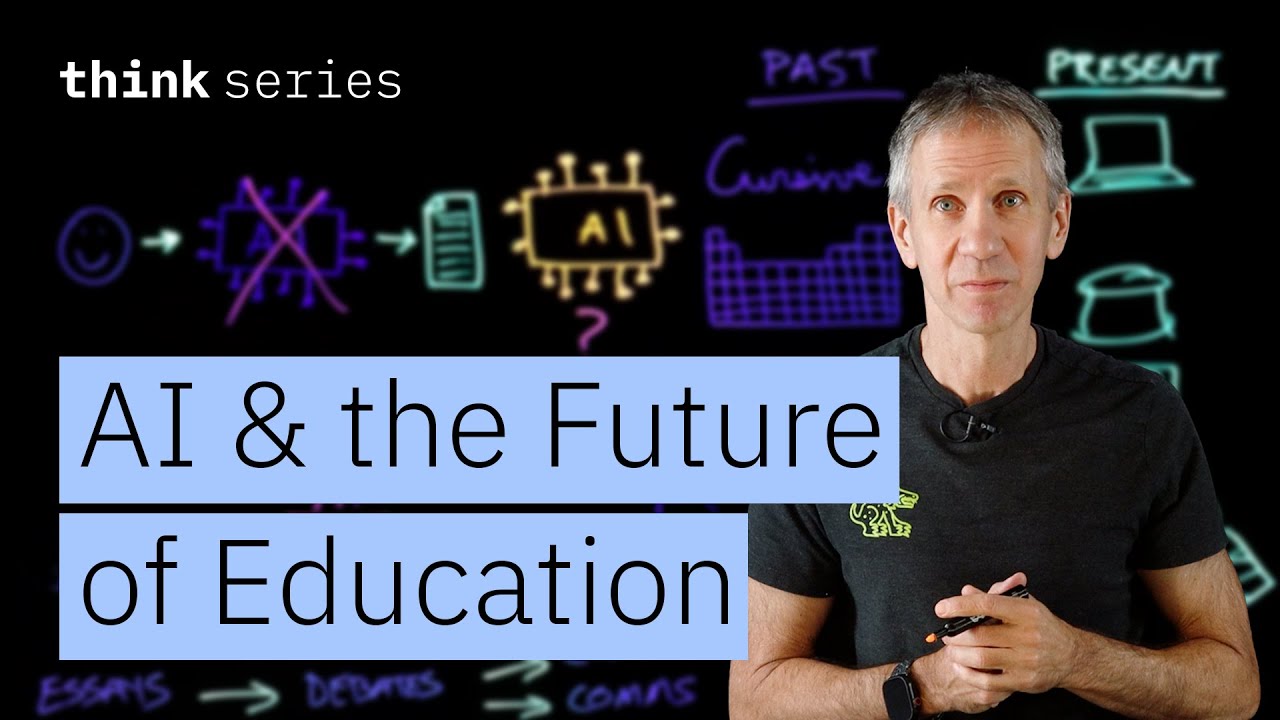
AI & Education: Generative AI & the Future of Critical Thinking

AI & Education: Generative AI & the Future of Critical Thinking

The author argues for embracing generative AI in education, shifting the focus from outdated skills like memorization to future-ready competencies such as critical thinking, adaptability, and creativity. The summary explores the pros and cons, practical applications like personalized tutoring and enhanced accessibility, and the necessity of teaching AI literacy and ethics to prepare students for the modern workplace.