How Two French Engineers In New York Built The Company That Monitors The Entire Cloud
Datadog CEO Olivier Pomel shares his journey, emphasizing the company's evolution from a DevOps insight to a public tech giant. He discusses the resilience required to overcome early rejections, his hands-on leadership style focused on raw customer feedback, and how Datadog is rapidly adapting to the AI revolution by prioritizing automation and faster iteration in product development and internal processes. Pomel also offers candid advice on co-founder relationships and the critical importance of moving quickly in both hiring and firing.
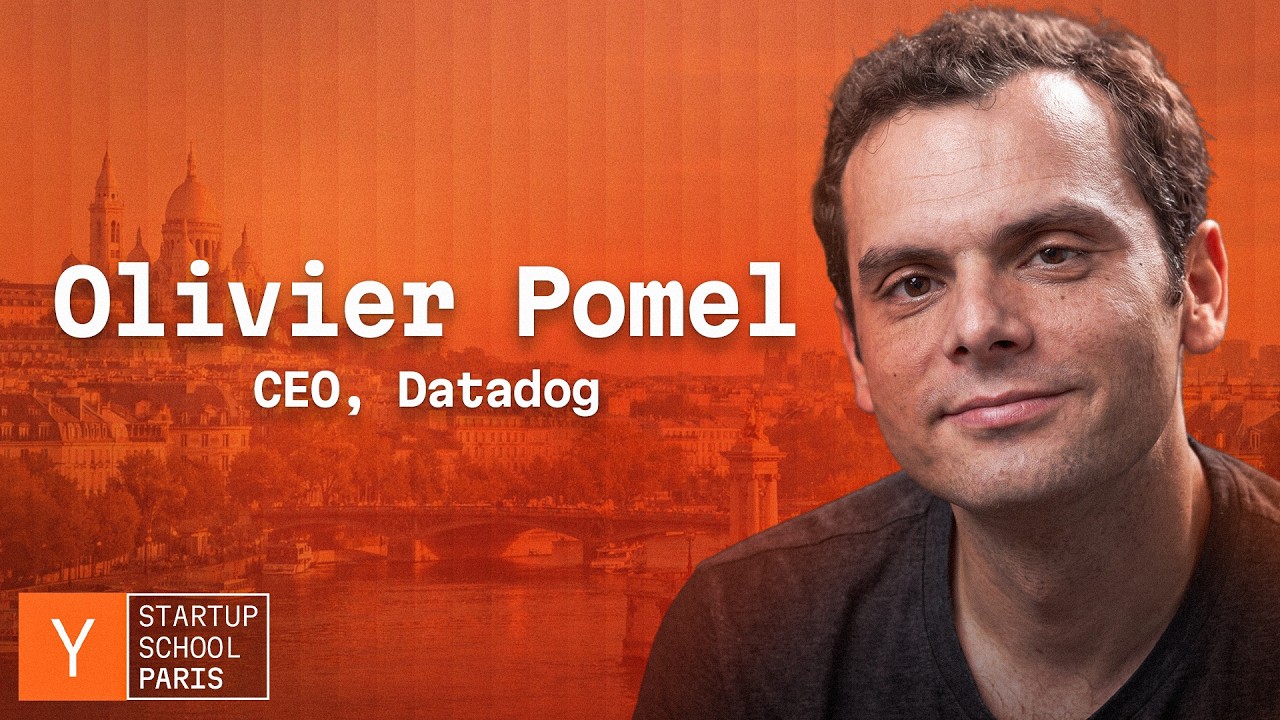
Olivier Pomel, CEO of Datadog, shares insights from his extensive entrepreneurial journey, emphasizing the importance of staying connected to customer feedback and moving fast.
Datadog’s Genesis and Early Struggles
Pomel and his co-founder Alexi met at IBM research in New York in 1999. Their initial venture together was at an educational software startup, which grew to 800 people. This experience exposed them to the prevalent friction between development and operations teams, inspiring the core idea for Datadog: a platform to bring DevOps together. Initially, they underestimated the explosion of cloud computing but built their first infrastructure support for cloud, which became a significant tailwind. The product was initially conceived as a “data platform for devops” but was rebranded to “infrastructure monitoring” because customers better understood this established category, making it easier to articulate value.
The journey was far from easy. Datadog was rejected by Y Combinator (twice, in Pomel’s case, including a dinner invitation rescinded due to non-YC affiliation). Early fundraising was painful, with New York VCs not understanding their market and Bay Area VCs dismissing them for not being located in Silicon Valley. These rejections fueled a strong motivation to prove critics wrong and build the company differently from typical Bay Area startups.
Culture, Leadership, and Product Strategy
Datadog never formally wrote down its culture. Instead, Pomel believes culture flows from the top: “If you need ‘don’t be evil’ to be written on the wall, you probably shouldn’t work here.” They exemplify, hire, promote, and fire based on this implicit culture, which still works effectively even with 8,000 employees.
Pomel maintains a hands-on approach, deeply involved in product decisions and actively avoiding the “strategic” (or “s-word”) in conversations that lack practical substance. He consistently reads support tickets, sales transcripts, customer feedback, and employee surveys to stay grounded. This direct engagement allows him to challenge management with real-world issues, preventing sanitized summaries from reaching the top and ensuring a clear understanding of problems on the ground. “Your job is to understand what’s happening within your span of control and understand it very, very precisely.”
With 20-25 products, Datadog’s expansion is largely driven by observing how customers use their platform and build extensions around it. They also make “strategic” bets on emerging technologies like AI, acknowledging the higher risk of being wrong but the necessity of anticipating demand in fast-moving fields.
Navigating the Public Market and AI Revolution
Datadog went public in 2019, with their lockup expiring on the day COVID lockdowns began, leading to a significant stock drop. Pomel notes that while being public means more choreographed investor interactions, the main challenge is managing market reactions and their impact on employee compensation (RSUs) and retention, rather than the company’s survival.
The AI revolution initially caused uncertainty among investors regarding Datadog’s position, but the company is now seen as a “winner.” Pomel highlights the rapid pace of change in AI development, requiring Datadog to “take more shots and be wrong more often.” Key new bets include making the product usable by AI agents and building more intelligence directly into the product to automate operations and reduce manual coding for troubleshooting.
Datadog’s diverse customer base, including top AI companies, AI startups, and traditional enterprises, provides unique insights into AI’s evolving landscape. Internally, Datadog is embracing AI, with Alexi declaring, “in two quarters, we’re not writing any code anymore,” signifying a shift from “mostly write, sometimes automate” to “mostly automate, sometimes write.” This has enabled smaller teams (2-3 people) to rebuild entire systems in days that previously took six months with larger teams, despite the organizational pain involved.
Co-Founder Relationship and Key Advice
Pomel and Alexi have worked together for 20 years, predating Datadog by a decade. Their strong relationship is maintained through practices like a regular “standing lunch” without a specific agenda, providing a space for open communication and mutual support. For European founders, Pomel advises starting in Europe but aggressively pursuing the US market as soon as product-market fit is achieved, with at least one founder relocating to the US. Datadog established its Paris office primarily for talent acquisition, leveraging French employees who wished to return home.
Pomel’s core advice, derived from constant learning, is to always move faster, especially with hiring and firing. He advocates taking calculated risks in hiring rather than waiting for the perfect candidate, and acting decisively on firing when necessary, noting that often, employees wonder “what took you so long?” when an underperforming individual is let go.