The Section That Gives Away AI-Written Docs (with Carly Taylor)
Carly Taylor, a prominent engineering leader and founder of Rebel Data Science, discusses strategies for thriving amidst rapid AI advancements, the importance of authenticity and identifying "AI slop," balancing innovation with operational maintenance, and overcoming fear through embracing discomfort. She also addresses the "glass cliff" phenomenon for women in leadership and how to effectively leverage AI without sacrificing critical thinking.
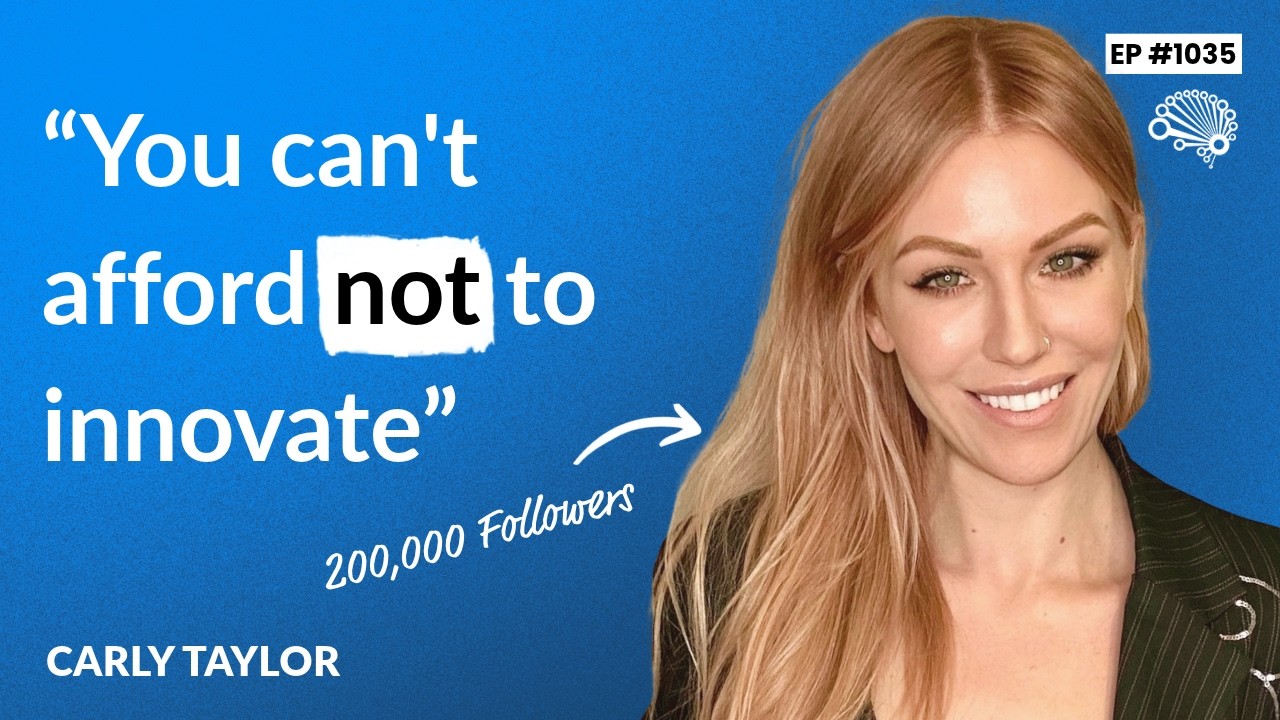
This episode features Carly Taylor, founder of Rebel Data Science, renowned for her candid online presence and extensive experience leading engineering teams in data and AI. The conversation delves into navigating the rapidly evolving AI landscape, personal and professional growth, and critical observations on the state of AI and leadership.
Navigating the Rapidly Evolving AI Landscape
Taylor emphasizes that in the face of AI’s swift advancements, no one possesses a crystal ball for the future. The attempt to predict outcomes often leads to analysis paralysis, where excessive contemplation results in inaction or a spiraling doomsday outlook. Instead, she advocates for focusing on fundamentals, citing Joe Reese’s adage, “fundamentals are gravity.” These unchanging truths include maintaining clean data, understanding stakeholder needs, and identifying core problems—which often don’t require complex, long-term AI solutions.
She highlights the constant change in AI capabilities, stressing the need for strategies that anticipate superior future models. While foundation models might quickly outpace custom fine-tuning efforts, committing to decisions is crucial. The discussion acknowledges the impressive capabilities of current models, like Claude’s Fable, but notes that for most users, workflows haven’t dramatically shifted yet, and the differences between models often come down to edge cases. Taylor shares her experience building a game with Claude, realizing the immense power of new models while also discovering the ease of inadvertently creating “extremely strange backends” and incurring significant cloud costs.
Authenticity and the Challenge of “AI Slop”
Carly Taylor’s “unhinged” LinkedIn posts, which have garnered over 200,000 followers, exemplify her commitment to authenticity. She views this as a millennial trait, challenging the traditional “no personality” social contract of professional platforms. She explains that being her true self online is a privilege earned later in her career, allowing her to speak uncomfortable truths.
She introduces the concept of “AI slop,” which violates a social contract of thoughtful communication. Referencing “work slop” coined by Jeff Hancock and Kate Neerhoffer, Taylor describes it as AI-generated content that, if unreviewed, shifts the cognitive burden to the receiver. This might make the sender’s job easier but multiplies the effort for others within the organization. Her playful advice for dealing with slop: “If you can’t deescalate, escalate,” suggesting a response with even more overwhelming content.
Exploration, Growth, and “Keeping the Lights On”
Taylor describes her career philosophy as one of constant exploration rather than grinding. She deliberately seeks situations that make her deeply uncomfortable, believing that if she’s not growing, she’s in the wrong place. Her shift from shipping Call of Duty titles to enterprise sales at Databricks exemplified this pursuit of new challenges, even if she later realized sales wasn’t her passion.
She introduces the engineering concept of KTLO (Keep The Lights On), encompassing essential operational work like infrastructure maintenance and meeting SLAs. While crucial, the goal for leaders is to minimize KTLO efforts to maximize time for innovation and exploration. She argues that in today’s environment, organizations “can’t afford not to innovate,” emphasizing that “swinging and missing is better than sitting back and waiting,” as merely maintaining current operations won’t sustain growth.
Confronting Fear: “Inviting Mara to Tea”
Taylor applies this philosophy to personal challenges like public speaking, which still causes her significant anxiety. She views confronting fear as a catalyst for growth, likening it to the Buddhist concept of “inviting Mara to tea.” Mara, representing uncomfortable thoughts or imposter syndrome, should not be pushed away but invited in, acknowledged, and understood as transient. This commitment to facing fears, despite sleepless nights, allows her to say, “Wow, I did it” afterwards. She extends this to leadership, noting that many leaders, particularly regarding AI, fear admitting a lack of understanding, which stifles innovation. Taylor stresses that indecision is itself a decision, and leaders must be prepared to make and own difficult choices in ambiguous, high-stakes environments.
Audience Questions
AI and Human Communication
Regarding whether AI agents will develop exclusive protocols and if humans can create AI-proof communication, Taylor suggests that without human interface, AI systems might revert to efficient machine code, abstracting away human-readable languages. She finds the idea of AI-proof human communication fascinating, akin to anti-facial recognition tech or “poisoning” LLM contexts. She ponders whether humans could create a “shared context so dumb that it’s too smart to understand it,” like communicating solely in memes, or whether AI’s pattern-deciphering abilities would always prevail.
AI for Sharpening Thinking vs. Doing the Thinking For You
Taylor advises that engineers must “own the output” of their systems, regardless of the tools used. She encourages using AI for intermediate steps like stress-testing ideas or drafting communications. However, she cautions against AI slop, which is “unnecessarily long and verbose,” “meandering,” or includes extraneous sections like “what this isn’t.” Such characteristics make it evident the content was not thoroughly curated, potentially cheapening the perceived effort of the sender. The key is to produce clear, concise communication that reflects genuine thought, even if AI assisted in its formulation.
Women in Tech and the “Glass Cliff”
Taylor observes a positive trend of more women in leadership and data roles but highlights the “glass cliff” phenomenon. This is where women are often elevated to leadership positions primarily during times of crisis, where failure is highly likely. She suggests this reflects a subconscious bias: companies might appoint women in these roles thinking, “failure is inevitable, so why not give her a shot?” or that women are better at handling emotional fallout like downsizing. Taylor argues that women should be promoted into visible leadership roles based on their expertise, when things are going well, rather than being seen primarily as “cleanup” agents during difficult periods.