The grief, loneliness, and burnout sweeping through the tech industry right now
Molly Graham revisits her classic "Give Away Your Legos" career advice for an AI era, exploring grief and burnout in tech, the difference between delegating to AI and to humans, the overblown fear of job displacement, which Legos should never be given away, and what effective managers should do now. Key ideas include treating AI as a junior intern, the human sandwich model of vision and review, and reframing careers as evolving rather than disappearing.
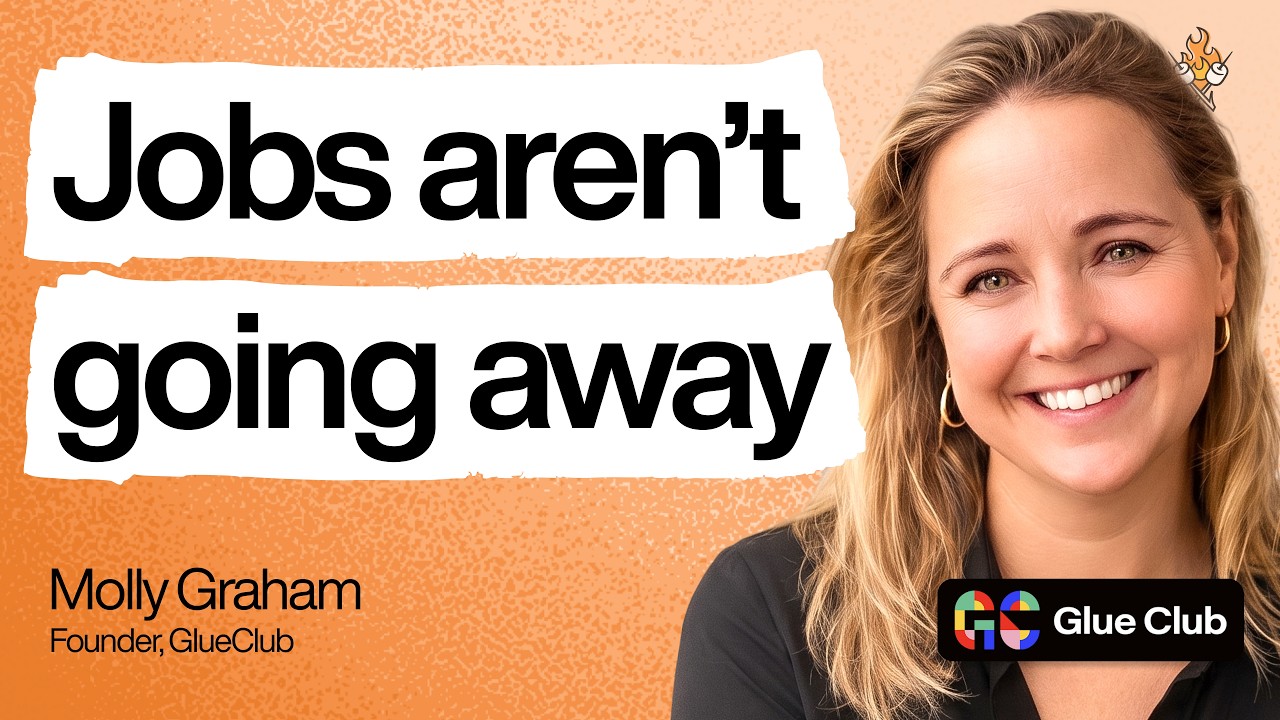
Molly Graham returns to Lenny’s Podcast to revisit her 13-year-old “Give Away Your Legos” framework and ask whether it still holds in an AI-driven world. She opens by explaining the origin of the advice: rapid growth at Google (10,000 employees in 2007, her department went from 25 to 125 in nine months) and Facebook (500 employees and 80 million users when she joined, 5,500 employees and over a billion users five years later). The core insight was that people build identity around the things they create, and scale forces them to hand those things to others. Her Lego metaphor, drawn from a kindergartener’s instinct to shove people away from a tower, became a Firstround Review article that continues to resonate globally.
What still holds true, in her view, is that change is scary and hard, that learning matters more than knowing (“the future will be defined by the people that learn, not the people that know”), and that standing still is the least safe choice because the company’s growth curve is also the curve of how fast your job must grow. She stresses emotional normalization: change brings a roller coaster of feelings, and naming grief, overwhelm, and burnout helps people feel less broken. She reframes her two-sentence summary, “make yourself irrelevant” and “don’t worry, it’s all going to be okay,” noting the first now sounds threatening and the second needs qualification.
A major theme is grief in engineering. Engineers who once derived flow from writing code now supervise agents, shifting from rowing to steering, and many miss the hands-on craft. Molly sees this as a real loss that deserves acknowledgment rather than forced positivity: “change sucks, it also can be awesome, but we don’t have to be fluffy bunnies about this.” She connects this to loneliness as team structures shrink and humans are replaced by agents, and to Corey Doctorow’s centaur versus reverse-centaur framing, where the fear is becoming the appendage that serves the machine.
She challenges the fear narrative directly, describing the framing of AI as a super-smart new hire you must train before being replaced in six months as toxic and inaccurate. She criticizes AI-branded layoffs as often masking poor management. Drawing on journalist Manoush Zomorodi’s career across 30 years of predicted industry death, she proposes the more productive question: “What would you do if you believed your job was always going to exist? It was just going to look completely different every six years.” She cites survey data showing burnout rising from 44% to 55% year over year, yet roughly half of respondents reporting they are the happiest they’ve ever been in their careers, with the strongest correlation among people who felt AI had amplified them. Designers reported the lowest happiness, partly because everyone now fancies themselves a designer.
On quality, Molly argues AI should be treated as a lazy or junior intern requiring coaching, context, and iteration, not as a superintelligent employee to copy-paste from. She warns that “AI slop” reflects shipped accountability and that CEOs sending AI-written strategy memos role-model the abandonment of judgment. She distinguishes productivity (generating more output) from efficiency (moving the conversation forward), noting engineering reports of rising code rewrites and security incidents.
The central difference from the original advice is delegation. Giving Legos to a human genuinely releases ownership; delegating to AI does not, because oversight remains with you, so the mental tax stays. She jokes that the best way to give Legos away is to “chuck them at their face and run in the other direction,” but warns that AI requires the same management skills as junior staff. Since everyone now manages agents, she suggests the ideal span of management is about 10 to 12 people, and worries about cognitive load.
On what not to give away, she identifies work requiring judgment, trust, relationships, and the ability to define quality. She compares autonomous driving to humans being poor at being automated, and suggests holding on to uniquely human strengths. She advocates a “human sandwich”: human vision at the top, AI in the middle, humans reviewing and iterating at the end, with taste and vision as the differentiator.
She encourages people to grieve what they lose, invoking Chip Conley’s idea of throwing funerals for things, then to ask what they could be extraordinary at in the new world. She frames the current period as early, citing a slow takeoff rather than an imminent superintelligence, and emphasizes that the distance from beginner to expert is short. Key takeaways include the most valuable skill being to ask “can AI help me with this?” before starting any task, and to think ambitiously about durable, high-quality work rather than fast throughput. Her final message to managers is that they are role models for accountability, that management matters more rather than less, and that they should name grief and let teams feel it, since the manager is the strongest lever for workplace happiness in the survey data.